 |
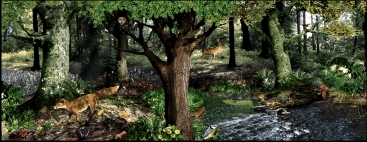
| Temperate forests consist
largely of deciduous trees and evergreen trees. Deciduous trees shed
their leaves in the fall and grow new ones in the spring. Evergreen
trees have leaves that live two or more years. Some evergreens have
needle-shaped leaves. Most temperate forests are in Asia, Europe,
and North America. Australia also has some temperate forests.
Many forest animals have small bodies that allow them to move easily through the underbrush. Forest mammals include chipmunks, mice, opossums, porcupines, raccoons, skunks, and squirrels. Bears, deer, and wild boars also live in temperate forests. Bobcats and wolves were once common in woodland areas. However, so many of these predators have been hunted and trapped through the years that they have become rare. Salamanders are often plentiful in temperate forests. They hide in the leaf litter or under rocks, where they feed on insects and other small organisms. In wet forests, slugs and other snails are common. Beavers, fish, frogs, muskrats, otters, salamanders, and turtles live in or near woodland streams, ponds, and lakes. Great numbers of birds nest in the trees and shrubs. Many temperate forests have been cleared for farms and cities, and many others have been cut down for fuel and lumber. This deforestation (destruction of forests) places woodland animals in danger. Extensive logging in the Pacific Northwest of the United States, for example, has destroyed much of the habitat of the spotted owl, threatening the existence of that species. |

