 |
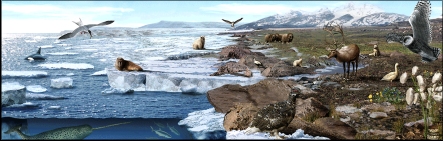
| Animals that live in polar
regions must withstand extremely cold temperatures. No land animals
except ice worms and a few species of insects live in polar regions that
have ice and snow the year around. But the seas of the Arctic and
Antarctic have large numbers of wildlife, including fish, giant sponges,
whales, and tiny shrimplike creatures called krill. In addition,
polar bears, sea lions, and walruses spend much of their time on floating
sheets of ice in the Arctic. Penguins and seals live on the Antarctic
coast.
Many animals inhabit the vast arctic tundras (cold treeless plains) of northern Asia, North America, and Europe. They include caribou, ermine, musk oxen, reindeer, lemmings, snowy owls, and wolves. Shallow ponds in the region provide a place for mosquitoes and many other insects to lay their eggs. These insects serve as food for the birds that migrate to the tundra each summer to nest. Animals that live in polar regions have developed bodies and ways of life that enable them to deal with the frigid winter weather. Caribou, musk oxen, and polar bears have thick fur, which helps them stay warm. The arctic fox and arctic hare have short ears and tails that keep them from losing much body heat. Arctic ground squirrels hibernate (sleep through the winter). They curl up in a burrow, and their body temperature drops, saving energy during the long winter. They also do not eat in the winter. They live off fat stored in their bodies. |

