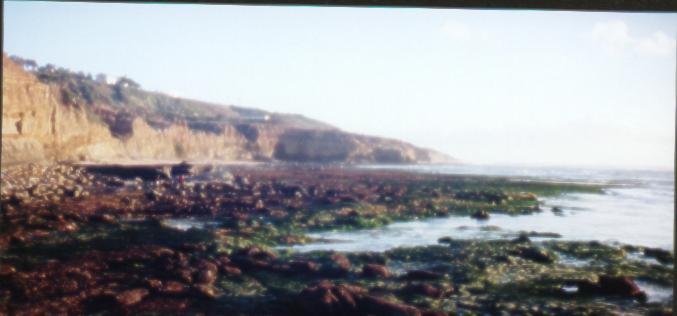
The rocky reefs along the Pacific coast have an abundance of life in the intertidal zone. Intertidal organisms use each other for food, to ride on, or hide in. Each time the tide goes out, the creatures that live within the tidepools are exposed to the elements that surround them, such as, pounding waves, drying wind, heat and radiation from the sun, rain, and a whole set of predators, including human beings. It's a hard life for those who rely on the tidepools as a nursery or, for that matter, for their lifelong habitat.
The intertidal zone extends from the highest wave-splashed rocks down to the levels which are uncovered by the infrequent, extreme low tides. You'll find many different kinds of plants and animals in the tide-level zones. For example, animals that have the least tolerance to the harsh environment of a low tide will be found at the lowest part of the zone. Other animals that are more hardy and can tolerate exposure to harsh conditions live near the tops of the rocks or higher up the reef.
The highest and lowest tides, which are called the spring tides, are usually when there's a full moon or a new moon. The less extreme tides are called neap tides.
The low spring tides are usually the best times to find animals and plants living within the tide pools. You can enjoy peeking at the creatures which scurry about, or the anemones with their flower-like appearance that can snatch prey as it walks or swims by.
Pictured below is a diagram showing three tide zones. This diagram has been enlarged so that you can study the species that depend upon life at each level.
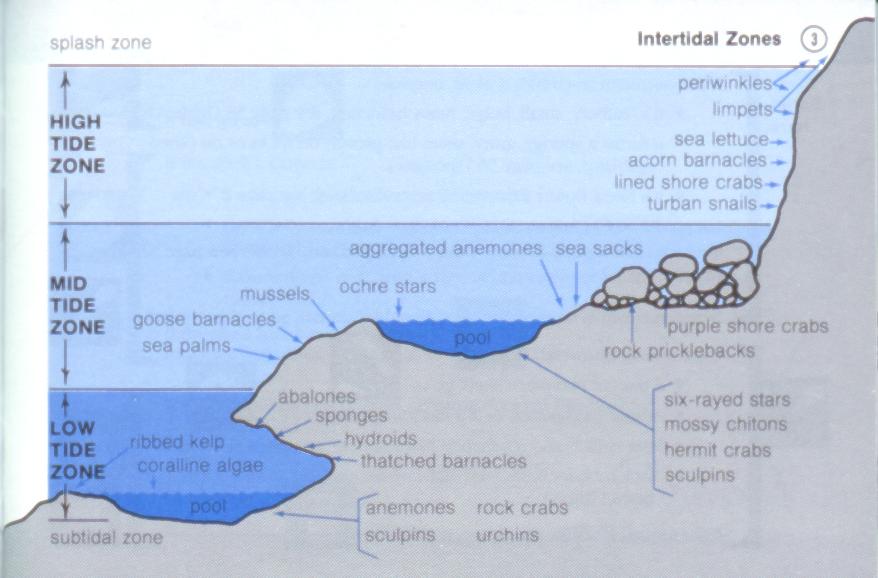
Notice the creatures live at the level which helps to protect them according to their tolerance to exposure to the elements of nature, such as pounding waves, air, heat, and predators. This is definitely an efficient and fantastic water world, called the intertidal zone.
 Life in the Tidepools
Back to the Tidepools of Southern California Home Page
Back to Humanity's Best Friend Home Page
Go to Catherine Robinson's Portfolio Site
