Handling Info
From my experience, and input from the faithful VMAX list
members,, the following are the appropriate steps to improve the
handling of the beloved Max
Stock bike:
Minor Mods:
Major Mods:
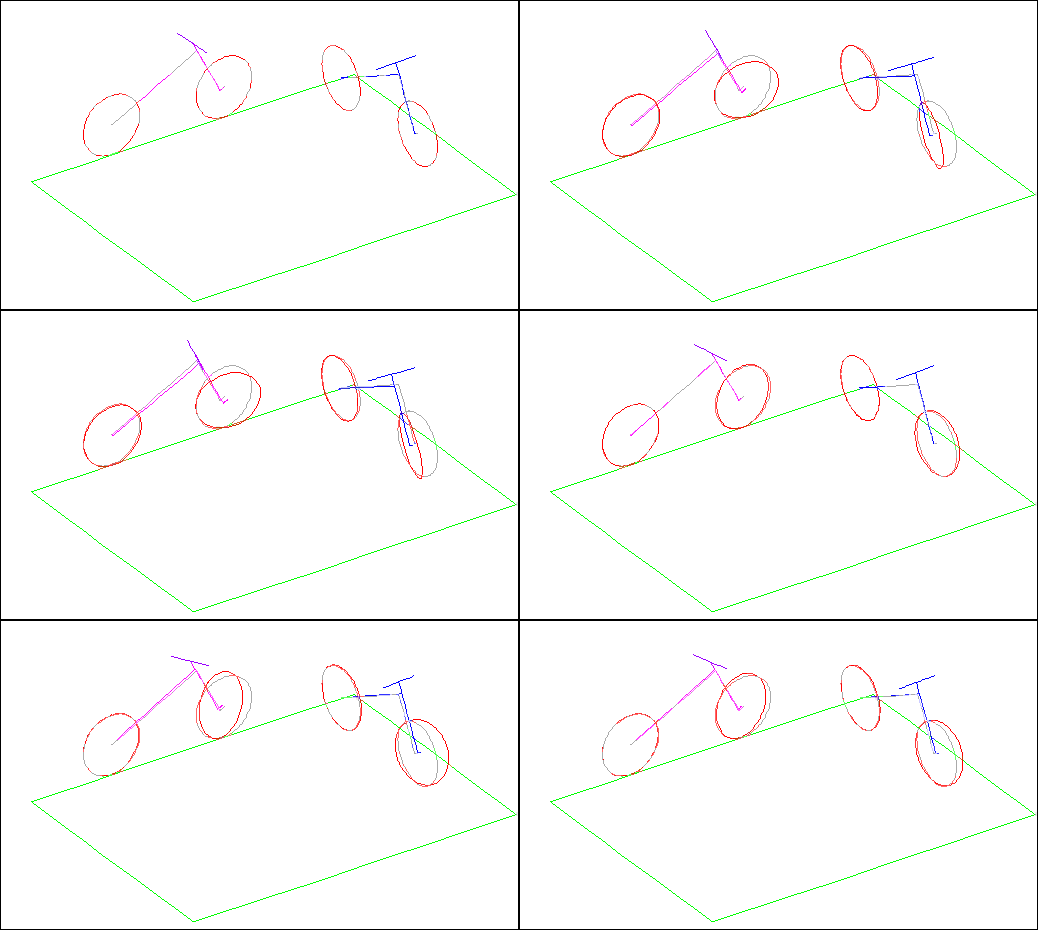
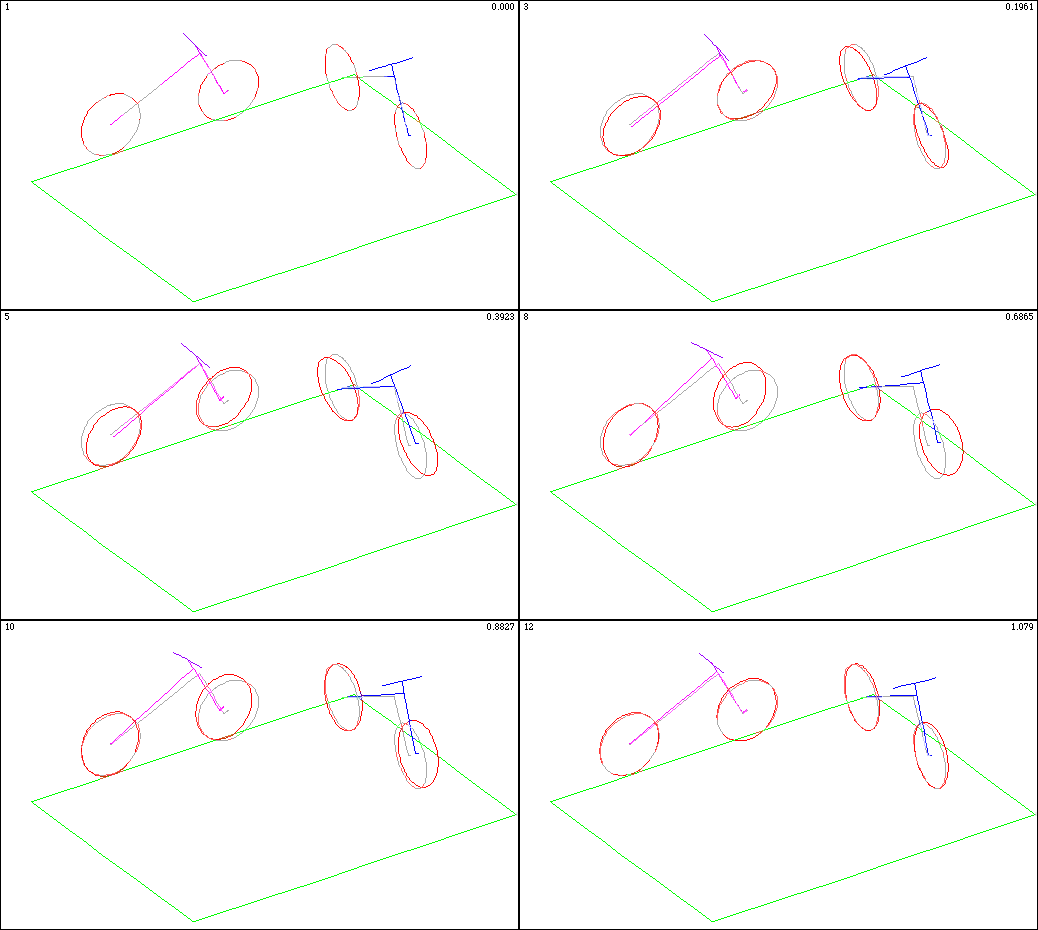
Many Maxers complain of wobbles and a high speed weave ...here are some hints on determining the source:
Front steering head bearings being loose will usually cause a
higher frequency wobble of about 6-10 cycles per second (CPS),
whereas slower weaves around 2-4 CPS can be traced to frame or
swingarm flexing. (see full article for
full explanation on cause and effect)
The Vmax front end HAS to be tightened
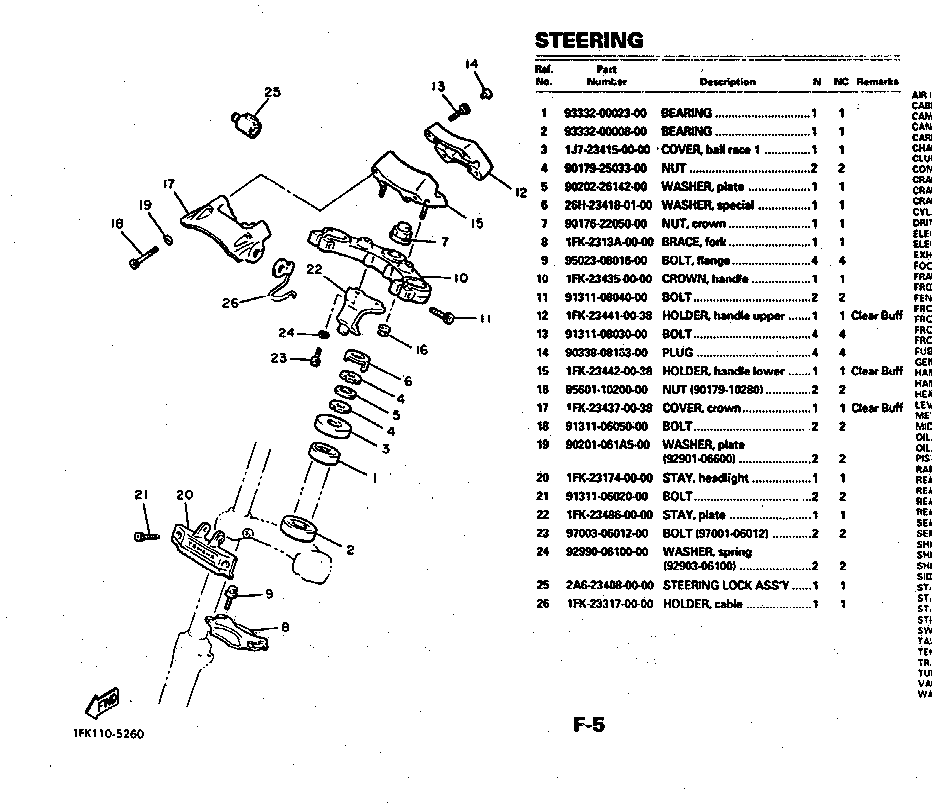
up(steering head nuts #4 on the diagram) until the forks softly
fall to rest on the stop with minimal bounce, but no bind through
the travel. You will kind of get a feel for this as you go along.
Then place the second nut with the flat side down on the first
one, and tighten securely. THEN put the rubber washer on
folllowed by the clip, tighten everything back up, and VOILA, new
feel in your bike, and no headshake if done right. (note: the
manual says to tighten the ring nut to 36 ft-lbs, loosen and then
retighten to 2.2 ft-lbs with "do not over -tightening"
(sic). As an option, leave the nut, rubber washer, nut
configuration and tighten the bottom nut so the forks fall gently
to either side without binding. If it sticks or you feel a notch
or catch as you rotate the forks side to side you have it too
tight. Too tight will cause excessive wear and a slow speed weave
(the front wheel won't be able to self correct to maintain a
straight line).
Detailed instructions on the Furbur Fix can be found here
There are two issues to think about.
1. Increasing the bearing preload.
2. Improving the strength of the top triple clamp seat.
I will address #2. In stock configuration the triple clamp
rests on the top nut assembly which "floats" on the
threads. The lock retainer does little except maintain
bearing torque. Unfortunately it does not stop rotating
movement of the nut (and the top triple clamp that is resting on
it) It allows slight movement when you hit a bump because
the whole assembly slightly moves (rotates) on the threads.
By removing the rubber washer and installing a metal washer and
tightening the hell out of the two nuts you now have a
"rigid" assembly (no longer floating) that the
triple clamp rests on. This makes a much stiffer
arrangement. If you skip the metal washer, on most Maxes
the triple clamp will seat on the small taper of the
steering shaft, missing the larger seat area of the
"rigid" nut assembly.
Done with washer, when you tighten the top triple clamp, you
now have 3 nuts all jammed together on the shaft. This is a
much more sturdy system. Hope this helps all who are
working on the front end. --
................................................................
Paul Sayegh
V-Max Technical List Administrator
VMOA Northwest Director
V-Max web page http://www.sayegh.org/tips.htm
Easy Handling Mods - Roy Richards
The easiest and least expensive way to improve the flickability of the bike while improving the suspension is to take apart the front end. Install lowering blocks ($15 from PCW), Progressive springs ($50), Gold valve emulators ($125), and then bolt on a fork brace ($90). This will lower the front end 1.3", Shorten the travel, Increase the slider overlap, stiffen it, improve the damping characteristics, and change the working Rake and Trail. Generally it will make it steer much quicker and feel more connected to the road. Then put on a quality rear shock of stock or longer length (quickening things up even more) brace the frame and Voila! ...Feels like a new bike.
Benefits
of Solid Motor Mounts -
Roy Richards
I thought I would give everyone some feedback on the PCW solid mount installation I
just completed before my trip to Deals Gap. Up until this point
my bike had the front end lowered, progressive springs, gold
valve emulators and a fork brace. It also has a braced swingarm,
progressive 418 shocks and furbur frame braces. A Metzeler
18055ZR-17 rear tire and matching 18" front radial complete
the package.
Although the bike handled wonderfully for a max the one annoying trait I couldnt vanquish was the high speed weave under your but in fast sweepers. It was much better with all the changes, but still not gone. Also it would sometimes waggle a bit when shutting down hard going into a corner.
The solid mounts have totally eliminated all that at last. And although I thought it was pretty solid in triple digits before it is rock solid now, feels like a good sportbike frame is under it. The stiffening job provided by the mounts is excellent.
The most amazing thing is that I can find no discernable difference in the vibration level. Maybe a little when you really wind it up, but not much and nowhere does it even begin to become annoying.
The only drawback to the mounts is that they were a bear to put in. I had to drop the exhaust and the swingarm, as well as loosening up the radiator. I had half the bike apart to get in the rear ones.
I would reccomend these to anyone looking for improved handling.
(I second the recommendation. I installed Delrin mounts from www.RMSportMax.com and was impressed with change and how well the bike now responds. The mirrors are fuzzy above 5K rpm but a rubber o-ring as a washer helps a little.- TH)
... Ohlins can be bought in this country (U.S.A) from Parts Unlimited, one of the largest wholesale/distributors in the USA, and selling to dealers only. Retail price here is $670. Another option would be the Works Performance Pro Racers, with fully adjustable damping externally. Retail over here is about $650. They work superbly, as well. I'm using Works Perf. Street Trackers(billet bodies) on my 85 Max and they have reduced shaft-effect over 50% , give a nice ride, and improve the handling a bunch. Clint
Ok I'll answer the most talked about question concerning frame bracing. It is true if you put a vmax on a dyno you can measure the engine twisting around an 1" within its engine rubber mounts with a slight twist in frame to the right as sitting on it. On a stock vmax this is not a great concern for Yamaha engineered it this way for low vibration, confront and life of gears, drive train components etc. The engine will twist from the left aft lower side upwards, right front top downwards. This motion will move the bike adversely to direction driven.
A long time ago one of my friends on a chain drive V-MAX on high amounts of NOS had his chain come over the front sprocket causing massive collateral damage and almost lost his life. After replacing the engine back to the previous modified condition he ran the max on the dyno. What he found out was that under heavy loads, besides the frame twisting hard to the right the engine twisted about (in his words over an inch) within the engine mounts.
The fix to his high performance problem was installing solid aluminum motor mounts and beef welding braces in structurally deficient areas. The frame braces will help prevent frame twist if installed correctly, mounted, top aft right side to lower front right. This will take care of allot of the twist of the frame and give better on-off throttle control of bike. Solid mounts should only be used if running a chain drive high out put engine, or you just want to stiffen your max up. The reason the solid mounts really don't need to be installed on the stock drive shaft bikes is because the spline shaft drive really isn't affected due to its flex characteristic design.
If you want to frame brace a little for your modified max you can install braces in critical load areas thus giving much stability support. With the seat off looking at the 2 upper aft support arms install a 1" brace 12" forward across frame. Others such areas can also gain from this extra support. Remember one thing about frame bracing, when you try to alter the normal flex of the frame from the design specifications of the frame structure, you will change the stress points. You have created "new" stress point on the frame located at each of its frame brace connections. Make sure you periodically inspect the frame brace support welds and welded points close to these areas to ensure structural cracks from the new stress point have not occurred.
Torqueing S/A bearings - Paul Sayegh
If you have ever torqued your swingarm bearings, you know how spongy it feels when you start to tighten the swingarm pins. Part of the reason is because the driveshaft tubes in the u-joint area goes "egg-shape" as you tighten it. I know what you all are thinking.......Does this happen in the turns? Good question. I don't know. I did however machine a 2" wide sleeve about a 1/8 thick and pressed and welded it in the inside of the tube in the centerline of the swingarm pins. It is noticeably less spongy and requires less turn on the torque wrench to achieve specified torque.

Home