| Name | Anders Bratalien Pedersen |
| Birth | 5 Oct 1838, Braatelien Farm, Sigdal, Buskerud, Norge |
| Death | 27 Dec 1919, Rothsay MN Age: 81 |
| Burial | Hamar, Rothsay, MN |
| Occupation | Store Owner In Rothsay MN - Skredder In Norway |
| Religion | Lutheran |
| Father | Peder Erickson Solumsmoen (1806-1881) |
| Mother | Berte Kristoffersd Ostby (1806-1865) |
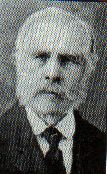
Anders B. Pedersen, proprietor of one of the finest farms of Wilkin county, resides in Rothsay, his farm lying within the corporate limits of that village. He is a man of wide experience and has prospered financially and has gained a high station as a business man and citizen.
Mr. Pedersen was born in Sigdahl, Norway, in 1838, where his father was engaged in farming. The parents spent their lives in Norway. Our subject was reared on a farm and as his parents were not in easy circumstances he was early obliged to earn his own way. He served three years as an apprentice and learned the tailor's trade and then went to Christiania and served in the army artillery and spent two years in the regular army. He then returned to his home and followed tailoring and also engaged in farming, remaining there for about eight years. He came to America in 1870, landing in Quebec, and he came direct to Wisconsin, and later to St. Paul, where he lived ten years. He followed his trade there until the fall of 1879 and then bought a lot in Rothsay and erected a building, bringing the first lumber to the town, when the railroad was but graded. He opened a general merchandise store the same fall and the postoffice was then established and he was appointed the first postmaster. His family joined him in Rothsay in 1880. He began in a small store with a small stock and continued in this business until 1891, building up a good business. In 1889 he engaged in manfacturing a patent razor sharpener, and was connected with this factory at Fergus Falls for one year, when the business was moved to Duluth, and the firm was incorporated. He later sold his share of stock and withdrew from the company. He now devotyes his attention to his farm, and owns two hundred and forty acres of land in Rothsay. He has good buildings and a fine grove on the place and has one of the best farms of the locality.
Mr. Pedersen was married in St. Paul to Miss Jorgen Watnaas, a native of Norway. Five children have been born of this marriage, two of whom are now living, namely; Selina, attending school; and Alice. Mr. Pedersen has held numerous local offices and is president of the village board and county commissioner of Wilkin county. He votes independent of party and lends his influence for good government and the upbuilding of the better interests of the community where he resides.
Compendum of History and Biography of Central and Northern Minnesota - Published in 1904. page 450.
A Greeting from A.B. Pedersen:
The Sigdalslaag thinks it would be nice to have a little writing about our own members, but not to take anything away from the Sigdal's Saga or area histories. No, it is to be called a 'year book', and contain short biographies and pictures of the members who are willing to contribute. What ever you request will be considered.
To make a yearbook interesting in the future, whoever is able should contribute stories, telling about area folks near by. A book can be a bond between members. I will take the first step mainly to show that it does not need to be fancy, so that each one can see that he or she can do as well, or even better!
I will now, in my humble way, take it on myself to reflect the thoughts and impressions of homeward bound Sigdolers, when, after 25 years or more of enjoying this land's big ranges, they return to walk on the ground where as children they first learned about our world. Since I think that most people's feelings at such an occasion are somewhat alike, I will use my own experience as an example. I hope I will hear that you, if you have been back to the old place, felt the same.
When one takes the train from Drammen, the first impression of the trip is that what we used to call braod acres have shrunk together. They have become just small strips along the river where the woods don't prevail. Think back about the landscape at Aamot, about those steep Haugfoss hills, and the hills all through Sigdal. As Nils Haugen once said, "The cows made the roads through Sigdal." It wasn't only in Sigdal. In the old days in Norway the roads followed the high places over the whole land. The reason was mostly to get the road closer to the buildings of the bigger farms, and those were most often on the highest point of the farm. Now we have a new road from Aamot to Eggedal, which is much more level. We can get in the cart at Aamot and don't have to get off on the steep hills to make it lighter for the horse, like we did in olden days.
At first I went no farther than Kolsrud where I crossed the bridge on the Grenskogen road. It was there my thoughts began to gather about the places I tromped around when I was young. I had mixed feelings. They mostly were very happy, although bad ones were hard to hold back. There! I am passing by the saw mill where my good friend Ole lived. There I had many good times but also some arguing and bad feelings.
I have come to Grimelven and I see "the hole" where, as little boys, we used to go fishing for trout during strong rain showers. The more it rained the better the trout bit the hook. It was only after the water became stirred with mud that they would bite. We stood for hours entirely soaked to the skin, the old as well as the young. Sometimes we would pull up one, or possibly up to a half dozen, small trout. There were seldom many, often none. Nevertheless we kept on until an older man, Kristoffer Pladsen, spit a big was into the water and swore. He said, "No, I guess we give up." He pulled his pole up over his shoulder and left. Then we smaller boys went too. We knew Kristoffer was an avid fisherman.
Now I am at the foot of the steep Naabakke on Grensjordet where as small boys we tramped up and down many times to go to the mill for a sack of meal. In the summer we used a little hand cart and in the winter a little sled; one pulled and the other pushed. If the sack was big, there was a lot of slipping and sliding to get the load home. I must mention that this was before my father could afford a horse. The Braata hills were almost the worst since there was loose sand which was very bad in summer time, but we had to keep going. I do not think the Gren farms are as large now as 25 years ago. I thought it strange that the biggest fields were now divided several times again. I am now closer to where I was born, Braatelien. I felt like I was treading on holy ground, where my cradle had stood, or rather hung. I remembered every hole and ridge in the yard and the stones in the ground which lay at the same place as when we as small boys used them for various purposes. I walk up a little hill by the house where I so often rode my sled. But I must also climb up the ridge where we had so many grand skiing competitions and where many majestic snow angels were made. It is strange that the memories of our childhood seem to be the strongest.
Now I must see if I can find the ruins of all those small houses we made from stone. Time has leveled out the old places, but this flat rock I remember was the place where I first smoked tobacco. My neighbor Steffan and I were supposed to take care of the sheep. Steffen's mother smoked tobacco, and he swiped her pipe and a piece of tobacco. We made a little campfire, cut off some tobacco, and sat taking turns smoking. The thicker the smoke the prouder we were, but in the end we were both lying beside the fire, very dizzy. What become of the sheep or how we came home again, I do not remember.
Such childhood memories come forth by the score and I think of them fondly, but I also have more serious pictures in my mind. So often I think of father and mother. Oh, how hard they worked! And what for? Mostly for the children's sake. There were nine of us in all. It took a lot of strength and will power to keep food on the table for that many mouths, to give us an education and to keep clothes on our bodies. That the whole flock could present itself with honor in the community was a result of their work. As I thought so often, it must have been hard for father, having worked as hard as possible in the woods, to come home and barely sit down when one of the children would notice that his shoe was busted. The child would ask if he could fix it tonight. Mother, after having cut her share in the fields or having torn off leaves into large heavy baskets and carried them home, besides all the other house work, would sit half the night mending clothes so that the children could use them the next day. I wish they were still living so I could honor them in some small way for what they have done for us children. We were just too young to understand at the time. If you have parents still living, or only one of them, you don't know how good you have it. I hope that you will send them a letter or a small gift as a token or remembrance. It doesn't take much to gladden a father's or mother's heart. When I hear about anyone who hasn't written home to father and mother, I think it is unforgivable.
Greetings to all members from Sigdal, Eggedal, and Krodsherad who support and assemble for Sigdalslaget. Make it festive for a long long time to come. Therefore include all our young people. Never think like this: "I will go to the meeting some time." No! Rather say, "We will come as many times as possible", and encourage your acquaintances to do the same. You who have not joined, come next time. We will have a good time. There are way too many who still haven't joined the lag. I hope that most of you will decide to come. Please let this happen. We will happily shake your hand and see your smiling face at our next meeting. Sigdalslag 1914.
Anders B. Pedersen
Rothsay, Minnesota
The founder of the Sigdalslag, which consists of people from Sigdal, Eggedal and Krodsherad, was born October 8, 1838, at Braatelien in Sigdal. His parents were renters and were not rich people, so Anders could not get the higher education which he longed for so much. His parents did as much as possible, but it was too expensive. The common school was for him, as for his eight siblings, the only resort. At that time it was not advanced enough to give a bright student all he was capable of. After confirmation he went to learn tailoring. He went from one family to another, and this was a good school to learn about everyday life. After he had undergone his apprenticeship, he went to Kristiania to be trained in his craft.
He had hoped for the opportunity to further his education, and he thought he had found t. He enlisted in the 4th battery of the artillery with the understanding that he could go to the non-commissioned officers school. He believed this because he didn't know that anyone who recruited someone got five dalers for each person he brought in. The commanding officer of the battery wouldn't acknowledge the promise because he had recruited several himself who were expecting it. They had top priority. Pedersen says that it was the biggest disappointment of his life up to that time. After his military service he went back to Sigdal, where, together with his brother, he bought Kvislebraaten. He worked at his craft on the side.
In 1870 he went to America to Pierce County, WIsconsin. After having tried almost all of the worst work which was to be had in this country, he started tailoring in St. Paul. In 1872 he married Miss J. O. Watnaas. She had come from Norway that year as planned, because they were engaged in Norway.
In 1879 he took Horace Greeley's advice, "Go west, young man." He went to Wilkin County. The extension of the Great Northern Railroad had come, and there was a station laid out. A town had been platted on Kristian Tanberg's property. Pedersen began a store there. He was the first to bring building material to what now is the village of Rothsay. He was appointed postmaster and worked under both Republican and Democractic administrations. Later he went into manufacturing in Fergus Falls and then in Duluth, where several bankers had shares. Because of the panic of 1891 and 1892, it went bankrupt. That stopped the business, so Pedersen sold out at a loss and went back to Rothsay. He soon sold his business there. He went to his farm, which also is in the village corporation. Since then he has worked on his farm, but in the later years he had a renter.
Pedersen and his wife have had five children. Three died at a young age. Their oldest daughter, who was married to Dr. Serkland, died on Christmas Eve in 1912, leaving her husband and three children. Their youngest daughter, Alice, is married to high school teacher, C.W. Rand.
Pedersen tried to be an author. He wrote a book, which he named Mother Hanson. He also has been very involved in local offices. In 1890 he was the census taker in his district. He was county commissioner for Wilkin County for 12 years. He has made many contributions to political matters in the Independent movement. He says himself that he could be in a much better financial position if he had followed along and obeyed the party whip. But he wasn't cut from that kind of cloth.
He got his first inspiration to organize a bygdelag after he had been back in Norway in 1895, where one or another asked if he had met any of their relatives or acquaintances. When, in most instances he had to answer in the negative, he thought, "If we had a Sigdalslag stevne, I would have met many of them." Now we have the Sigdalslag, so we will know a little more about each other. Sigdalslag 1914.
Anders B. Pedersen
Anders B. Pedersen died December 27, 1919. He suffered a stroke on August 25, 1916. The subsequent lameness on his left side caused him to lie in his sick bed for over three years. Most of that time he was sound of mind. He read and wrote a lot. We find many of his good thoughts in the lag's first book. During that long illness he thought about establishing a fund for Sigdal's old people's home. He had the happiness to see that fund grow to a significant amount. The Sigdalslag and the old people's home were always in his thoughts and he offered both time and money for these causes. The funeral took place at the home and at Hamar Church in Rothsay, Minnesota, January 3, 1920. Sigdalslag 1920.
The Rothsay Commercial Club was chartered in 1903 with the following members: A E Anderson, E G Anderson, Theo K. Brye, S C Bowman, W J Breen, F N Burrell, G M Cowie, O H Ekeren, J L Flynn, M H Feiring, E Gunderson, W C Huff, H S Kjelsven, Carl Knudson, August Larson, O H Lunder, Olaf Lein, John A Melby, A B Pedersen, K K Peterson, Herman Rudh, J C Serkland, H G Stordock, E C Schroder, A A Wigdahl, Anton Wester, J D Weyhrauch, W Winter. In 1906 the following were added: O G Felland, O E Juvrud, Charles Larson, Gust Lee, O O Tweeten. In 1908 added: O L Johnson, Emil Brusven, L A Olstad, P E Rutter, Fred Kintigh, H M Brusven, T O Juvrud, O H Lunder, G A Jorve, Ole A Haga. 1909 added: J D Weyhrauch, A L Wood, Ed Kellgren, Frank Sha, Julius Spidahl, John Peterson, Ralph Higgins, T. Nelson.
A. B. Pedersen opened a general store in Rothsay in 1879 and operated it until 1880 when he sold it to T. K. Brye in 1891 who operated it himself and later with his son-in-law Edwin A. Skugrud.
A. B. Pedersen was the first postmaster in Rothsay from 1879-1892.
| 1 | J�ran Olsd V�tnas |
| Birth | 10 Jun 1843, Vatnaas Farm, Sigdal, Buskerud, Norge |
| Death | 12 Jun 1926, Rothsay MN Age: 83 |
| Burial | Hamar, Rothsay, MN? |
| Religion | Lutheran |
| Father | Ole Gulsen V�tnas (1809-1888) |
| Mother | Sigrid Olsd Brandsrud (1818-1905) |
| Marriage | 1873, St. Paul MN |
| Children | Peder Georg (1873-1874) |
| Berthe Seline (1875-1912) | |
| Oscar Edward (1877-1877) | |
| Petra Olava (1879-1882) | |
| Ida Alice (1884-1953) |