| Name | Jøran Olsd Våtnas |
| Birth | 10 Jun 1843, Vatnaas Farm, Sigdal, Buskerud, Norge |
| Death | 12 Jun 1926, Rothsay MN Age: 83 |
| Burial | Hamar, Rothsay, MN? |
| Religion | Lutheran |
| Father | Ole Gulsen Våtnas (1809-1888) |
| Mother | Sigrid Olsd Brandsrud (1818-1905) |
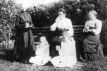
ANDERS B. PEDERSEN
I did not remain true to my resolution to continue living in St. Paul and I took to heart Horace Greeley's well-known advice: "Young man, go west." I began to speculate about going farther northwest and starting as a merchant.
I began now to try to learn where there might be a place that would be a prospect for starting a store, and as in 1879 I had correspondence with Tollef Gronseth in Wilkin County, Minnesota, I learned from him that a new railroad was being built from Fergus Falls to Barnesville and that there was to be a station in his where he thought there would be a good opportunity for a Norwegian to begin business. Before long I decided to go there to investigate. My wife would have preferred that we remain in St. Paul, but she did not protest a plan to move because we thought it would be better for my health if I could get away from a sedentary life, and therefore we made the decision to leave the city.
In the fall of 1879 I went to investigate the place that Tollef Gronseth had described to me and it was to him that I went to get information and directions to find the railroad station. Grading was almost finished for the new railroad track, then the St. Paul, Minneapolis and Manitoba, now the Great Northern from Fergus Falls to Barnesville and a station was planned on Christ Tanberg's farm, wherefore it was thought at the time that the place would be called Tanberg. Application for this name had already been made to the Postal Department. But the railroad company won by applying the name of one of their stockholders.
In order to get there I went by another line of the same railroad from St. Paul via Breckenrige and Barnesville. My journey ended at Manston, where I got a ride to the Gronseth home with a farmer. He took me to the place where it was planned the station would be and where Christ Tanberg had planned the town, laying out house lots and streets. Some lots had already been bought but I was able to get two of them that I preferred, on the corner directly across from the railroad depot. At the same time I set up a petition for a post office with myself as postmaster. Mr. Gronseth took that around and got signatures after I had gone home. The petition was granted, although John Jacobson from Oscar Township already had sent in a petition, but if his had been granted, the post office would have been away from the railroad. I also made an agreement with a carpenter, Martin Heggen, to build a store building, for which when I had returned home I bought materials in Minneapolis. I was the first who shipped lumber to the village of Rothsay, but before I returned several buildings were under construction.
I again began to work in St. Paul, while at the same time I arranged and made plans for my business in the new area. Pedersen was a tailor in the establishment of George Palmes in St. Paul. We decided that my wife should remain in St. Paul the first winter until we could arrange living quarters, and fortunate that was, for this winter became a terrible one for people out on the prairie as well as for those in many small towns and hamlets, and it became for me a trial to prove what one can endure in time of need.
At the beginning the first uncertainty was about getting enough goods for my store, for I really didn't have the money to supply what one calls a "general store." I planned to have groceries, hardware, dry goods, boots and shoes and notions. I did not have any problem with getting credit, for I had lived in St. Paul a long time and my employer, George Palmes, gave me a good recommendation, as did my cousin, Mr. O.L. Brevig, who was a merchant in Hancock, Minnesota. "Let him have all he wants," was his order to the wholesale business.
While I now again worked, waiting for word that my building had been finished, I also ordered goods, et., and prepared to leave again in the middle of November. My family would remain in St. Paul until spring. I sent my goods to Manston, 10 miles from Rothsay. From that place the goods had to be hauled by team, for the railroad to Rothsay was not completed. This arrangement was harmful for my business as another store had been built by A.A. Baatten and he had ordered his goods sent to Fergus Falls from where it was practical to use horses to brings goods to nearby places. But it was often not practical to use horses on the flats near Manston because of heavy snowstorms. The result was that I was in my store with far from enough goods, while my rival got his supplies, and as a result had the most customers.
In Manston I became acquainted with Venoss and Iverson who had a store there and also with H.G. Stordock, who had a farm in the neighborhood and also was a wheat buyer in Manston. One and all, these were opposed to having a business place in Rothsay, for, as I now understand, they saw that that would harm Manston, for most of their customers were from the Rothsay neighborhood where most of the pioneers had settled. Therefore, they made me several offers to trade my property in Rothsay for theirs in Manston. But even in my inexperience I could understand that what for the moment seemed a good offer would prove a loss in the future.
As earlier mentioned, I returned to Rothsay again in mid-November 1879. Because the weather then began to be very stormy with snow and severe cold, it was not comfortable to establish myself in my new store, which was not quite finished. For example, a board was missing along the whole length of the ceiling, allowing the warm air to escape.
I had made arrangements ahead of time with O.L. Brevig to have him help me put prices on goods and to advise me about what price this and that must sell for when my first shipment of stock arrived. On a certain day I was to meet him in Manston and take him over to Rothsay. I had Tollef Gronseth as driver with me. He was well acquainted with the area and familiar with the roads, something that was important, for the train arrived late in the day and it would be dark before we could arrive at our destination. It is very easy to make a mistake about roads out in the open flat country, which at that time had few buildings, so that for several miles there was nothing to see except the earth and sky. It was at twilight that we left Manston and a light snow began to fall, the first snow of the winter. But we sat feeling safe and talking, for we had faith in Mr. Gronseth's knowledge of the landscape.
While we were talking Gronseth interrupted to say, "Now I've got away from the road." We got out and searched but we could find no road. Then Gronseth said, "Don't hunt any more; I'm so well acquainted that I'll go by direction."
We got into the sled again. Gronseth drove and drove but found no road, only smooth marshes and rough land while the snow increased. After we had been driving for several hours we were prepared to spend the night outdoors, and we consoled ourselves with the thought that it was not cold enough so that we would freeze to death. After about four hours of driving we came to some hay stacks and this was a great comfort. For one thing, we could not be far from a settlement, and for another, if we had to remain out, we could burrow into the hay and the horses could get something to eat.
"I know almost everyone who has put up hay in this area. Hold the horses and I will go to see if I can get my bearings," said Gronseth and he started out.
He was gone a long time and then came back to say that he had learned nothing. He went out once more with the same results. Then after a long discussion with us he went a third time. Had we paid attention to the direction of the wind before we left Manston, we would have been able to get along better, but each of us had his own idea about that matter and therefore it could not be a guide.
When Tollef came back the third time he exclaimed: "I'm a tosk (fool), I have put up this hay."
Now he knew the direction to his home and we arrived there, well satisfied to exchange the naked prairie for the warm house, food and bed. And it was fortunate, for when we awakened the next morning there was a real blizzard and it was very cold, so that it was doubtful if we could have survived if we had had to be outside all night. The next day Gronseth took us to Rothsay where Brevig and I began to set the stock in order while the snowstorm increased its fury. I ate my meals at Christ Tanberg's home, probably 30 to 40 roads away, but I slept in the store, and there Mr. Brevig was satisfied to be.
But when we were going out to the noon meal the second day, Mr. Brevig said: "I know more about such storms than you do, and I would rather be without a meal than go out in such weather." So that was our decision. But we didn't miss only that meal; we remained in the store for two whole days before we dared venture as far as our eating place, and we depended upon what we could find to eat among the groceries. All that was ready to eat was soda crackers and cheese.
After having finished the work with the stock of grocery goods, Brevig went home and in a few days I hired a boy, O.E. Juvrud, to work as clerk. He, like me, was new in the merchandise business. Except for some intervals, we had that winter one snowstorm after another with temperatures as much as 40 degrees below zero. I have several memories of the extreme cold and the snow and storms in this winter, which was the most severe since I came to this country right up to the present time 1903. I shall permit myself to record a few of my recollections of the weather even if for the present day reader they will seem quite incredible.
We must on bad days wear our overcoats in the store in spite of keeping up a good fire in the stove. And it was not enough that we wore overcoats during the day; we slept in them at night with several quilts over us. That winter I think I lost quite a bit of my memory because of icy frost. This is what happened: We slept in a bed near the stove, and when we went to bed we turned the bed toward the stove so that the head faced the back door of the store. Ole could sleep with his head under the covers but I have never been able to do that. However, in the circumstances I wore a cap. I awakened one night because I was freezing and found that the door near us had blown open, and as the temperature was 38 degrees below zero, it is not strange that my head felt as if it were full of ice, for my cap had fallen off. I felt the after-effects a long time and believe that my brain was permanently debilitated.
From my store to the depot the distance was probably six or seven rods, and in walking that distance it happened that someone occasionally froze nose or ears.
But the queerest incident that I can tell, one which I would not have believed if someone had told it to me, showed what the temperature in my store was at times. On New Year's morning, 1880, the coldest day of that winter, my quicksilver thermometer had frozen, but I think the temperature was 40 to 50 degrees below zero. When I got up that morning I made a red-hot fire in the stove and then in order to write a letter I thawed the ink which had frozen solid in spite of standing under the stove during the night. When this had been done I took a book and put my paper upon it, holding it in my left hand as close to the stove as possible so that the cold would not stiffen my fingers. I began to write but could not get more than a word or two on the paper at each attempt. I thought: "What can be the matter with my pen?" Upon investigating, I found that I had a little lump of ice on the pen point. I then held the pen in the hot flue and thawed the frozen point, and in this way I continued till my letter was ready. After I had finished my writing I went to O.T. Nordmarkens, where at that time I ate my meals. On weekdays they usually brought the food to me at the store, but now on New Year's Day I was going to have hot food. When it was brought to me it often froze on the way. The distance to go was about three-fourths of a mile. Many times I walked backwards for long distances because the cold wind seemed to take my breath away if I faced directly into it. (These notes were completed by Alice Serkland).
Twixt Hill and Prairie - A Century of Challenge in the Rothsay, Minnesota, Area, by Gary Wigdahl, 1982
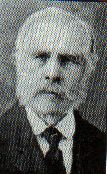
| 1 | Anders Bratalien Pedersen |
| Birth | 5 Oct 1838, Braatelien Farm, Sigdal, Buskerud, Norge |
| Death | 27 Dec 1919, Rothsay MN Age: 81 |
| Burial | Hamar, Rothsay, MN |
| Occupation | Store Owner In Rothsay MN - Skredder In Norway |
| Religion | Lutheran |
| Father | Peder Erickson Solumsmoen (1806-1881) |
| Mother | Berte Kristoffersd Ostby (1806-1865) |
| Marriage | 1873, St. Paul MN |
| Children | Peder Georg (1873-1874) |
| Berthe Seline (1875-1912) | |
| Oscar Edward (1877-1877) | |
| Petra Olava (1879-1882) | |
| Ida Alice (1884-1953) |