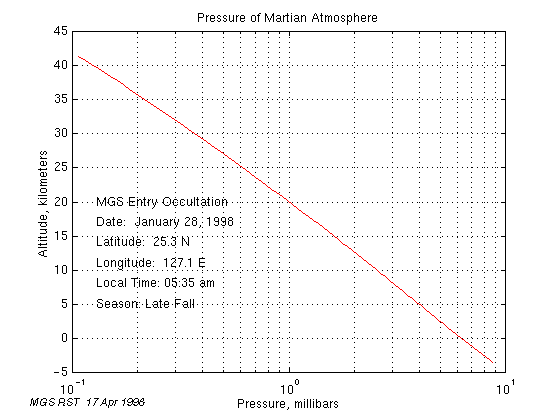
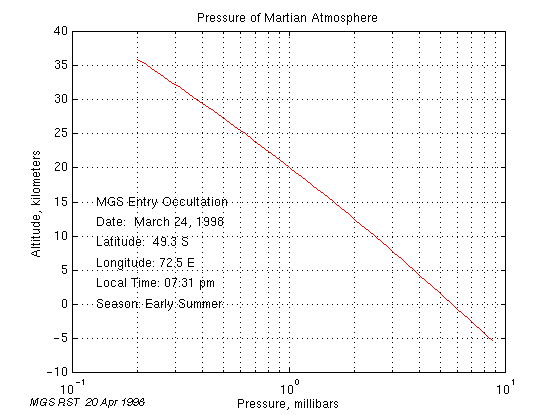
Image taken from Catling, 1998.
Late Fall Atmosphereic Pressure
Profile
Early Summer Atmosphereic
Pressure Profile
The graphs show that the Martian
atmosphere is about forty-five kilometers tall when the pressure reaches
zero. A similar graph of Earth's atmosphere would show a height of
about thirty-six kilometers at nearly zero pressure (Lutgens and Tarbuck,
1998).
Winds on Mars are menifested
by differences in air pressure, as is also the case for Earth. When
an area of low pressure is created, surface wind will blow into this area
from the surrounding area. Wind speeds on Mars can reach over thirty
meters per second (67 miles per hour). When compared to top wind
speeds on Earth, this number seems low. One must be aware of the
fact that Mars does not have hurricanes or tornados. The atmospheric
pressure on Mars is much less than on Earth, thus a pressure gradient on
Mars would lend itself to creating less energetic winds. Follow this
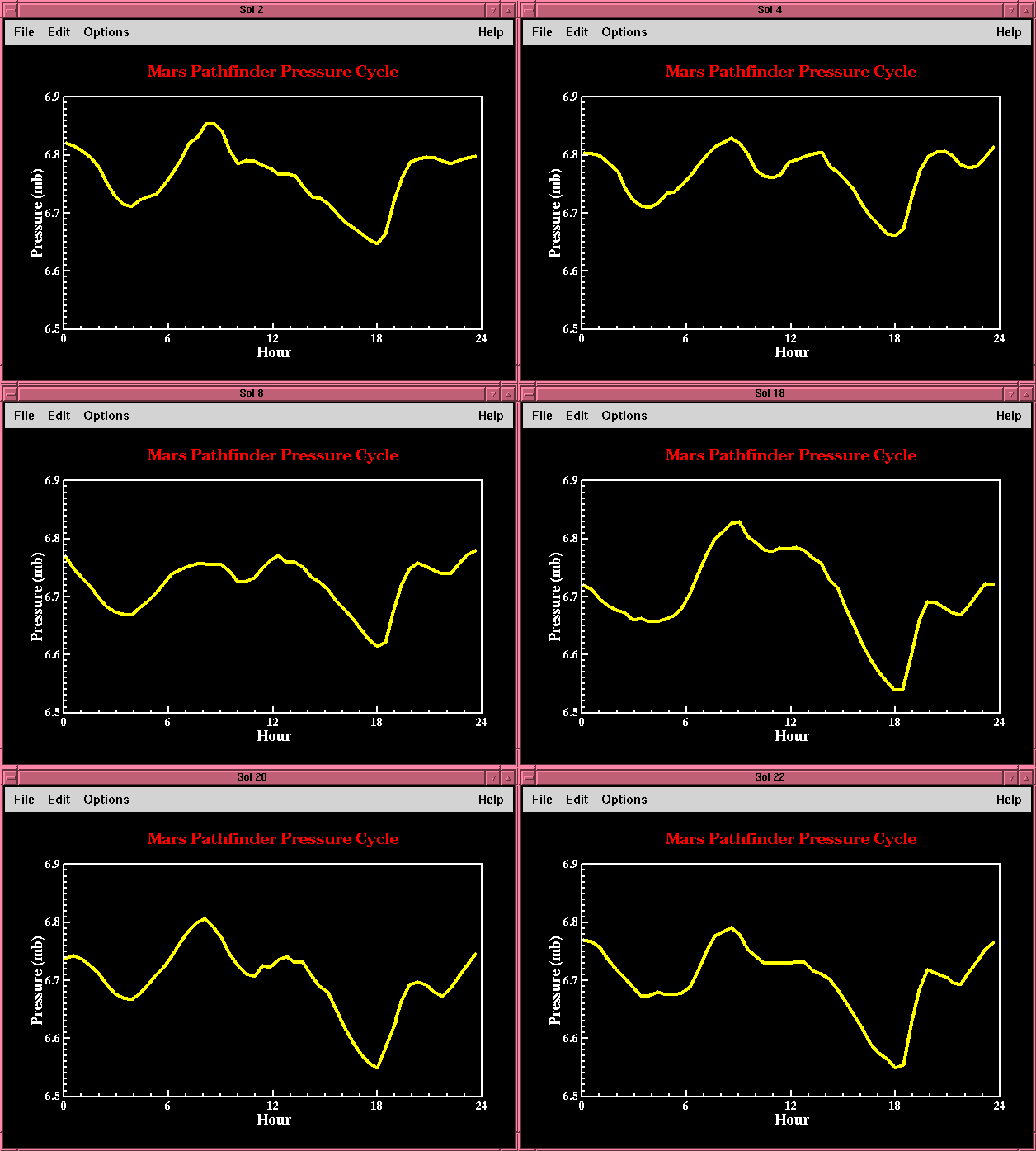
link to view a movie of Mars pressure variation
over time (Mars Pathfinder, 1998). The movie shows that pressure
changes over time. Low pressure system passage must be common on
the planet's surface.
The strongest winds on Mars
arise from the temperate zones. This location is the origin of Mars'
most energetic form of weather phenomenon: the global dust storm.
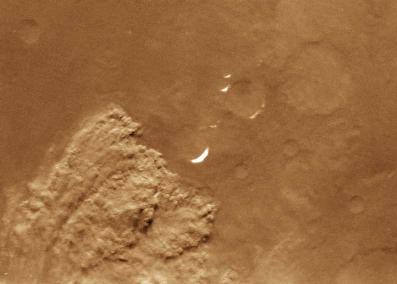
The image below shows a well developed dust storm dominating the lower
left of the picture. This storm has not yet reached global status.
Image taken from Catling, 1998.
It is interesting to note that the dust storm shows no sign of cyclonic rotation. This leeds one to speculate that on Mars, there is very little influence from the coriolis effect. Also, Martian dust storms occur during perihelion when the surface temperature is higher. Since temperature is the driving force of winds via pressure gradients, this seems to follow reason.