|
Location
My discussion of location will be limited to the discussion of the physical locations where it may be easier for the disabled person to fish, not where the fish may be located. In the links section, I have tried to gather links that contain information on the ideal places to look for fish in various situations. Unfortunately for us disabled folks, the ideal places for fish are not necessarily the ideal places for disabled people. There are still several places, though, that can produce good fishing action and good fish for us. While driving by lakes and rivers, keep a sharp eye out and you may be surprised at how many areas you’ll find. I ran across some of my favorite places just by following gravel roads that I knew crossed rivers. An added bonus of looking for fishing holes is that it gives you an excuse to get out of the house and go see some scenery. Even if you don’t find a new hole, the hour or two spent away from the house can relieve a month’s worth of cabin fever. Then again, depending on who you have to answer to, you may have to come up with an excuse for getting out of the house and then "accidentally" wind up on some road looking for a spot.
Look, Look, Look
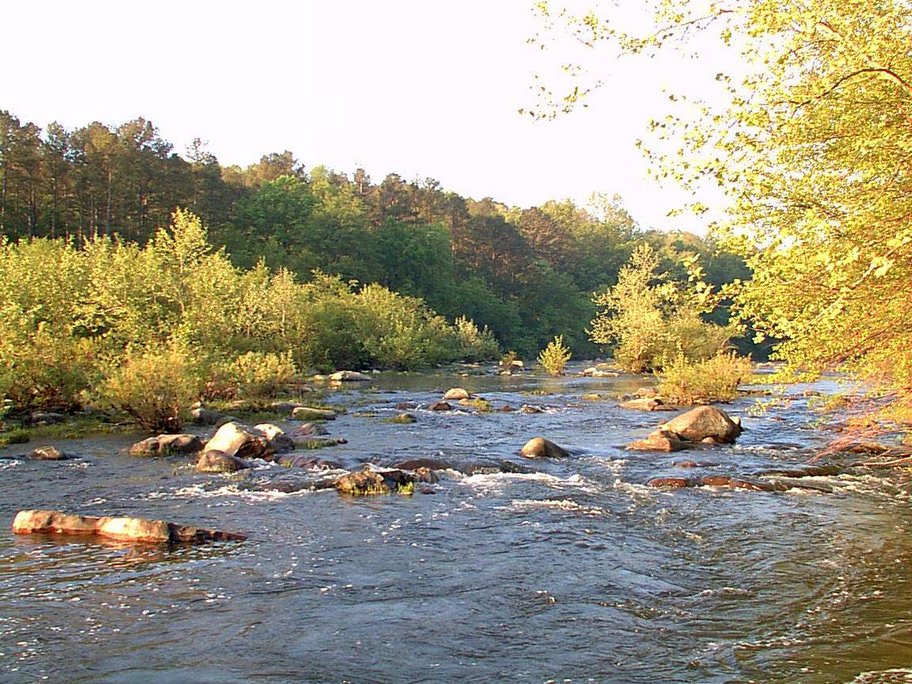
Another good spot to fish is along lake shores, especially around boat ramps. This may seem obvious, but many people do not realize how many accessible areas there are around many lakes. Since most lakes have numerous areas with gently sloping shorelines, access becomes fairly easy. If near a boat ramp, parking is usually not a problem. You should go look around lakes in you area and see where you can get to. With help from an able-body or two, there is no reason why you can’t enjoy some good shore fishing at just about any lake. Don’t rule out pay lakes in your area. Most are built so that you can fish all around them which means that they are relatively flat all around. It may even be possible to talk the operator into letting you drive to a fishing spot if you have a disability. If they let you do this, remember to tread lightly and not mess up the landscape. You won't learn much about the details of catching fish at a pay lake, but the pleasure of catching them often outweighs this disadvantage. Rivers are often a little harder to get to and get around near. With floods changing the shoreline, you can’t even count on a spot from one year to the next. Of course, you might be lucky and be near one of those rivers that rarely flood, but they don’t exist around here. Still, some rivers have places that have been there for eons and are known by everybody in the county. These spots can be good for the disabled angler due to the fact that they usually have acquired well defined roads and paths leading to them. An able-body is still a necessity, however. Another good spot to look on rivers is around bridges. While not visible to someone casually looking, a sharp eye will often see that areas around bridges have many signs of fishing activity. These can usually be accessed with the help of some able-bodies. Don’t worry if areas such as these show lots of signs of fishermen. Fish move around and just because an area has been fished a lot doesn’t mean there isn’t anything more to catch. These areas became popular because they produce fish. Easy access isn’t enough to keep fishermen returning. On a river nearby, catfishers park at a spot that is only marginal for fishing. They park there, though, because it is the trailhead for a path that leads you along for a 15 minute walk to a better spot. I made that trek several times loaded down with all the gear, and believe me, I would have fished that first hole if I thought it was half as good as the distant hole.
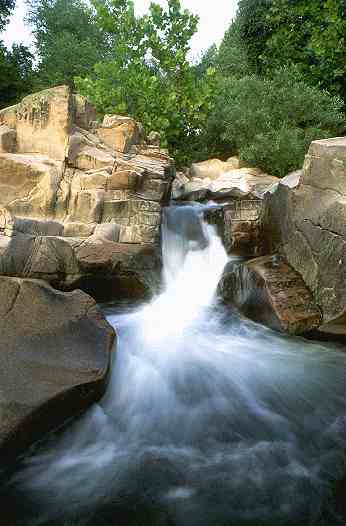
Millstream Gardens Conservation Area, St. Francis River, Madison County, MO Don't get there much anymore
|
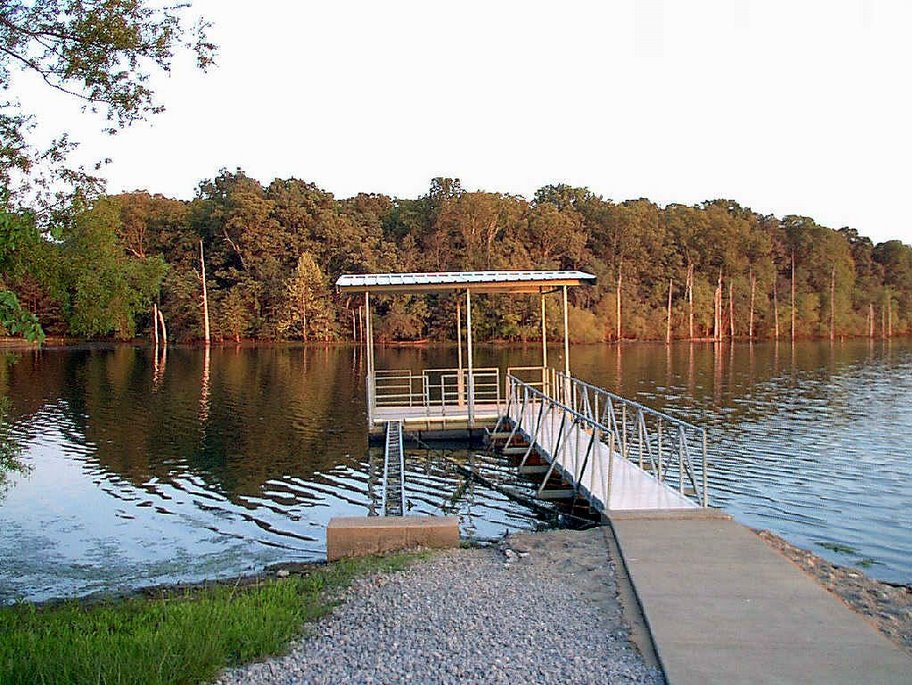 I have already briefly mentioned fishing docks or piers maintained by
conservation departments specifically to enhance access for
handicapped
individuals. These should not be overlooked and if you're just starting
out
fishing, these are an excellent spot to start. The docks themselves
attract
large numbers of fish and when added to the structures that are often
placed
nearby, the opportunity to spend a productive afternoon is greatly
enhanced.
They generally have parking close by, with a smooth path leading to the
dock,
greatly helping those confined to wheelchairs and scooters and those
with
balance problems such as myself. The nice, flat platforms lend
themselves very
well to those who have a wheelchair that allows them to
stand. This will
let you combine your daily PT dose with your recreation.
Makes PT much
easier if you can take your mind off of the actual "physical" part.
These are the only locations I would recommend solo fishing for safety
reasons,
although I do suggest that you first check out the site before
committing
yourself. I solo fish occasionally and always look over the setting
before I
decide to fish there. A call to your state’s conservation department
will get
you information on docks throughout your state. Their number can be
found in
rule books that should come with your license or in your phone book
under
"State Government." (By the way, if you do not have a rule book for
your state - get one. A quick trip back to the sporting goods
department at your
"mart" store is all you need do. Most convenience stores that
sell fishing licenses can give you one as well.)
I have already briefly mentioned fishing docks or piers maintained by
conservation departments specifically to enhance access for
handicapped
individuals. These should not be overlooked and if you're just starting
out
fishing, these are an excellent spot to start. The docks themselves
attract
large numbers of fish and when added to the structures that are often
placed
nearby, the opportunity to spend a productive afternoon is greatly
enhanced.
They generally have parking close by, with a smooth path leading to the
dock,
greatly helping those confined to wheelchairs and scooters and those
with
balance problems such as myself. The nice, flat platforms lend
themselves very
well to those who have a wheelchair that allows them to
stand. This will
let you combine your daily PT dose with your recreation.
Makes PT much
easier if you can take your mind off of the actual "physical" part.
These are the only locations I would recommend solo fishing for safety
reasons,
although I do suggest that you first check out the site before
committing
yourself. I solo fish occasionally and always look over the setting
before I
decide to fish there. A call to your state’s conservation department
will get
you information on docks throughout your state. Their number can be
found in
rule books that should come with your license or in your phone book
under
"State Government." (By the way, if you do not have a rule book for
your state - get one. A quick trip back to the sporting goods
department at your
"mart" store is all you need do. Most convenience stores that
sell fishing licenses can give you one as well.)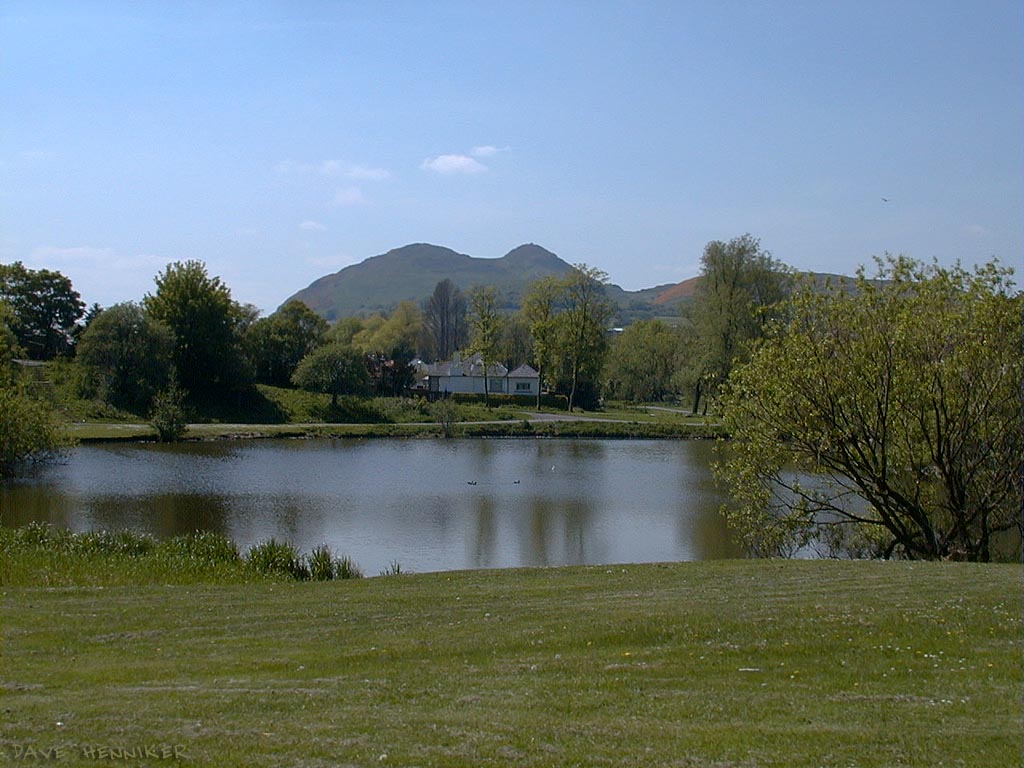 One of the my personal Holy Grails is the private pond. These can
really produce
some nice fish. The drawback is that you must know someone who owns one
or be a
friend of a friend. If you can get to fish on one, though, you’ll be
spoiled in
most cases. Access is usually a piece of cake as the owner has probably
already
worn a road to them with his pickup. As an added bonus, many people
often want
their ponds cleared of bluegill, carp, or catfish that have multiplied
beyond
the owner’s wishes. These are situations that dreams are made of.
Imagine
fishing somewhere where there are so many catfish that they have to be
culled.
Even if they wind up not being of great size, it sure is fun to pull
‘em out
like they’re bluegills. And the only way to find out if someone will
let you
have all this fun is to ask them. Be polite and if they say yes, ask
what special
rules they would like you to follow. Find out what time you can fish,
what
species and sizes you can keep or kill, where to drive, and how many
friends
you can
bring (the fewer the better usually). Be sure to ask if the owner will
join you
and whether he would like a portion of the catch. Follow all rules to
the
letter. It’s the least you can do for the privilege. Keep in
mind, too,
that just because an owner says no this year, it doesn't mean that he
will say
no next year. Just don't make a pest of yourself.
One of the my personal Holy Grails is the private pond. These can
really produce
some nice fish. The drawback is that you must know someone who owns one
or be a
friend of a friend. If you can get to fish on one, though, you’ll be
spoiled in
most cases. Access is usually a piece of cake as the owner has probably
already
worn a road to them with his pickup. As an added bonus, many people
often want
their ponds cleared of bluegill, carp, or catfish that have multiplied
beyond
the owner’s wishes. These are situations that dreams are made of.
Imagine
fishing somewhere where there are so many catfish that they have to be
culled.
Even if they wind up not being of great size, it sure is fun to pull
‘em out
like they’re bluegills. And the only way to find out if someone will
let you
have all this fun is to ask them. Be polite and if they say yes, ask
what special
rules they would like you to follow. Find out what time you can fish,
what
species and sizes you can keep or kill, where to drive, and how many
friends
you can
bring (the fewer the better usually). Be sure to ask if the owner will
join you
and whether he would like a portion of the catch. Follow all rules to
the
letter. It’s the least you can do for the privilege. Keep in
mind, too,
that just because an owner says no this year, it doesn't mean that he
will say
no next year. Just don't make a pest of yourself.