|
Equipment
Popular reels come in four specific types: baitcaster, spinning, spincast, and fly. There are some variations on these themes, a few of which will be discussed below. Rods (poles) come in a bewildering array of lengths, pieces, weights, and purposes, most of which only concern gear hounds and the professionals. And we can never rule out the lowly cane pole, the next step in the evolutionary ladder that began with a stick. We’ll begin with this simplest of all devices.
Cane Poles: Fish Sticks
Spincasting
When looking at spincasts for a disabled fisherman, handle size should play a very important part in the selection process. Ideally, you want two big, oversized grips on a long reel handle. This not only makes it easier to grip, but also increases mechanical advantage slightly. Tiny grips will cramp hands quickly. I have seen oversized handles that can be bought to put on reels, but they don’t cover a lot of reels. Maybe a friend who has some skill with his hands could help if you need larger handles. My Rock II was bought with a good deal of consideration given to the handle size as it was originally bought so that my father could use it. Also, it is important to look at the gear ratio of the reel. Gear ratios in the 5.0:1 or higher (numerically) range will bring in lots of line quickly, but make it harder to bring in a big fish. (Somebody yell at me if I've got that backwards.) Few spincast reels have gears in this range anyhow. Lower gear ratio numbers give you better gearing to bring in fish, but take more handle revolutions to bring in a length of line. Ratios in the 3.5 to 4.5:1 range are a good compromise and most spincast reels I have seen fall into this range. There are reels that have a 1:1 ratio that are made to crank in big fish and that make it an absolute breeze to bring in a five pound bass, but they are big and heavy and not suited to someone with hand problems. The exception to that rule is if you are going to be doing lots of catfishing. One of the principle drawbacks to spincast setups is that they are not very balanced and can fatigue hands quickly if you’re prone to cramps. Mating to a good pole can reduce this. Another drawback is that most spincast reels are set up so the handle is cranked with the right hand. If you cast with your right arm, this means that you will be constantly switching the rod between hands. Recently, though, it has become very common to find reels where the handle can be reversed so that you can cast with your right arm and reel with your left hand. (Unfortunately, my favorite, the Zebco 33, does not do this.) Of course, if you are able to cast with your left arm and reel with your right hand, then any reel will do. Anytime I cast with my left arm, I catch more trees than fish, so I usually switch hands since my spincasts do not have convertible handles.
Spinning
Spinning reels are arguably the most popular reels for bass fishing
enthusiasts
today. They are inherently better balanced than spincasts and baitcasts
due to
the fact that they mount below the rod with most of their weight
directly
beneath your hand. Their spools are not enclosed in any way. When
casting, line
freely plays off the front of the spool resulting in much lower
friction, and
therefore better casting distances, than the other reels. Generally,
spinning
reels are mated to longer poles than are the spincasts, with poles
being
6’6" to 7’ normally, with 8’ and even longer poles used in certain
conditions by the pros. They have no button to press to release the
line. To
cast, you grab the line near the reel with your index finger, pressing
it
between your finger and the rod and then flip a half-circle piece of
wire called
a bail over to the release position with your other hand. During
casting, you
release pressure on your finger at the same time you would press the
button on a
spincast and gently apply pressure again as the bait or lure slows.
When you
turn the reel handle, the bail flips back into position so that line
may be
taken in. Spinning reels vary widely in price and quality, with the
best having
the most balls. Literally. By having ball bearings in reels, they
become much
smoother to cast and reel and also last longer. There seems to be war
right now
between manufacturers with the main goal being to have the highest
number of
ball bearings. More balls, more money. It is possible to buy
inexpensive models,
but those that sell below about $25.00 or so are notoriously difficult
to
manage, though they can still be very durable. My brother has a cheap
one that
despite years of abuse is still going strong. He has broken much more
expensive
ones, in fact. Expect to pay 40 bucks are more for one that will not
frustrate
you to the point that it gets thrown in the water. If you have the
inclination
and the cash, you can easily spend $200 on a top of the line model. I
don’t
own a spinning reel right now, but I’ve been lusting after a D.A.M.
Quick
model that was in the middle 100’s last time I priced it. I don’t
think I’ll be fishing with it anytime soon, or ever, even. Luckily for the disabled angler, spinning reels usually come with generously oversized handles. Some may even be too large. Also, in recent memory, I cannot recall seeing a reel that could not be switched for right or left handed use. The principle drawback of a spinning reel for the disabled person is the very way you must cast it. Some people with totally normal hand function never can learn the proper way to do it. And if you do it wrong, you get what is commonly called "birdnests." This is a pretty way of saying that you get a big ball of line wrapped up into knots around your spool, usually with little bits dangling to the ground. This is the result of backlash, a nasty little condition that has been blamed as the reason that fisherman curse. It is caused by the line coming off the spool going faster than the line that is going through the eyes. The result is the line continues to come off the spool, only now it really has nowhere to go. So it all just has a party. Baitcast reels also have major problems with this. It can be both serious and funny at the same time. My cousin - a diehard spinning reel fan - has thrown his pole into the river when he has had an afternoon full of backlashes. He then swam out and dove for the pole as it was the only one he had at the time. Another drawback is that gear ratios are usually set up for speed, not power, which is why they find favor with bass fishermen, who use the speed to bring in crankbaits. Gear ratios are usually all above 5.0:1. There are, however, reels made for catfishing that have lower ratios, but these things are HUGE. They are used around here by guys catfishing in the Mississippi. For those near the coasts, these same poles or used by surf fishermen and pier fishers.
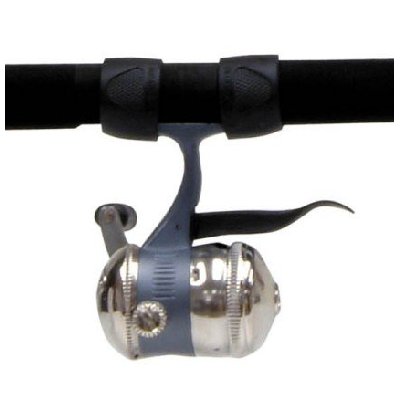
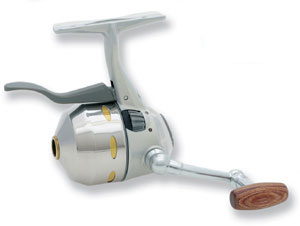
Triggerspin Now is probably the best time to talk about a hybrid reel that has become very popular in recent years: the underspin closed face spinning reel , or "triggerspin". It is a spincast reel in essence, but is mounted below the rod like a spinning reel, but with a trigger that is pulled upward by the index finger. This setup lets you have the ease of the spincast reel combined with the balance of the spinning. Another advantage over most spincast reels is that triggerspins can have the handles reversed like spinning reels, giving you the option of reeling right or left handed. They are very comfortable to use for extended periods. Right now I own at least half a dozen triggerspins and I use them more than any of my others. My first ultralight venture was a Zebco 11 TL, which is a Legacy model. This is an ultralight reel, spooled with 4 lb. test and I mated it to a 4’6" ultralight rod of uncertain origin. The reel cost $18 and a new rod would cost about the same for a decent model. My all time favorite reel, triggerspin or not, is my Zebco 44 Classic. I’ve got it spooled with 12 lb. Trilene and mated to a 6’6" Daiwa medium action Eliminator rod. I simply love this setup. The reel runs about $20-$30 and I paid $38 for the rod years ago. Well worth the money. I've had the reel since about 1990 and the rod, which replaced the original combo rod that I broke, since about 1994. They've caught a lot of fish. Unfortunately, they weigh about twice as much as a straight-up ultralight setup and the extra weight kills my shoulder if I cast a lot. (Anybody who thinks I have definite leanings toward Zebco products is absolutely correct.) Well, the 11 TL broke while my nephew was fishing with it. Don't know how it happened, but the mainshaft bent. Strange thing for it to do. I replaced it with a Daiwa US80XA, my first non-Zebco reel in as long as I can remember. It's a small triggerspin model that I put on the same pole as the TL. The line was much too heavy for my taste, so I replaced it with 4 lb. Berkley Trilene XL and everything's fine. The drag sucks, though.
Baitcasting
The drawbacks of a baitcaster include the casting procedure and all the disadvantages of the spincaster. Another disadvantage is price. While there are numerous lower priced models, these reels don’t really get made well until the $50 range. From there, the sky is the limit, with higher prices buying higher quality reels that actually become easier to use. The previous discussion on "balls" applies to baitcasters as much as spinning reels. I use my baitcaster strictly for catfishing. I own a Quantum IR3 (3 meaning 3 ball bearings) spooled with 17 lb. test Fireline, mated to a 6’6" Mitchell medium-heavy Fulcrum rod. The reel cost me $55 and the pole cost me $45. This rod length seems to be the norm for most fishing, though special applications can go up to 8’. I can heartily tell you not to put Fireline on your baitcaster. The line, while excellent, is pretty much flat, which makes it even more hellish to get birdnests undone. And it’s too expensive to cut until the snag clears. On the other hand, though, you do have something to do if the fish aren’t biting.
Fly-Fishing
Rods Rods have become very complicated in recent years. Materials such as fiberglass, IM-6, graphite, and Kevlar, among others, all vie for the fisherman’s eye. There are a dozen materials for eyelets, and who knows how many handle materials. You can pay as little as $5.00 for a kid’s rod or a couple thousand for a handmade. A look through any of the popular catalogs will show rods of every possible combination. There just isn’t a magic bullet where poles are concerned. So, the major decision for most people comes down to two concerns: combos and price. If the reel you like comes as a combo, then more than likely you will choose the combo and use the rod that comes along. There is certainly nothing wrong with this and it can simplify the process for the beginner fisherman. Most manufacturers mate the rods and reels not only based on the recommended usage, but also match trim designs that make the combos look better than mismatched rods and reels. I like the look of a matched combination. Unfortunately, the rods most always break before the reels, which means you must buy another rod. The chance of finding something that matches is slim to none, so another criteria must be used. This is where price comes into play. It is always a good idea to follow the manufacturer’s lead regarding length and weight when you are replacing a pole that came as part of a combo. Usually, you’ll find several rods that fit these criteria. Then, it usually comes down to the money issue. Buy the best you can afford. That doesn’t mean the most expensive, necessarily. Compare the rods that fit in your price range. Most will usually have some paperwork attached that will tell you the rod’s features and composition. Also, if you look on the rod down near the handle, there will be information about the rod written on the rod itself. Use all the info to make a decision. You may even be lucky and find a rod that is nearly identical to the rod that came with your combo. If you liked the combo rod, then there is no reason not to purchase a similar one. Conversely, if you always hated something on the combo rod, such as the handle, don't get that type again. A big concern for the disabled when choosing rods is the handle. Handles come in many materials, but three types are most common: hard plastic, compressed soft foam, and cork. The most comfortable of these is compressed foam, followed by cork. However, the hard plastic is a much better foundation if you will be building the diameter up with foam or tennis racket tape. Usually, the foam-like handles are already quite thick and despite looks are extremely durable. All but one of my rods has a compressed foam handle and I have not had to increase the handle size on any of these. Another thing that should be looked at by the disabled is the balance of the rod. If there is not a reel on the rod, you want the tip to be heavy. When the weight of the reel is added, the overall effect will be that the rod should balance just in front of your hand or even further back. The rod may look nice and light, but when you start holding it for any length of time, things such as the fulcrum, or balance point, come into play and the tip becomes heavier and heavier. It is much less fatiguing to control a rod when the weight is balanced closer to your hand or even balances in your hand. You can fix an out-of-balance rod by taping coins to the handle until you are satisfied with the results. The difference a balanced arrangement makes will be felt immediately, especially in those with hand and wrist problems.
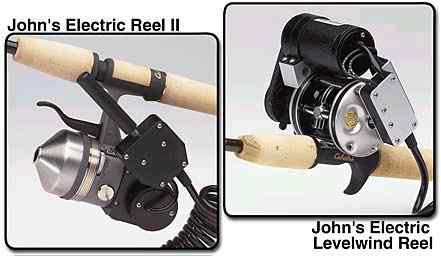
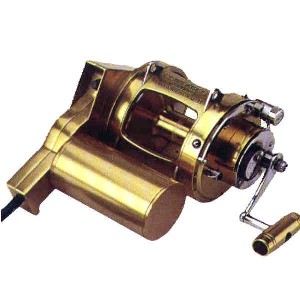
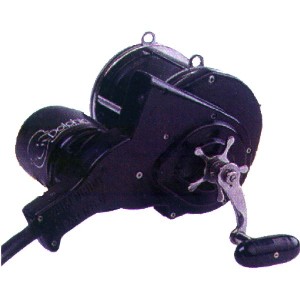
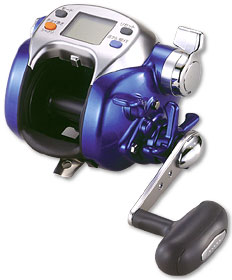
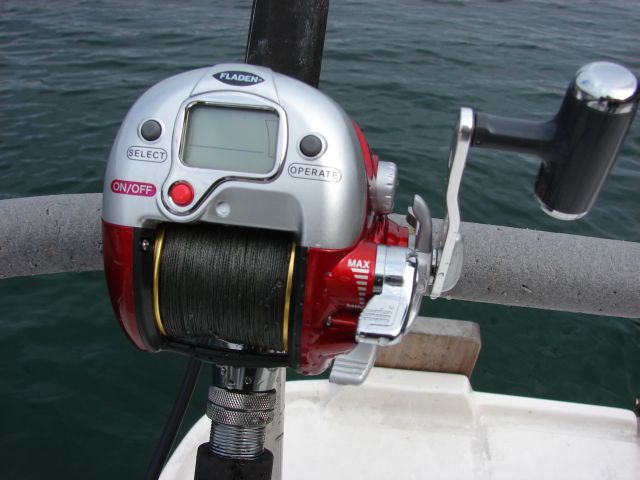
Electricity and Water Now for a brief look at a strange bird....the electric powered reel. The idea is pretty simple, with an electric motor hooked to a separate battery pack doing the work when a button is pressed. They are supposed to even allow you to "play" the fish. The Elec-tra-mate is made exclusively for Penn reels and runs about $300.00....with no rod or reel. With this on, casting is seriously compromised, so it seems primarily aimed at the offshore boating crowd. It looks capable of hauling in anything. An able-body around for casting is a must with this unit, although if you're on a boat and trolling, this unit should be handled pretty easily by the disabled. There are smaller units - one even uses my favorite, the Zebco 44 (left, below) that are much more castable. They run a little over $300 and are much more practical for most situations. They're shown below. They would need to be cast by an able body, but then a disabled person could handle them. Think about this: The motors in powered wheelchairs and scooters are the same motors they use in trolling motors. If you could hook your reel into that kind of power, you could reel in Moby Dick. Remember to lock those brakes before trying this. I would love to have one of these babies. It's just the gadget freak in me. Currently, the makers of John's Electric Reel are bust, it seems, but the reels are still available on Ebay every now and then and I've heard from several folks who have bought them and are very satisfied.
There is currently a company called Dolphin Electreels manufacturing Whisenhut electric reels for all heavy duty - and expensive - adventures. Seems to be some quality stuff. http://www.dolphinelectreel.com/
Electric reels are also available from Lagerstone Reels of North Carolina at http://www.lsreels.com. Lots of different models available and they sometimes have preowned models available. These can be reeled in manually or electrically, and since most are made for offshore fishing, they should be able to handle freshwater species easily. Heck, the bait they use for offshore is often as heavy as a freshwater fish.

|
 It
would be easy for me to write forever on all the equipment available to
the
modern angler. Quite frankly, though, I don’t want to and I would be
wasting a
lot of your time and mine. Equipment boils down to something very
simple: for
most recreational fishing, you use a rod and a reel to catch one fish
at a time.
(Such items as lines, hooks, swivels, and floaters are referred to as
terminal
tackle and will be discussed shortly. It is called terminal
because it
never sticks around long. Also, tackle boxes are a vital part
of equipment
and will be discussed along with terminal tackle.) There are still
several types
of rods and reels to occupy our discussion, however. Which ones to
choose will
be based on ease of use, price, fishing techniques, and flat-out
personal
preference.
It
would be easy for me to write forever on all the equipment available to
the
modern angler. Quite frankly, though, I don’t want to and I would be
wasting a
lot of your time and mine. Equipment boils down to something very
simple: for
most recreational fishing, you use a rod and a reel to catch one fish
at a time.
(Such items as lines, hooks, swivels, and floaters are referred to as
terminal
tackle and will be discussed shortly. It is called terminal
because it
never sticks around long. Also, tackle boxes are a vital part
of equipment
and will be discussed along with terminal tackle.) There are still
several types
of rods and reels to occupy our discussion, however. Which ones to
choose will
be based on ease of use, price, fishing techniques, and flat-out
personal
preference. In case there is someone reading this who has never been fishing with
one, a
cane pole is merely a long, usually over seven feet, cane or bamboo
shaft with
an eyelet on one end. Most often they come in two or more pieces so
that they
can be transported more readily. The idea is simple: tie a piece of
line about
ten feet or so long to the eyelet and tie a hook to the other end. Get
close to
the water, bait up with a nightcrawler or cricket and heave ho. You
won’t get
too far away from shore, but you’d be amazed at how many fish there are
not
too far from shore. True, they’ll probably be bluegill and sunfish and
they
may not be very large, but they’re still fun to catch. If you want to
get
fancy, you can tie a bobber onto the line. When you get a bite, you
just yank
up. Nothing is simpler unless you can talk the fish into jumping into
your
hands. If you can let me know. The real beauty of the cane pole is this
simplicity and ease of motion. Even without much motor control in your
hands, it
is still possible to use a cane pole successfully. If the shaft is too
small to
grasp easily, tape can be used to build up a larger diameter surface.
For those
who need a very large increase in diameter, I suggest rolling an old
towel up
and wrapping the handle and then taping it in place. A fancier version
might use
some of that foam rubber used for window insulation that is
self-adhesive. Wrap
the foam around the handle like a tennis racket grip or a bat handle.
You
don’t need to worry much about ruining the pole; the last one I bought
cost
three dollars. They are available pretty much anywhere, from Wal-Mart,
K-Mart,
and bait shops to gas stations near popular fishing areas. Kids find
them easy
to use, too.
In case there is someone reading this who has never been fishing with
one, a
cane pole is merely a long, usually over seven feet, cane or bamboo
shaft with
an eyelet on one end. Most often they come in two or more pieces so
that they
can be transported more readily. The idea is simple: tie a piece of
line about
ten feet or so long to the eyelet and tie a hook to the other end. Get
close to
the water, bait up with a nightcrawler or cricket and heave ho. You
won’t get
too far away from shore, but you’d be amazed at how many fish there are
not
too far from shore. True, they’ll probably be bluegill and sunfish and
they
may not be very large, but they’re still fun to catch. If you want to
get
fancy, you can tie a bobber onto the line. When you get a bite, you
just yank
up. Nothing is simpler unless you can talk the fish into jumping into
your
hands. If you can let me know. The real beauty of the cane pole is this
simplicity and ease of motion. Even without much motor control in your
hands, it
is still possible to use a cane pole successfully. If the shaft is too
small to
grasp easily, tape can be used to build up a larger diameter surface.
For those
who need a very large increase in diameter, I suggest rolling an old
towel up
and wrapping the handle and then taping it in place. A fancier version
might use
some of that foam rubber used for window insulation that is
self-adhesive. Wrap
the foam around the handle like a tennis racket grip or a bat handle.
You
don’t need to worry much about ruining the pole; the last one I bought
cost
three dollars. They are available pretty much anywhere, from Wal-Mart,
K-Mart,
and bait shops to gas stations near popular fishing areas. Kids find
them easy
to use, too.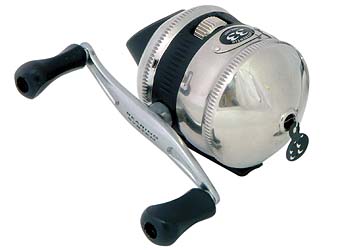 The next easiest fish catcher is the spincast reel. A spincast reel has
an
enclosed spool with a button in the rear of the case. When the rod is
held, it
sits on top of the rod with the button positioned to be released with
your
thumb. An over the shoulder or sidearm cast with the button pressed
midway or so
through is all that is needed to send the bait on its way. A turn of
the reel
handle sets the reel ready to take in line. It is the easiest reel to
use in
most all conditions. They rarely get line tangled up around the spool.
Mated to
a 5’6" or 6’ medium action pole, it can be used to catch little
bluegill all the way up to good size catfish. I’ve caught fish no
longer than
my finger and 20 pound catfish on the same rod and reel in the same
day. They
are also very reasonably priced and extremely dependable. It is very
common
today to buy a rod and reel as a combo, sometimes even with tackle
thrown in as
a bonus. Zebco especially has very attractive sets at downright low
prices.
Venture into any one of the various "Mart" stores and you can buy a
good outfit for less than $20.00 that will serve quite well for many
years of
fishing. Often, when you get to looking around, you will find combos
where the
total price for rod and reel is only a couple dollars higher than the
reel
itself. I have seen combos that are geared toward the young crowd for
less than
10 bucks, sometimes still with a little tackle thrown in. While these
sets
don’t hold up to heavy fishing and lack some precision, they are a very
good
buy for those who don’t know yet whether they like or are going to be
able to
fish. Generally speaking, as in all things, price equates to quality,
but a lot
of fun is available for little investment. Shakespeare, Johnson,
Mitchell,
Daiwa, and Zebco all make good reels that sell below 30 dollars, with
many below
twenty. The Zebco 33 (pictured) is the mainstay in the industry.
Most any fisherman owns at least one. I’ve owned several, only
replacing them
after thefts or catastrophic accidents. Currently, I have a 33 and a
Zebco Rock
II spincast reels. They were both purchased as combos. The 33 is a
"Tackle
Tote" model with a 5-piece rod, reel, and tackle storage in a sturdy
case.
It’s kept behind my truck seat along with a small Plano tackle box. It
cost
about 30 bucks. I use the Rock primarily for catfishing and it is
strung with 17
lb. Berkley Fireline right now. I had to purchase a new pole for it as
I got
stupid and broke the one that came with it. I chose a 6' one
piece,
medium-action Zebco Gatorback rod. It comes with a 6 year or
60,000 fish
guarantee. That's slightly over 27 fish a day, every day of
the year, for
six whole years.
The next easiest fish catcher is the spincast reel. A spincast reel has
an
enclosed spool with a button in the rear of the case. When the rod is
held, it
sits on top of the rod with the button positioned to be released with
your
thumb. An over the shoulder or sidearm cast with the button pressed
midway or so
through is all that is needed to send the bait on its way. A turn of
the reel
handle sets the reel ready to take in line. It is the easiest reel to
use in
most all conditions. They rarely get line tangled up around the spool.
Mated to
a 5’6" or 6’ medium action pole, it can be used to catch little
bluegill all the way up to good size catfish. I’ve caught fish no
longer than
my finger and 20 pound catfish on the same rod and reel in the same
day. They
are also very reasonably priced and extremely dependable. It is very
common
today to buy a rod and reel as a combo, sometimes even with tackle
thrown in as
a bonus. Zebco especially has very attractive sets at downright low
prices.
Venture into any one of the various "Mart" stores and you can buy a
good outfit for less than $20.00 that will serve quite well for many
years of
fishing. Often, when you get to looking around, you will find combos
where the
total price for rod and reel is only a couple dollars higher than the
reel
itself. I have seen combos that are geared toward the young crowd for
less than
10 bucks, sometimes still with a little tackle thrown in. While these
sets
don’t hold up to heavy fishing and lack some precision, they are a very
good
buy for those who don’t know yet whether they like or are going to be
able to
fish. Generally speaking, as in all things, price equates to quality,
but a lot
of fun is available for little investment. Shakespeare, Johnson,
Mitchell,
Daiwa, and Zebco all make good reels that sell below 30 dollars, with
many below
twenty. The Zebco 33 (pictured) is the mainstay in the industry.
Most any fisherman owns at least one. I’ve owned several, only
replacing them
after thefts or catastrophic accidents. Currently, I have a 33 and a
Zebco Rock
II spincast reels. They were both purchased as combos. The 33 is a
"Tackle
Tote" model with a 5-piece rod, reel, and tackle storage in a sturdy
case.
It’s kept behind my truck seat along with a small Plano tackle box. It
cost
about 30 bucks. I use the Rock primarily for catfishing and it is
strung with 17
lb. Berkley Fireline right now. I had to purchase a new pole for it as
I got
stupid and broke the one that came with it. I chose a 6' one
piece,
medium-action Zebco Gatorback rod. It comes with a 6 year or
60,000 fish
guarantee. That's slightly over 27 fish a day, every day of
the year, for
six whole years.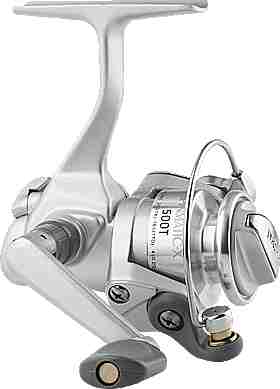
 The baitcaster is the Cadillac of reels. They are the most
durable of all
reels and are capable of fishing for all species of fish. They
can be had
in jewel-like ultralight versions or in monster versions that are used
in
deepwater fishing. They sit on top of the rod like spincast reels. If
you cast
right-handed, you cast in the following procedure: grab the line
forward of the
reel between your index finger and thumb of the left hand, push the
spool
release button with your right thumb, then put your right thumb on the
spool,
release the line from your left fingers, cast as you would normally,
releasing
the spool at the time you would normally push the button. Now, the hard
part:
you must keep your thumb near the spool and reapply pressure as the
bait slows
to the water. It is imperative that you do this or you will be the
unlucky owner
of a reel that has suddenly become useless thanks to our wonderful
friend,
backlash. The backlash of a spinning reel pales in comparison to the
backlash of
the baitcaster. They make "picks" that are used exclusively to try and
untangle the mess that occurs with poor cast control. Baitcasters
certainly take
practice to master and those with poor hand function would be well
advised to
avoid them. They don’t do anything that a spincast doesn’t do; they
merely
do it smoother and more stylishly. Any person, especially those who are
disabled, should try to fish with a borrowed reel before making the
decision to
buy.
The baitcaster is the Cadillac of reels. They are the most
durable of all
reels and are capable of fishing for all species of fish. They
can be had
in jewel-like ultralight versions or in monster versions that are used
in
deepwater fishing. They sit on top of the rod like spincast reels. If
you cast
right-handed, you cast in the following procedure: grab the line
forward of the
reel between your index finger and thumb of the left hand, push the
spool
release button with your right thumb, then put your right thumb on the
spool,
release the line from your left fingers, cast as you would normally,
releasing
the spool at the time you would normally push the button. Now, the hard
part:
you must keep your thumb near the spool and reapply pressure as the
bait slows
to the water. It is imperative that you do this or you will be the
unlucky owner
of a reel that has suddenly become useless thanks to our wonderful
friend,
backlash. The backlash of a spinning reel pales in comparison to the
backlash of
the baitcaster. They make "picks" that are used exclusively to try and
untangle the mess that occurs with poor cast control. Baitcasters
certainly take
practice to master and those with poor hand function would be well
advised to
avoid them. They don’t do anything that a spincast doesn’t do; they
merely
do it smoother and more stylishly. Any person, especially those who are
disabled, should try to fish with a borrowed reel before making the
decision to
buy. I know next to nothing about fly reels and rods and probably even less
about
techniques for them. So I will tell you the few things I do know. First
is find
someone who fly-fishes regularly and learn from them. Second is avoid
flyfishing
if you do not have good hand, arm, and shoulder control. The laborious
method of
casting will quickly wear you out. Also, most often, this type of
fishing is
done from the riverbed, not from the shore, which makes it difficult
for the
disabled person to participate. I personally cannot withstand the
casting
procedure, though I would love to be able to fish this way. (
A lot of
that has to do with the equipment. Those reels above are just
gorgeous. )
Not being able to flyfish with proper equipment is one of the principal
reasons
I have taken up fishing with light equipment. There is
something to be
said for fighting a 2 pound smallie in the current with 2 or 4
pound line.
I know next to nothing about fly reels and rods and probably even less
about
techniques for them. So I will tell you the few things I do know. First
is find
someone who fly-fishes regularly and learn from them. Second is avoid
flyfishing
if you do not have good hand, arm, and shoulder control. The laborious
method of
casting will quickly wear you out. Also, most often, this type of
fishing is
done from the riverbed, not from the shore, which makes it difficult
for the
disabled person to participate. I personally cannot withstand the
casting
procedure, though I would love to be able to fish this way. (
A lot of
that has to do with the equipment. Those reels above are just
gorgeous. )
Not being able to flyfish with proper equipment is one of the principal
reasons
I have taken up fishing with light equipment. There is
something to be
said for fighting a 2 pound smallie in the current with 2 or 4
pound line.