The tankists were not in a good situation. The front line shifted every day, the enemy kept advancing and pushing our forces back. Because of this flux, appropriate reconnaissance which could clearly define the army's entrance zones was not possible. The 10th DAAB and the 1529th Self-Propelled Artillery Regiment assigned as support had not yet reached the frontline. Only in the morning, when the operation had already started, did a forward detachment of K.G. Trufanov's group reach Prokhorovka from Oboiani. The units lacked sufficient ammunition. In the evening of July 11th General A.F. Popov's and Colonel Burdeny's tank corps, which numbered 215 tanks, were transferred to the operational command of P.A. Rotmistrov.
The 12th of July has a special place in the history of the battle. On this day at a narrow 10km sector of the front the main offensive force of the Voronezh Front - the 5th GTA - had started the counteroffensive. Unintentionally, this blow was delivered right into the face of the 2nd SSPzC whose divisions were preparing for the decisive attack towards Prokhorovka themselves. By the scale and intensity of the fighting, July 12th is the climax of all the fighting on the southern side of the Kursk bulge. Because of this, until recently, most authors had attempted to reduce the whole battle just to the fighting on this day. This is not true, however. July 12th was the decisive, but not the last day of the battle. Sometime at midnight the commander shifted the starting time of the offensive from 1000 to 0830 in the morning, in order to preempt the enemy.

Based on the latest studies, Colonel-General H. Hoth's plan for July 12th can be summed up this way: "Totenkopf" and "Adolf Hitler" were to penetrate the defenses and reach the line Kartashovk- Beregovoe - Prokhorovka - Storozhevoe, where they would turn westwards and advance towards Oboiani, having protected their flanks. Meanwhile, "Reich"would capture Pravorot and link up with the 3rd PzC of the army detachment "Kempf" advancing from Rzhavetz. As you can see, the mission was broad: not only to reach Oboiani through Prokhorovka, but also by enveloping blows of the 2nd SSPzC and the 3rd PzC to encircle Voronezh Front's forces in the region of Prokhorovka - Pravorot - Shakhovo. The result of this was supposed to be a gap in our defenses, which was then to be exploited by the reserve 24th PzC that was assembling near Belgorod.
Germans started realizing this plan during the night of July 12th. At 0200 in the night up to 70 tanks broke through the defenses of the 69th A and captured Rzhavetz, Ryndinka and Vypolzovka (28km southeast of Prokhorovka). This created a risk of a major enemy advance into the rear of the 5th GTA. P.A. Rotmistrov ordered at 0600 to bring the 11th and the 12th Guards Mechanized Brigades of the 5th Guards "Ziluvnikovsky" Mechanized Corps into the area of the enemy breakthrough. K.G. Trufanov's army forward detachment was moving from Oboiani with the 53rd Guards Independent (Heavy) Tank Regiment, a separate motorcycle battalion and several artillery regiments. The 26th GTB of the 2nd "Tatsinskaia" GTC was sent into the region of Shakhovo with the mission of prevent further German crossings through r. Lipovyi Donetz and deeper advance into the rear of our army.
Disregarding the drastically changed situation and the weakening of the forces, the Voronezh Front's command still was determined to conduct the operation. Since 0500 our air attack forces started bombing German crossings over the Psel, the hill 252.2, the farm "Komsomolets."
At 0830 "Katyusha" salvos served the guards armies as signals to advance. The spearhead of the main blow was aimed against a 10km sector between Storozhevoe and Psel 2km south-west of Prokhorovka. This blow was delivered by the 18th and 29th TC of the 5th GTA together with the 42nd GRD and 9th GAD of the 5th GA. The brigades of the forward echelon, firing on the move, hit the German defenses with a frontal assault, literally piercing through the ranks of the advancing enemy. The command of the forward units and detachment was disrupted. The field was fully covered with smoke and dust raised in the air by the explosions and the tracks of the tanks.
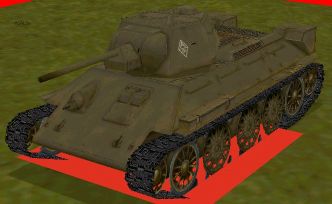
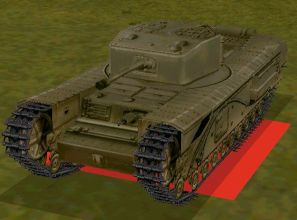
It is precisely this battle of the two tank corps against the divisions of the 2nd SSPzC that afterwards was called as the tanks' meeting engagement, and the place where it occurred - the "tank field." In reality, the battle on the "tank field" became the epicenter of a larger Prokhorovka battle. According to the 5th GTA headquarters' report of 2100 July 11th, Major-General B.S. Bakharov's 18th TC had 164 tanks on hand, of these T-34 - 64 tanks, T-70 - 58 tanks and MK-4 "Churchill" - 18 tanks. During that day Major-General A.V. Kirichenko's 29th TC used in combat 192 tanks and 30 self-propelled guns, of these T-34 - 122 tanks, T-70 - 70 tanks. This way, the total amount of Soviet armor that fought on the "tank field" is 386 tanks and SPG's. Besides this, in the region of Storozhevoe a defensive operation was conducted by the 169th TB of the 2nd TC, which had 18 tanks, of these T-34 - 14 tanks.
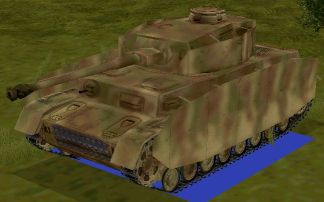
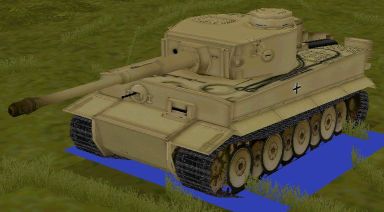
Resisting our two corps was the "Adolf Hitler" division and parts of "Totenkopf," whose main forces were concentrated in the sector of the advancing 5th GA beyond Psel. Accurate data on the enemy's forces on July 12th are unavailable. In the 3rd volume of "Germany's Ground Army: 1933-1945" B.Muller-Gillrbrandt cites the numbers dated to 30th of June, 1943. "Adolf Hitler" had 133 tanks, of these 13 "tigers" and 35 SPG's; "Totenkopf" had 145 tanks, of these 15 "tigers" and 35 SPG's. It has to be considered, however, that these numbers are two weeks old, and the divisions was involved in heavy combat for seven days suffering losses. According to the German scholar K.F. Frizer, on the day of that day the entire SSPzC had 275 combat-ready tanks.
Even without precise numbers, it is possible to imagine the approximate ratio of the forces during the meeting engagement of the tanks. The right flank of "Adolf Hitler" was protected by the Panzergrenadier division "Das Reich." On June 30th it had 129 tanks, of these 14 "tigers" and 34 SPG's. Against them in the region of Kalinin - Ozerovskii - Teterevino were advancing the tanks of the 2nd "Tatsinskaya" GTC of Major-General A.S. Kostitsin. The corps had 139 combat ready tanks, of these T-34 - 84 tanks, T-70 - 52 tanks, MK-4 "Churchill" - 3 tanks. This formation was to attack the base of the enemy's advancing spearhead. But because, the 18th and 29th TC met strong resistance and were unable to exploit, the Germans built up a strong defense against the "Tatsinskaya" corps. As a result, our units had to retreat to the starting positions and by the end of the day were on the defensive against the "Reich's" tank regiment, which not only beat off our attacks but also advanced into the rear of our corps. Thanks to A.S. Burdenny's decision to stoppthe attack on time and pull his brigades back, tragical consequences were avoided. During these battles the corps not only failed to accomplish the assigned mission, but was also forced to retreat from the starting positions. During the day of fighting this corps lost 490 men, including 145 KIA; 25 T-34 and T-70 were knocked out and another 9 T-70 were burned.