Our tankists fought bravely and tenaciously. For example, the crew of a MK-4 "Churchill" tank, commanded by Lieutenant Lupakhin of 36th Guards Independent Heavy/Breakthrough Tank Regiment, continued to fight until the engine caught fire. By this time, the vehicle had 4 holes in it, including flaking armor of the front side of the turret. All of the crewman were wounded. Only after smoke and fire reached the turret, did the tankists abandon the vehicle.
What became the symbol of the battle was the heroic act of Alexander Nikolaev, a mechanic-driver of a T-34 of the 2nd battalion of the 181st TB. While saving his wounded battalion commander P. Skripkin, Nikolaev together with the loader F. Chernov rammed their damaged T-34 into a German tank. The tankists accomplished their military duty to the last. According to the memoirs of an intelligence officer of the 2nd TC E.F. Ivanovsky, about 20 tank rammings were conducted by our tankists that day on the Prokhorovka field.
During this day the corps lost 183 men, including 8 senior officers and commanders. Among them were the corps' engineer Colonel Belov and commander of the 170th TB Colonel V.D. Tarasov. The Germans knocked out and burned 55 tanks.
The 29th TC was in a very difficult situation since the first minutes of the battle. This was the main shock formation of the army. It had 230 fighting vehicles. Because of a lack of time and ferocity of the fighting, our reconnaissance did not manage to properly study the enemy's main strong points, their strength and intention. Therefore, when the corps attacked early in the morning, its blow was directed not against the flanks, as was planned, but right into the face of the "Adolf Hitler" division, which itself was preparing to advance.
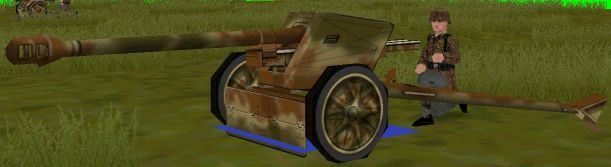
The Germans' first strong point was "Oktiabrskii," which they had captured in the evening of July 11th. Using our trenches and other engineered defenses, during the night the Germans dug in anti-tank artillery on the outskirts of the farm and the northern face of the hill 252.2, on the southern and south-western sides the assault guns were dug in . Using this commanding height, the enemy effectively repelled our attacks. The "tiger" tanks had also provided strong support to the artillery battalions defending "Oktiabrskii." The "Adolf Hitler" division was supposed to attack at 0910 in the morning. Having aligned for a march, the tanks met our "thirty-fours" and "seventies" with heavy fire from their starting positions. This quickly lead to heavy losses among the attackers.
Having started the offensive on 0830, our brigades with the support of infantry had reached the enemy's artillery positions only by 1200. Several tanks advancing in the second echelon of Colonel A.A. Linev's 32nd TB outflanked the height and reached the southern outskirts of the farm. The Germans did not hold off the attack and started retreating.
Seeing the developing breakthrough, P. Hausser ordered up to 150 planes to bomb this region for more than an hour. The attack was conducted by "Messerschmidt-110" and "Junker-87" planes in groups of 7 to 37 aircraft. Our motorized infantry was separated from the tanks, and the brigades suffered heavy losses. Out of 64 fighting vehicles of the 32nd TB that started the offensive in the morning, only 24 remained by the middle of the day; 350 men were killed or wounded, th 31st TB lost 44 tanks. One of the reasons for such heavy losses was that the advancing corps had virtually no air cover by Red Airforce until 13.00.
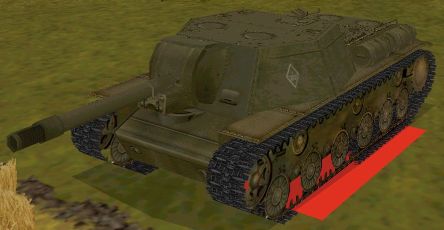
The 1529th SPAR, which was supposed to support the 29th TC, had not yet reached the front line when the offensive began. This regiment had 12 SU-152 "Animal-Hunters," which could combat any enemy armor, including the "tigers." According to the testimonies of the witnesses, a direct hit from a SU-152 at about 500m would blow the tank's turret away by several meters. A direct hit into the hull would literally disintegrate any tank like a house of cards. Such a powerful and effective weapon was obviously lacking on the battlefield that day.
 By
1315 the air bombardment managed to halt the 29th TC's advance. Taking advantage
of the confusion, caused by the retreat of our infantry and the destruction
of most of our tanks, the Germans brought reserves to "Oktiabrskii"
and at 1540 conducted a counterattack. The fire of the stationary tanks of the
31st and 32nd TB and the three batteries of the 1446th SPAR managed to stop
the enemy. At 1600 Colonel A.A. Linev combined his reserves and random vehicles
from other brigades and unsuccessfully attempted to attack the retreating enemy.
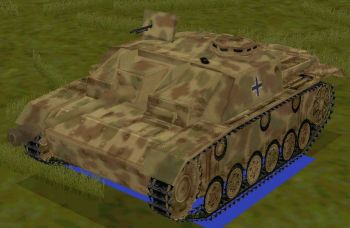
Our tanks were stopped by the covering fire of the dug-in Stug-40 assault guns
and "Marder" tank-destroyers.
By
1315 the air bombardment managed to halt the 29th TC's advance. Taking advantage
of the confusion, caused by the retreat of our infantry and the destruction
of most of our tanks, the Germans brought reserves to "Oktiabrskii"
and at 1540 conducted a counterattack. The fire of the stationary tanks of the
31st and 32nd TB and the three batteries of the 1446th SPAR managed to stop
the enemy. At 1600 Colonel A.A. Linev combined his reserves and random vehicles
from other brigades and unsuccessfully attempted to attack the retreating enemy.
Our tanks were stopped by the covering fire of the dug-in Stug-40 assault guns
and "Marder" tank-destroyers.