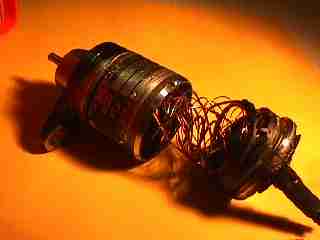
 Analysis
of this automotive component revealed failure modes which the customer
did not suspect. This caused a high number of field returns. Research &
Design analysed the failures and tracked it down to this source.
A report was prepared on CD, with full motion picture sequence and
many photographs, showing the effect of this type of failure. Measures
were taken which corrected the situation.
Analysis
of this automotive component revealed failure modes which the customer
did not suspect. This caused a high number of field returns. Research &
Design analysed the failures and tracked it down to this source.
A report was prepared on CD, with full motion picture sequence and
many photographs, showing the effect of this type of failure. Measures
were taken which corrected the situation.
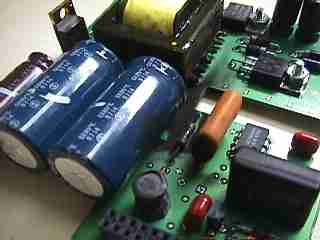 A
switch mode power supply with multiple outputs (5) used in the food
service industry. Design was challenging in that a number of requirements
were added late in the design phase. These were accommodated.This unit
required very careful design of the switching transformer to realize
proper performance, yet be manufacturable at reasonable cost.
A
switch mode power supply with multiple outputs (5) used in the food
service industry. Design was challenging in that a number of requirements
were added late in the design phase. These were accommodated.This unit
required very careful design of the switching transformer to realize
proper performance, yet be manufacturable at reasonable cost.
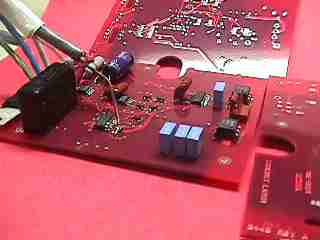 Medical
equipment often has to meet requirements not found in other applications.High
reliability, low noise, efficiency all must be optimized. This motor control
was designed for a high tech. motor. Designed to interface to an embedded
microprocessor control, the circuit board was mounted directly on the
motor frame.It had to be robust against vibration and heat. While
this unit was not rated for life support, multiple limit detectors
were used to keep the motor within design parameters.
Medical
equipment often has to meet requirements not found in other applications.High
reliability, low noise, efficiency all must be optimized. This motor control
was designed for a high tech. motor. Designed to interface to an embedded
microprocessor control, the circuit board was mounted directly on the
motor frame.It had to be robust against vibration and heat. While
this unit was not rated for life support, multiple limit detectors
were used to keep the motor within design parameters.
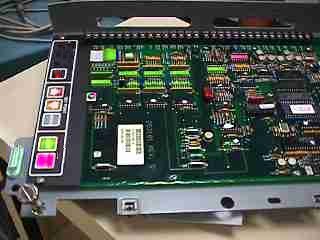 Politics
forced a client company to manufacture an 'orphan' (no one would
take responsibility for design or test maintenance.) Research & Design
provided design support. All available schematics were compared
to the actual sample of the board. When compared, the circuits were analyzed. A description of operation written, in most cases to the
component level, and was provided to the client. This enabled their
technical personnel to build, repair and trouble shoot units. Several components
were obsolete,Research & Design worked with the end customer
and suppliers to resolve these issues.
Politics
forced a client company to manufacture an 'orphan' (no one would
take responsibility for design or test maintenance.) Research & Design
provided design support. All available schematics were compared
to the actual sample of the board. When compared, the circuits were analyzed. A description of operation written, in most cases to the
component level, and was provided to the client. This enabled their
technical personnel to build, repair and trouble shoot units. Several components
were obsolete,Research & Design worked with the end customer
and suppliers to resolve these issues.
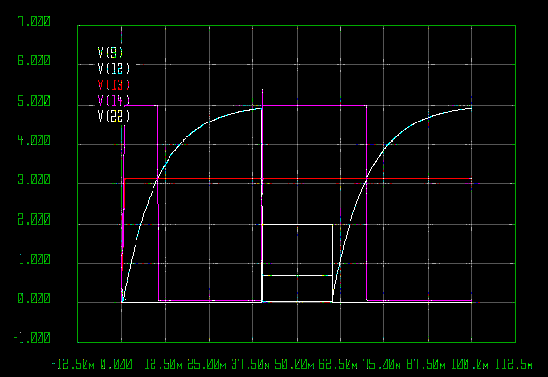 A major semiconductor
manufacturer obsoleted a chip widely used by a clients company.The
annual quantity was too low to license another fab house, but
too high to do a 'onetime buy.' Research & Design was engaged to
design a replacement module that could be piggybacked on all existing
products without change. Higher level components were used to design
a circuit that emulates the silicon version. SPICE analysis was
extensively used both to model the silicon and to evaluate the
replacement module.
A major semiconductor
manufacturer obsoleted a chip widely used by a clients company.The
annual quantity was too low to license another fab house, but
too high to do a 'onetime buy.' Research & Design was engaged to
design a replacement module that could be piggybacked on all existing
products without change. Higher level components were used to design
a circuit that emulates the silicon version. SPICE analysis was
extensively used both to model the silicon and to evaluate the
replacement module.
Find this interesting? You need to read
Research & Design's Newsletter.
The second page often has actual case histories of some really unusual
challenges, this along with useful information on getting the
most
out of a technical assistance firm.