
History of Noom: Founders, Timeline

The History of Noom: How a Small Health App Became a Weight-Loss Giant
For most of dieting history, the basic pitch was remarkably simple: follow these food rules, summon more willpower and try not to look directly at a doughnut. Hmmm... I wonder why most diets fail!?
Noom entered the weight-loss industry with a different promise. Instead of offering another rigid meal plan, the company said it would help people understand why they ate the way they did—and use psychology, technology and coaching to build healthier habits.
That idea eventually turned Noom into one of the world's most recognizable wellness apps. The journey, however, took much longer than its sudden popularity might suggest, and there have been some bumps in the road.
Who Founded Noom?
Noom was founded in 2008 by Saeju Jeong and Artem Petakov.
Jeong grew up in South Korea in a family with a strong medical background, but his own early interests took him in a less predictable direction. Before entering digital health, he started an independent music business. He later moved to the United States with the ambitious goal of creating technology that could help people live healthier lives.
Petakov brought the technical side of the partnership. A former Google software engineer, he had worked on user-created mapping technology before joining Jeong to build the company that became Noom.
The founders shared a broad mission: use technology to change human behavior before unhealthy habits developed into chronic medical problems.
That was a grand goal. Figuring out the right product was considerably harder.
Noom’s Long Startup Years
The company was originally known as WorkSmart Labs and experimented with several ideas during its early years. Its products included fitness-tracking apps, health-coaching tools and even an interactive exercise bike.
Some ideas attracted users, but none immediately produced the lasting business model the founders wanted. Jeong later acknowledged that the company spent roughly nine years testing products, making strategic mistakes and learning what users actually needed before finding its footing around 2017.
This slow development is an important part of Noom’s history. From the outside, it later looked like one of those apps that appeared overnight and suddenly occupied every available advertising space on the internet. In reality, the company had spent close to a decade adjusting its approach. Their success reminds me of that saying, "ten years of work to be an overnight success." (Or, something like that!)
Noom's eventual breakthrough came from combining food and activity tracking with short educational lessons, goal setting, human coaching and principles associated with cognitive behavioral therapy. Finally, they had discovered the key to sustainable weight loss, which was elusive for most other weight loss programs.
How the Noom App Works
Noom positioned itself as a behavior-change program rather than a traditional diet or system based on calorie restriction.
Members (aka "Noomers") recorded meals, weight and activity while completing daily lessons about habits, motivation, emotional eating and decision-making. Foods were organized by caloric density using a color-coded system intended to encourage larger portions of lower-calorie foods without declaring particular foods completely forbidden.
The idea was not that users didn't know that vegetables were healthy. Noom's larger argument was that information alone rarely changes behavior.
By placing lessons, reminders and tracking tools on a phone, the company tried to deliver small nudges throughout the day rather than relying on a weekly meeting or a printed diet manual.
Noom also invested heavily in human coaches. By 2021, the company said it employed thousands of people, including a large coaching (and expensive!) workforce that supported members inside the app.
Noom’s Rapid Growth
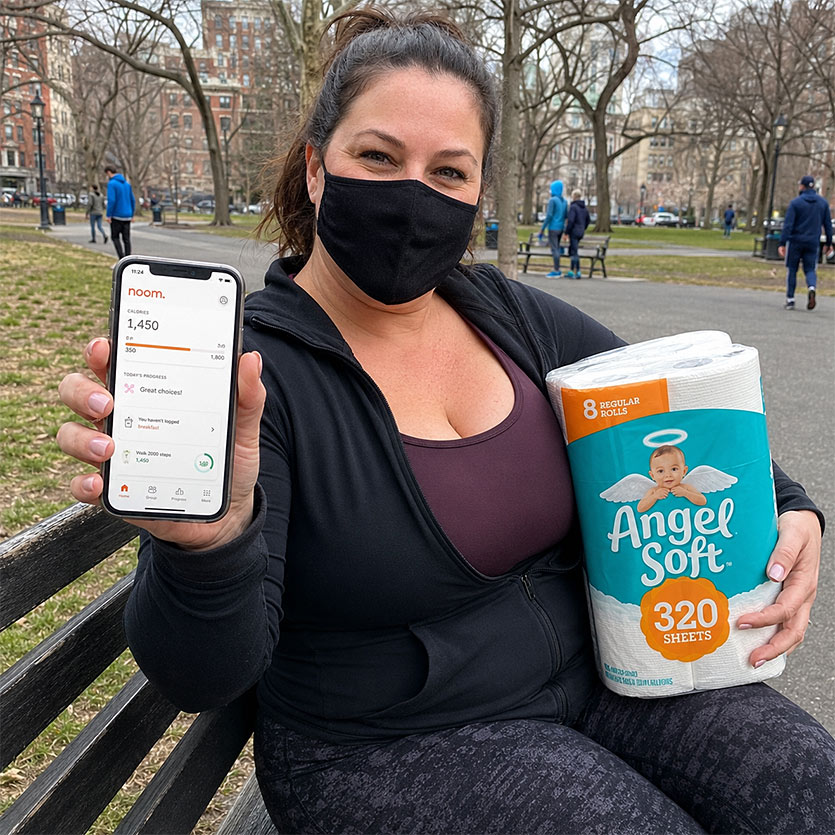
Noom began gaining significant momentum in the late 2010s. Its message—often summarized as “psychology-based weight loss” helped distinguish it from established companies, like Weight Watchers, focused on meal plans, calorie counting, points, or in-person meetings.
Noom's timing became especially favorable during the COVID-19 pandemic. Gyms closed, routines changed, toilet paper was scarce, and consumers became more comfortable doing everything through their phones. Companies like Peloton, Zoom, and Noom were in the right place at the right time.
Noom reported an astounding $400 million in revenue for 2020. (Noom? More like, "Boom!") In May 2021, it raised about $540 million in a funding round led by Silver Lake, with participation from top investors including Novo Holdings and Sequoia Capital.
For a company that had spent years searching for the right product, the sudden growth and transformation was dramatic. They were the Justin Bieber of the weight loss industry, so what could go wrong?
Complaints, Criticism and Growing Pains (Doh!)
Noom's rapid expansion also brought criticism.
Some customers complained that its free trials automatically converted into expensive subscriptions and that canceling or obtaining refunds was difficult. In 2020, the Better Business Bureau issued a consumer warning after receiving more than 1,000 complaints involving billing, cancellation and customer-service problems.
In 2022, Noom agreed to a $62 million class-action settlement related to allegations concerning automatic subscription renewals. The company did not admit wrongdoing and said it had improved its cancellation process, pricing disclosures and self-service tools.
The program itself also attracted debate. Some dietitians and former users argued that its calorie recommendations could be overly restrictive or that its “anti-diet” marketing did not fully match an app built around food logging, daily weigh-ins and weight-loss targets. (Hmmm... that sounds like a diet!)
Noom, meanwhile, maintained that its focus on psychology and habit formation distinguished it from short-term dieting.
Employing thousands of human coaches is expensive! As pandemic-era growth slowed, the company conducted several rounds of layoffs beginning in 2022, many of which affected coaches. Further staff reductions followed as Noom attempted to create a leaner and more sustainable business. *Related: How the Noom free trial works
From Weight-Loss App to Medical Platform
In May 2023, Noom launched Noom Med, a telehealth program combining its behavioral tools with clinical evaluations and, for eligible patients, prescription weight-loss medications. The launch reflected the rapid growth of GLP-1 meds and a major change in the weight-management industry.
That July, Geoff Cook became Noom’s CEO. Saeju Jeong, who had led the company for 16 years, moved into the role of executive chairman.
Noom continued developing medication-support programs, health coaching and digital tools intended to help members maintain habits while using or discontinuing weight-loss drugs. Here's a quick timeline of their history:
Noom History Timeline
- 2008: Saeju Jeong and Artem Petakov found the company that becomes Noom.
- Early 2010s: The company develops fitness trackers, coaching apps and other digital-health products.
- 2012: Noom Coach becomes a leading health and fitness app on Google Play.
- 2016–2017: Noom refines its consumer weight-loss program and settles on the subscription model that drives its later growth.
- 2020: Pandemic-era demand helps Noom’s revenue reach approximately $400 million.
- 2021: Noom raises $540 million in growth funding.
- 2022: The company agrees to a $62 million settlement involving subscription-renewal claims and reduces its workforce.
- 2023: Noom launches Noom Med, and Geoff Cook replaces Saeju Jeong as CEO.
- Today: Noom combines app-based behavior change, coaching, telehealth and weight-loss medication support.
Noom’s Lasting Impact
Noom didn't invent calorie tracking, coaching or behavior therapy. Its innovation was packaging those familiar ideas into a user-friendly mobile experience and marketing psychology as the missing ingredient in weight loss.
Noom's history also shows how quickly the wellness industry can change. Noom began as a technology company trying to prevent chronic disease, became famous as a psychology-driven diet app and then quickly pivoted to catch the GLP-1 prescription weight loss medication wave.
Whether viewed as a genuine alternative to old-fashioned dieting or simply a modern diet program wearing smarter clothes, Noom helped move weight management from meeting rooms and websites onto the phone in your pocket.
Noom FAQs
Who founded Noom?
Noom was founded by Saeju Jeong and Artem Petakov in 2008. They created the company to use technology and behavior change to improve long-term health.
When was Noom founded?
Noom was founded in 2008. The company spent several years developing fitness and health products before its weight-loss app gained widespread popularity.
What was Noom originally called?
Noom was originally known as WorkSmart Labs. The company later adopted the Noom name as it focused more heavily on digital health and behavior change.
What does the name Noom mean?
Noom is “moon” spelled backward. The founders chose the name partly because the moon was historically associated with guidance and personal journeys.
When did Noom become popular?
Noom gained significant popularity in the late 2010s. Its growth accelerated during the COVID-19 pandemic as more people turned to app-based health and fitness programs.
How is Noom different from a traditional diet?
Noom combines food and weight tracking with short lessons about habits, motivation and emotional eating. It presents itself as a behavior-change program rather than a fixed meal plan.
Does Noom use cognitive behavioral therapy?
Noom says its lessons are influenced by cognitive behavioral therapy and other behavior-change techniques. The app is not a substitute for treatment from a licensed mental health professional.
What is Noom Med?
Noom Med is a telehealth weight-management program launched in 2023. It combines medical evaluation, behavioral support and prescription weight-loss medication for eligible patients.
Who owns Noom?
Noom is a privately held digital health company backed by outside investors. It is not owned by a larger public weight-loss company.
Is Noom still in business?
Yes. Noom continues to offer app-based weight management, coaching and clinical programs, including services that support eligible users taking GLP-1 medications.