
The History of VistaPrint: How a Small Printing Idea Became a Global Brand
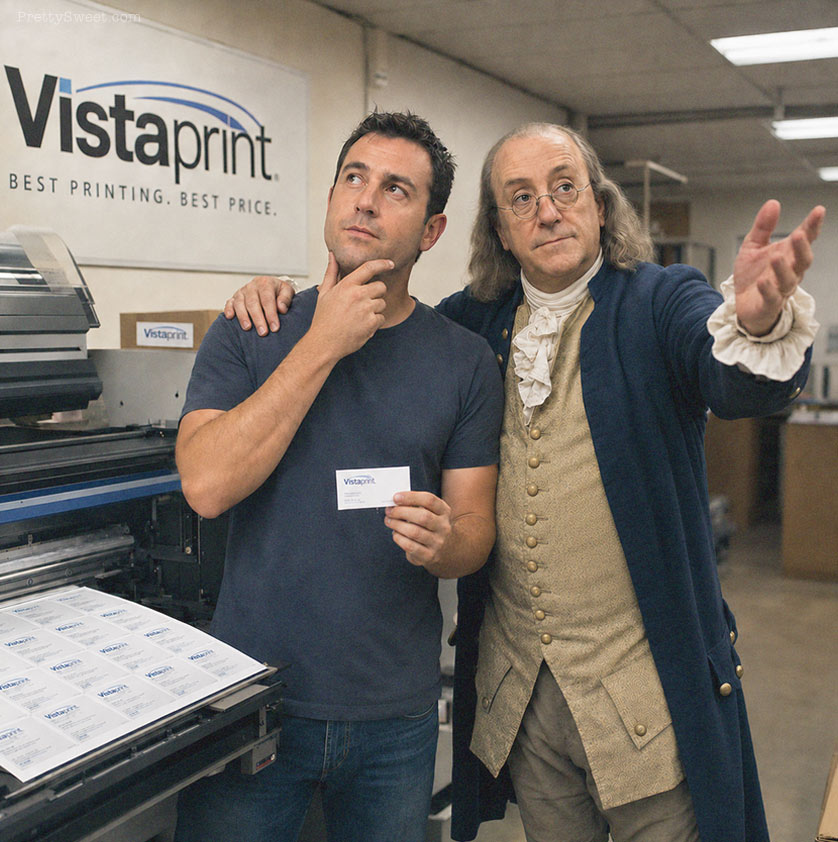
Today, ordering business cards online is very easy and affordable, and we kind of take that for granted. Choose a template, add your logo and details, then wait for a little white box to arrive at your door.
In the mid-1990s, however, professional printing was not nearly so friendly; especially if you ran a very small business. Local printers often required large minimum orders, graphic design could be expensive and a modest batch of full-color business cards might feel like something only established companies could afford. In fact, if you wanted to start a landscaping, tutoring, dog-walking, or babysitting business, printing business cards was a bit of a luxury.
VistaPrint was created to change that.
Who Founded VistaPrint?
VistaPrint was founded by Robert Keane in 1995. The idea began while Keane was studying at INSEAD business school in France and noticed a problem hiding in plain sight: small businesses needed professional marketing materials, but the traditional printing industry was largely designed for customers placing big orders with big budgets.
Keane’s original company was called Bonne Impression, French for “good impression.” Its goal was to make low-volume printing faster, more flexible and more affordable. In those early days, the company sold desktop publishing software, specialty paper and other products that allowed business owners to create printed materials using their own computers and printers.
It was a practical idea, but the young internet was about to make it much bigger.
VistaPrint Moves Online
As internet use expanded in the late 1990s, Keane recognized that customers would eventually want to design and order printed materials entirely online. Bonne Impression shifted away from its original desktop-printing model and began developing browser-based design tools and automated printing systems.
In June 1999, the company changed its name to VistaPrint and launched online services in France and the United Kingdom. It entered the U.S. market in 2000.
This was more than simply putting a print shop on a website. VistaPrint developed technology that could combine thousands of small customer orders into larger, more efficient production runs. Instead of printing 250 business cards as a completely separate job, the company could place multiple customers’ cards onto the same large sheet. That meant they could even offer 100 economy business cards for free to hook new customers. That promotion would have been unthinkable before, and probably would have led to losses on the scale of Red Lobster's endless shrimp disaster!
That process helped reduce waste, setup time and production costs. The savings made it economical to accept the small orders that traditional commercial printers often disliked. Boom! That was the really the key to it all.
VistaPrint had essentially figured out how to give a one-person landscaping company, freelance photographer or newly licensed real estate agent some of the purchasing power of a much larger business.
Rapid Growth and the VistaPrint IPO
The combination of online ordering, customizable templates and affordable prices proved extremely popular. VistaPrint opened its first production facility in the Netherlands in 2003, along with its first customer-service center in Jamaica.
The company’s growth during this period was dramatic. Annual revenue increased from approximately $17 million in fiscal 2002 to $815 million in fiscal 2011, all without relying on acquisitions. That's pretty impressive growth in any industry!
On September 30, 2005, VistaPrint became a publicly traded company. Its shares began trading on the Nasdaq under the ticker symbol VPRT.
Business cards remained one of its signature products, but the catalog steadily expanded to include postcards, brochures, invitations, signs, banners, stationery, promotional items, clothing and other customizable products.
Its frequent promotions also helped make the company a familiar name. For many customers, VistaPrint became the first place they looked when they needed 500 postcards, a lawn sign or a coffee mug featuring a logo that had been designed approximately 20 minutes earlier.
From VistaPrint to Cimpress
As the business grew, VistaPrint’s parent company began expanding beyond a single printing brand. It acquired and developed other companies serving different countries, products and customer groups.
In 2014, the corporate parent changed its name from Vistaprint N.V. to Cimpress N.V. The change separated the name of the parent organization from VistaPrint, which continued operating as a customer-facing brand. The company’s Nasdaq ticker also changed from VPRT to CMPR. (Source)
Cimpress described its broader specialty as “mass customization,”or the ability to produce personalized items in small quantities while achieving efficiencies closer to mass production.
VistaPrint remained its best-known brand, but Cimpress eventually built a portfolio that included online printing, signage, promotional merchandise, packaging and customized writing products.
VistaPrint Expands Beyond Printing
During the 2020s, VistaPrint began positioning itself as more than an online printer.
In 2020, Cimpress acquired 99designs, connecting VistaPrint customers with a worldwide network of freelance designers. The following year, the company acquired Crello and Depositphotos. Crello was renamed VistaCreate, giving customers tools for creating social media graphics and other digital marketing content.
In October 2021, the company introduced Vista as an umbrella brand encompassing VistaPrint, VistaCreate, 99designs by Vista and other design and digital services. The move reflected a larger goal: helping small businesses create a consistent identity in print and online, rather than simply selling them a box of business cards.
Florian Baumgartner became CEO of the Vista business in February 2023, while Robert Keane continued as founder, chairman and CEO of parent company Cimpress.
VistaPrint History Timeline
- 1995: Robert Keane founds Bonne Impression in France.
- 1999: The company changes its name to VistaPrint and launches online in France and the United Kingdom.
- 2000: VistaPrint enters the United States.
- 2003: The company opens its first production facility and customer-service center.
- 2005: VistaPrint begins trading publicly on the Nasdaq under VPRT.
- 2011: Annual revenue reaches $815 million.
- 2014: The corporate parent becomes Cimpress, while VistaPrint remains the consumer brand.
- 2020: Cimpress acquires 99designs to expand VistaPrint’s professional design services.
- 2021: Vista launches as a broader print, design and digital marketing platform; Crello becomes VistaCreate.
- 2023: Florian Baumgartner becomes CEO of Vista. (Wow, that's a good name for a regal cat!)
- Today: VistaPrint continues offering business cards, signs, apparel, promotional products and other customized marketing materials as part of Cimpress’s global family of brands.
VistaPrint’s Lasting Impact
VistaPrint did not invent the business card, online shopping or commercial printing. Its breakthrough was bringing those things together at exactly the right moment.
Robert Keane saw that millions of small businesses wanted to present themselves professionally, even when they could not afford a designer, a large print order or an in-house marketing department. VistaPrint used online design tools, automation and large-scale production to close that gap.
What began as an effort to make small printing jobs affordable eventually helped reshape the custom-printing industry. VistaPrint’s real product was never just ink on paper. It was the ability to help a very small business look a little bigger, and perhaps make a good impression while doing it!
*Related: History of the Wall Street Journal
Frequently Asked Questions
Who founded VistaPrint?
VistaPrint was founded by Robert Keane in 1995. He started the company to make professional printing more affordable and accessible for small businesses.
What was VistaPrint originally called?
VistaPrint was originally called Bonne Impression, which means “good impression” in French. The company adopted the VistaPrint name in 1999.
When was VistaPrint founded?
VistaPrint was founded in Paris, France, in 1995. It began offering online printing services under the VistaPrint name in 1999.
Is VistaPrint an American company?
VistaPrint was founded in France and expanded into the United States in 2000. Today, it serves customers in numerous countries as part of Cimpress.
Who owns VistaPrint?
VistaPrint is owned by Cimpress, a publicly traded company specializing in personalized printing and mass customization.
Why did VistaPrint become Cimpress?
In 2014, VistaPrint’s parent company changed its name to Cimpress to reflect its growing portfolio of printing and customization businesses. VistaPrint remained a separate customer-facing brand.
When did VistaPrint go public?
VistaPrint became a publicly traded company on September 30, 2005. Its parent company now trades on the Nasdaq under the ticker symbol CMPR.
How did VistaPrint become successful?
VistaPrint used online design tools, automated production and grouped printing orders to make small quantities of customized products more affordable. This model appealed strongly to small businesses.
What products does VistaPrint sell?
VistaPrint sells business cards, postcards, signs, banners, invitations, clothing, promotional products, stationery, packaging and other customizable marketing materials.
Is VistaPrint still in business?
Yes. VistaPrint continues to operate as a major online printing and marketing brand within the Cimpress group of companies.