 |
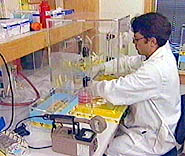
Confine radioactive materials to as small of an area as possible.
|
|
Use placards and physical barriers to minimize access and exposure.
|
|
Restrict use to those employees who have been approved to work with and
handle radioactive materials.
|
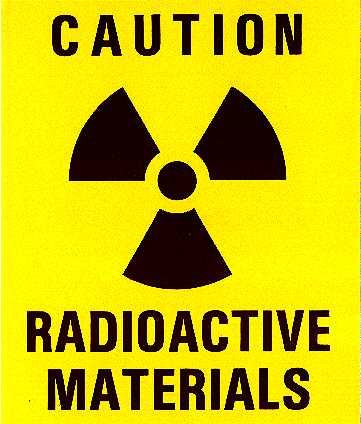
| Label with appropriate signs all areas where radioisotopes are used. |
|
Conspicuously post the entrance of an area where radioactive materials are used. Signs or labels shall also be affixed at locations within the laboratory/area where radionuclides are used or stored. A copy of the emergency rules and the Standard Operating Procedure for the specific task should also be posted within the work area. |
| All areas where radioactive material is stored or used must be locked or guarded at all times. This is a Nuclear Regulatory Commission security regulation that has become more important than ever in recent times. |

|
Label all refrigerators used to store radioisotopes. Never store food or
drinks in
the same refrigerator used to store radioactive materials or use microwave
ovens for heating food that were used for such materials.
|
|
Do not smoke, eat, or drink in a room where radioactive materials are
handled.
|
|
Perform all operations on a surface covered with an absorbent paper with
plastic backing.
|
|
Wear protective clothing as necessary and a double set of gloves (when
required) when working with radioactive
materials. Change gloves frequently.
|
|
Isolate, label, and dispose of radioactive wastes according to approved
guidelines and utilize approved containers.
|
|
Secure all radiation material, remove and dispose of protective clothing
and covering, monitor and decontaminate yourself and surfaces, wash your
hands, and monitor them again when completing an operation.
|
|
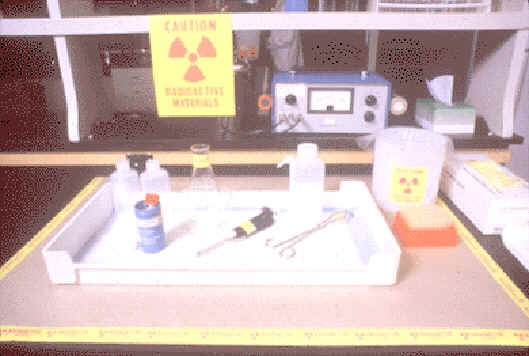
Perform all work or activities involving relatively large volumes of radioactive material in a spill tray lined with absorbent paper. |
|
Whenever possible plan and practice procedures involving radioactive materials in advance using non-radioactive materials.
|
|
Wear protective clothing that is appropriate for work conditions when
working with radioactive materials. This includes lab coats, gloves, and
safety glasses. Appropriate footwear must always be worn. (Sandals should
not be worn when working with radioactive materials.)
|
|
Do not use respirators for protection against airborne radioactive material. Respirators are not approved for this purpose. Work procedures and equipment should be designed to prevent the release of any radioactive substance into the room air. Processes that involve volatile or gaseous material or that generate particulates shall be confined to an approved fume hood operating with a face velocity of at least 100 linear feet per minute (lfm) or to an approved glove box. |
|
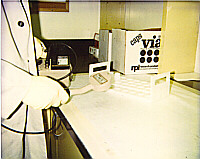
The work area and the researcher should be regularly monitored for contamination and decontaminated if necessary. |
|
Dosimeters are required to be worn when working with relatively large quantities of radioactive materials that emit penetrating radiation or when specified by the Radiation Safety Officer or Radiation Safety Committee. The Radiation Safety Officer will issue this dosimetry. |
|
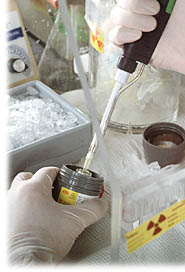
Never pipette any radioactive solution by mouth. |
|
Assume that all equipment that comes into contact with radioactive
materials is contaminated.
|
|
All containers of radioactive materials and items known, or suspected to be, contaminated should be properly labeled (e.g., with tape or tag bearing the radiation logo and the word "radioactive"). |