|
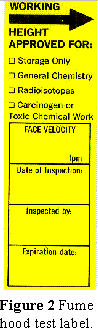
Confirm that the hood is operational. If
fitted with a local on/off switch, make sure the switch is in the
"on" position; check the air flow gauge if so equipped. In the
absence of a gauge, you can tape an inch wide strip of tissue to the lower
corner of the sash. Air flow can be visually assessed by noting that the
tissue is pulled gently into the hood. The most recent hood test data and
optimum sash height are indicated on the yellow sticker affixed to the hood
face. Never work with a malfunctioning hood; report problem hoods to Ted
Ward at 4-4548.
|
Maintain operations at least 6" inside the hood face.
Barricade tape can be attached to the work surface to serve as a visual
reminder.
|
Lower sash to optimum height. Optimum height is the sash
height at which air flow is maximized without creating turbulence, generally
100 - 150 feet per minute. A yellow sticker placed on the hood face
indicates the most recently recommended sash height. With unattended or
potentially explosive processes, conduct the operation behind a lowered sash
or safety shield.
|
Keep head out of hood except when installing and
dismantling equipment.
|
Keep hood storage to an absolute minimum. Keep only items
needed for the ongoing operation inside the hood. Keep the back bottom slot
clear at all times as it serves as an exhaust port for fumes generated near
the work surface. Raise large objects at least two inches off the hood
surface to minimize air flow disruption. This can be accomplished by
placing small blocks or test tube racks under the items. Ensure
the items are stable and on-balance.
|
Minimize foot traffic around the fume hood. A person
walking past a fume hood can create competing currents at the hood face,
causing vapors to flow out. Other sources of competing air currents such as
open windows and fans should also be avoided while using a fume hood.
|
Use extreme caution with ignition sources inside a fume hood.
Ignition sources such as electrical connections, Variac controllers and open
flame can be used inside a fume hood as long as there are no operations
involving flammable or explosive vapors. If possible, ignition sources
should remain outside the hood at all times.
|
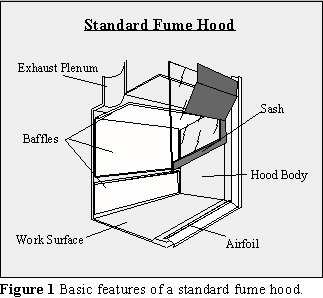
Replace hood components prior to use. Every component of a
fume hood, whether airfoil, baffle, or sash, plays a vital role in
preventing the escape of hazardous materials from the hood. Any hood
components removed to conduct maintenance or repair activities, or to set up
experimental apparatus must be replaced prior to using the hood for
contaminant control.

|
| | | | | | |

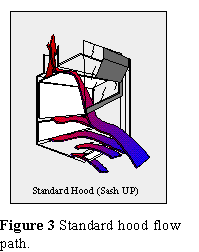 Conventional
hoods represent the original and most simple of the hood design styles. With a
conventional hood the volume of air exhausted is constant, regardless of sash
height. As the sash is lowered the opening area decreases, resulting in an
increase in face velocity. Since face velocity changes dramatically with sash
position it is particularly important when working with conventional hoods to
maintain the sash at its optimal height as indicated by the yellow sticker
attached to the hood frame. Optimal sash height represents the point where face
velocity equals 100 - 150 fpm.
Conventional
hoods represent the original and most simple of the hood design styles. With a
conventional hood the volume of air exhausted is constant, regardless of sash
height. As the sash is lowered the opening area decreases, resulting in an
increase in face velocity. Since face velocity changes dramatically with sash
position it is particularly important when working with conventional hoods to
maintain the sash at its optimal height as indicated by the yellow sticker
attached to the hood frame. Optimal sash height represents the point where face
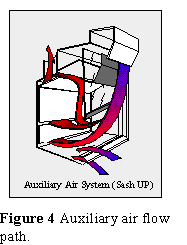
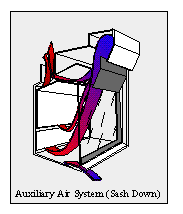
velocity equals 100 - 150 fpm.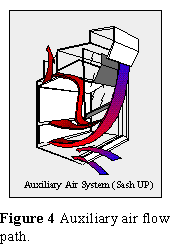 While
energy savings can be substantial, the unconditioned air flow can cause
discomfort for those working near the hood. It is important to keep in mind,
however, that the auxiliary air supply is necessary for proper functioning of
the hood. Any alteration of the air supply system such as sealing off the
auxiliary air duct will adversely affect hood operation and may result in
hazardous chemical exposures. If the sash of an auxiliary air hood is kept
closed most of the unconditioned air will bypass through the hood, reducing its
effect on room temperature and humidity. Remember to check the optimum sash
height since it will affect face velocity in a manner similar to that for bypass
hoods.
While
energy savings can be substantial, the unconditioned air flow can cause
discomfort for those working near the hood. It is important to keep in mind,
however, that the auxiliary air supply is necessary for proper functioning of
the hood. Any alteration of the air supply system such as sealing off the
auxiliary air duct will adversely affect hood operation and may result in
hazardous chemical exposures. If the sash of an auxiliary air hood is kept
closed most of the unconditioned air will bypass through the hood, reducing its
effect on room temperature and humidity. Remember to check the optimum sash
height since it will affect face velocity in a manner similar to that for bypass
hoods.