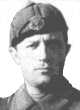
MACEDONO-BULGARIAN
HEROES:
IVAM
MIHAILOV
(1896,
Shtip Vardar Macedonia-1990, Rim-Italy)
Ivan Mihailov (Bulgarian: Иван Михайлов), also known as Vanche
Mihailov (Bulgarian: Ванче Михайлов), (August 26, 1896, Novo Selo,
present-day Republic of Macedonia – September 5, 1990, Rome, Italy)
was a Bulgarian revolutionary, leader of the Internal Macedonian
Revolutionary Organization after 1924.
Mihailov studied at the Bulgarian Secondary School "St. Cyril and
Methodius" in Solun/Thessaloniki until the Second Balkan War when
the school was closed by the new Greek administration and he was
forced to continue his studies at a Serbian school in Skopje. He was
offered a scholarship by the Serbian Ministry of Education to pursue
a degree at a European university but declined and enlisted instead
in the Bulgarian army. After the end of World War I, Mihailov
settled in Sofia and started to study law at the Sofia University
where he was contacted by activists of the IMRO and offered to work
as a secretary for IMRO’s leader at that time, Todor Aleksandrov.
After the death of Aleksandrov on August 31, 1924, Mihailov was
elected member of the Central Committee of IMRO and shortly
afterwards became leader of the organisation. The election of
Mihailov as leader of IMRO marks a period of intensification of the
armed struggle of the organisation in Greek, and especially in
Serbian Macedonia. A total of 63 terrorist acts and attacks on
bridges, warehouses, Serbian police stations and military targets
were undertaken between 1922 and 1930, the number of the
assassinated Serbian officials and collaborators of the regime in
Belgrade numbered some 1,000.
In the late 1920s, Mihailov got into contact with the leader of the
Croatian Ustase movement, Ante Pavelic and the two organisations
started to co-operate in their struggle against the Yugoslav regime.
The most obvious result of that co-operation was the assassination
of the arch-foe, King Alexander I of Yugoslavia, on October 9, 1934
in the French city of Marseilles. The assassination was carried out
by the personal driver of Mihailov, Vlado Chernozemski.
The events in 1934 prompted the Bulgarian government to take action
against the IMRO and expelled Mihailov from Bulgaria. Mihailov had 9
life-sentences and 3 death-sentences in Bulgaria.
Although IMRO's goal was creation of an independent Macedonian
state, some previous Bulgarian governments tolerated it as its goal
was the liberation of the Macedonian Bulgarians as well from the
Greek and Yugoslav occupation. As a result of this, IMRO had built
an extensive network in Pirin Macedonia and Sofia, which was used to
provide financing for the organisation and an operational base from
which the incursions into Yugoslavia and Greece were conducted.
After 1934, Mihailov lived in Turkey, Poland and Hungary to finally
settle in the capital of the Independent State of Croatia, the
Ustaša puppet-state between 1941 and 1944. In 1941, Mihailov refused
to return to Bulgarian-occupied Macedonia and stayed in Croatia
until the end of the war. In September of 1944 he was offered by the
Germans to head a future semi-independent Macedonian state but he
declined favouring the occupation of Vardar Macedonia by Bulgaria.
In 1944, he was forced to flee again, this time to Italy where he
lived for the rest of his life.
Although IMRO was no longer active, Mihailov remained the leader of
the Macedonian Liberation Movement and was supported by the
Macedonian Patriotic Organization of US and Canada, of Fort Wayne,
Indiana. He wrote 4 books of memoires and regularely wrote articles
for The Macedonian Tribune, the oldest continuously published
Macedonian emigree paper. Until the end of his life Mihailov
continued his interest in the fate of the Macedonian Bulgarians and
was committed to a free, independent and united Macedonian state.
He, Ivan Mihailov about the developments in Vardar Macedonia
after 1944
The following is an excerpt from an article by Ivan Mihaylov:
"There has been a Macedonian Question only since the Congress of
Berlin.
I have always been part of the Macedonian Liberation Movement but I
am a son of the Bulgarian people, just as the Slavs of Macedonia
have been Bulgarians for a thousand years.
For us, a "Macedonian nation" means Yugoslavism and Yugoslavism
means imperialism, which aims at snatching Thessaloniki and a part
of Bulgaria. In two words: a "Macedonian nation" can mean the
addition of one million new Serbs to the Serbian people.
There is no narrow nationalism in favour of any nationality within
IMRO. When it defends nationalism, it must be understood in the
sense that the organisation is against the denationalisation of the
ethnicity, whatever it may be.
In united Europe (if it becomes a reality), Macedonia should be
represented by itself, not by Belgrade and Athens, or by anybody
else."
By:
http://en.wikipedia.org/wiki/Ivan_Mihailov
|