| When Graffiti was finally released on August 1, 1973, America's attitude about itself seemed ravaged from so much turmoil that had taken place during what historians often call the "turbulant sixties." Four months earlier, American President, Richard Nixon ended Americas' eleven year futile involvement in South East Asia by pulling out the last of the American troops in South Vietnam. The country was tired and divided and many longed for a simpler time. Graffiti seemed to be the elixer that the country needed. Had it really only been eleven years? The nostalgia it evoked worked to elude viewers of the turbulent social problems of the early 70s. At least for an hour and a half. In comparison to the more aggressive counter culture of the 60s, the teenagers in 50s were less threatening and basically harmless. Filmgoers delighted in experiencing and remembering a time when things seemed less complicated. Audiences loved it and most reviewers raved about the film. "The warmest, most human comedy in a long time...masterfully executed...profoundly affecting...sensationally funny," wrote Charles Champlin of the L.A. TIMES. |
| GRAFFITI STYLE |
| Page 5 |
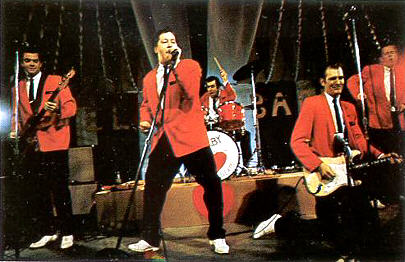
| (left) Flash Cadillac & the Continental Kids [Herby & the Heartbeats], normally dressed like Greasers for their retro-50s act but Lucas had them wear matching suits for the sock hop scene in the film. |
 |
|
| (c.) Kip Pullman, 2005-2006 |
| MR. LUCAS a Sexist Pig??? |
| However, sexist some might see the film,one thing is for sure: without women the story would be boring. After all, it�s the women that motivate the young men in Graffiti. Women are the foundation for most of the action. For instance, Debbie encourages Toad to buy liquor, which in turn causes a robbery. And, Toad wouldn�t be nearly as funny if he wasn�t trying to impress and win the affection of Debbie by feeding her lines such as, �I used to have a couple of horses myself. I used them for hunting. I do a lot of hunting. Deer mostly, although I got a couple of bear last year. Yep, they were good ponies-hunting ponies. I had to train �em special, you know.� Other clear examples of women initiating action in the film include Carol encouraging John to stop and vandalize a car full of girls, and Curt chasing a mysterious blonde all over town. And, ultimately Laurie shows she has the upper-hand in the relationship by manipulating Steve to stay in town with her rather than leave for college back east with her brother, Curt. |
 |
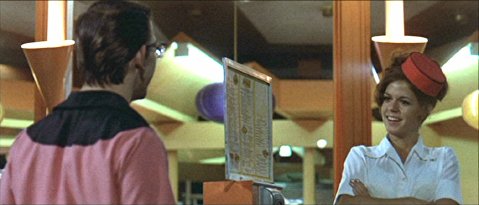
| Ron Howard was 18 years old and Cindy Williams, (who plays his younger girlfriend), was 25 years old at the time Graffiti was filmed. |
| Hmmm, who wears the pants? |
 |
|
 |
| Although most critics loved American Graffiti some critics such as the influential Pauline Kael of THE NEW YORKER Magazine (1968-91), believed the film to be sexist. For instance, she pointed out that although the film tells what happened to each of the four male characters, viewers learn nothing about the fate of the girls at the end of the film. Ms. Kael refers to the the wonderful, bitter sweet postscript that is used as a re-affirmation that things change and to put the film in perspective. For clarity and balance it only makes sense that because the story begins with four white boys growing up in a small town in the early sixties that the story should also end with the focus on the same four protagonists. And, even though Ms. Kael has a valid point, Cindy Williams, who played Laurie in the film, defends Lucas' choice to only include the four young men in the end titles, poignantly stating, "It smacks of the times." And, indeed it did. Housekeeping and raising a family were considered ideal female roles in 1962. Those women that did work outside the home had yet to attain any position of influence: about 70 percent held clerical, assembly-line or service jobs in the latter part of the 1950s and early 1960s. Suburban values were sexist so, the film is consistent for a story about that year. |
 |
 |
 |