 |
 |
| Where were you in 62?: American Graffiti, George Lucas and the Baby Boom Generation Pg. 2 |
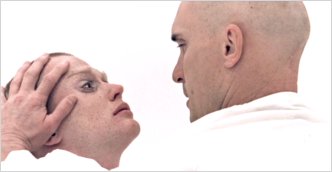
| 1 The Origins of American Graffiti There are close links between Lucas' teenage car obsession and his filmmaking. His student films at the University of Southern California included a short and very dynamic documentary (made in 1966) about a race car driver turning laps, and a more abstract experimental film (also from 1966), exploring the reflections of traffic on the glistening surface of a car at night. After film school Lucas made two documentaries in Hollywood, before joining his mentor, the slightly older Francis Ford Coppola, in San Francisco. Here Lucas' first full length movie based on his prize winning 1967 student Science Fiction film THX 1138:4EB (Electronic Labyrinth) featured a prolonged chase sequence, in which robotic motorcycle cops pursue the hero who tries to escape from an oppressive underground society in a futuristic car. Despite the excitement generated by this chase, as a whole the film THX 1138 was a rather difficult experience for viewers at the time. It retained many characteristics of Lucas' earlier experimental work, and told its story of one woman's fatal desire and her lover's successful, yet probably futile rebellion in a far from straightforward manner. Not only was it difficult to empathise with the main characters, but often enough it was difficult to figure out what was going on in the first place. This brilliant and challenging film was the first in a series of productions being developed at Coppola's American Zoetrope studio, which he intended to be a Northern Californian alternative to Hollywood, a haven for young, innovative filmmakers such as Lucas. However, Zoetrope had required seed funding from Warner Bros., one of the Hollywood majors, and when Warner executives first saw THX 1138 in 1970, they were horrified. Warner Bros. withdrew its investment from Zoetrope, thus closing down its production activities, and also gave Lucas' film (which the studio re-edited) little support during its initial release in 1971. Not surprisingly, it flopped. |
 |
| As far as Lucas was concerned, the failure of THX 1138 and the collapse of Zoetrope forced him to reconsider his relationship with Hollywood. Unable to stay away from it in Northern California, he decided to conquer Hollywood with what he felt to be two highly commercial projects a big screen version of the Flash Gordon and Buck Rogers Science Fiction serials he had watched on television as a child, and a film about pop music and youth in early 60s America, loosely based on some of his own teenage experiences, especially his obsession with cars and the surrounding cruising culture. This second project turned into American Graffiti, while the first developed into Star Wars, the film which eventually allowed Lucas to realise Coppola's dream of a Northern Californian alternative to Hollywood. One might say that Zoetrope was reborn as Lucasfilm and Skywalker Ranch. But before any of this could happen, Lucas needed to establish his commercial credentials after the failure of THX 1138. He wrote a short outline of American Graffiti (a so-called treatment), on the basis of which he received $10,000 from United Artists (another Hollywood studio) to write a full screenplay. As Lucas was unsure about his own writing abilities after having been chiefly responsible for the script of THX 1138, he asked various former film school class mates to write it for him. Yet, several early script drafts proved unsatisfactory both to Lucas and, more importantly, to United Artists. His deal with the studio fell through. Borrowing money, Lucas was able to pay Willard Huyck and Gloria Katz for another version of the script, which with significant input from Lucas eventually proved workable. Universal Pictures was willing to fund the production of the film, yet remained cautious by limiting the budget to $750,000, which was only about a third of the average budget of a Hollywood picture at the time. What is more, a substantial portion of this budget would be needed to pay for music rights. These were absolutely essential because Lucas conceived of the film as a kind of "musical," whereby pop songs on the soundtrack would constantly accompany the action, expressing the characters' thoughts and feelings, or commenting on their situation. |
| Maggie McOmie & Robert Duvall in THX 1138 |