 |
| Planes of Fame, Chino California Click here for the official Planes of Fame Webpage Chino is a museum that is different from most in that some of its planes still fly. World War 2 Japanese and German planes are on display near American planes of the same time. And they have a huge collection of models.. |
 |
 |
 |
 |
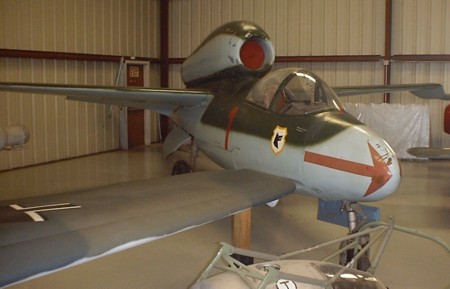
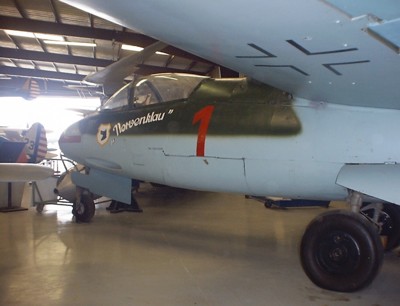
| Heinkel He-162 This small one engine, one pilot jet was built by Germany in 1944. The plan was to make a plane that could be mass-produced and easy to fly. The designers were presented with a huge challenge in designing a production jet aircraft when the jet engine itself was in its early days. |
| The "Volksjaeger" was made partly of wood and was an interesting design. Drooped wingtips, a "butterfly" type twin tail fin and a early ejection seat are some unique features for this plane. The max speed was 553 mph but it was an unstable aircraft. Only pilots with experience could safely fly this craft. |
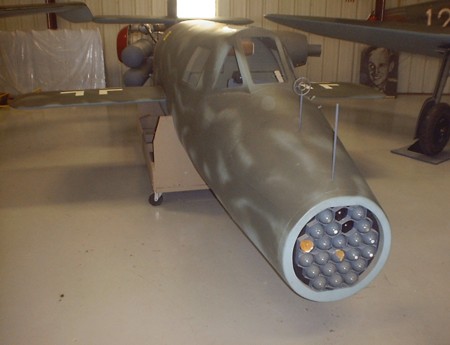
| Bacham BA 349 This German rocket powered craft never got past the testing stage. The pilot would be launched vertically into enemy bomber formations. After releasing explosive rockets into the enemy bombers the pilot would fly away using any remaining fuel. The nose of the "Natter" would separate and the pilot would bale out to fly another day. The rocket engines would be found and re-used but the other parts would be scrapped. Any volunteers? |
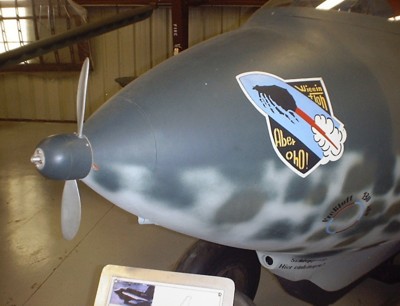
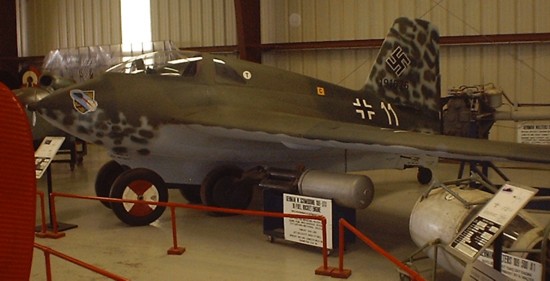
| Messerschmitt Me-163 The goal of this rocket fueled fighter was the same as the Ba-349. However, the plane took off and landed horizontally. The pilot attacked with machine guns instead of rockets. The rocket burned concentrated hydrogen peroxide and sodium or calcium permanganate. The hazardous nature of these fuels caused many accidents. Although this fighter did see some combat its effectiveness was questionable. |