Having enjoyed immersing ourselves in beach and rainforest when based at Port Douglas, we flew to Darwin.
We never really got to grips with Darwin, staying just one night either side of a camping tour. Darwin feels �new� as it had to be rebuilt following a cyclone in 1974. A lot of employment has been brought to the area due to offshore gas rigs and the building of a pipeline to Timor. Anyway, it felt a laid-back place and is spacious. Apparently visitors come for a while and end up never leaving. To us, however, it felt like it was a long way from anywhere!
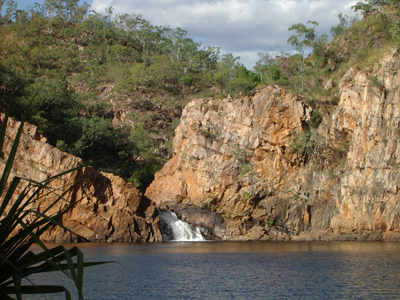
Our camping tour took in Kakadu, Nitmiluk (incl. Katherine Gorge) and Litchfield National Parks. We learnt a lot about the countryside from an utterly enthusiastic guide. The landscapes are amazing with gorges, sandstone escarpments, miles of high spear grass and wonderful trees and wetlands. We saw bush fires (carefully managed) and learnt of the importance of these to regeneration of the land. We swam in waterholes (some as big as lakes) with waterfalls cascading into them and hiked to view ancient aboriginal rock art. We sailed up Katherine Gorge, went out on a billabong festooned with lilac water lilies and pink lotus flowers and saw many unusual birds and the odd crocodile. Our tents had mesh sides so it felt like sleeping outside. The occasional wallaby hopped past. Frogs and spiders in the toilets were more scary. The stars were �awesome� with the Southern Cross and Milky Way easily visible.
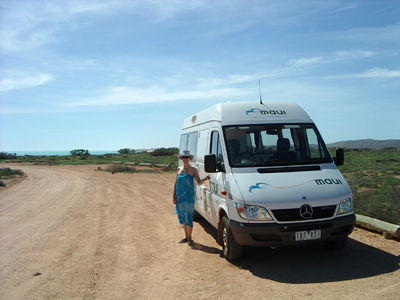
Back in Darwin we picked up our campervan and are currently heading down to Perth. When crossing from Northern Territories (or the �top end�) into Western Australia (WA), we passed through a quarantine check point where the van was searched by a friendly officer. Taking fruit and veg. across the border are prohibited to minimize pest transfer.
The Kimberleys in the north west are an area of sandstone ridges and rocky outcrops with remote cattle stations, lots of termite mounds, grasses and boab trees. The scenery changes from tropical to semi-arid. Distance between habitations can be huge and drivers usually acknowledge each other as it is often an event to encounter another vehicle. Huge road trains, juggernauts with up to 4 big trailers, thunder past on the highway (but only enough to keep us fascinated). These may be up to 50m long!
There are many aboriginal communities in the northwest and we have had several conversations with Australians about their status etc. From our superficial observations (apologies to those more knowledgeable), it all seems a complex and difficult ongoing situation with a long history of abuse by immigrants at many levels. A large proportion of the aboriginal communities (often based separately at the edge of town) are alcoholics and there are sobering-up shelters in most towns. There is little work ethic and literacy & numeracy are poor. As far as we can see, there is little integration into society. But then, aboriginals live on and with the land and �education� is passed on through art, storytelling and �dreaming�. Our cultures are so different. We did hear of one project in WA where a residential school is being built for children who live remotely. For the aboriginal children, there will be an outdoor sleeping platform and open fires for cooking. The governments, both federal and state, are promoting aboriginal culture through tourism and mention is made of aboriginal culture in most tourist literature etc. We only observed a few aboriginals who were actually employed in the tourist business although we believe that they are being consulted by the national parks regarding their culture and knowledge of the land. Increasing efforts are being made to involve them. However, people have differing views on aboriginals� land claims. They were given the status of Australian citizens only in 1967 and given the vote in the 1970s. Anyway, on to other things��
As we began to travel down the west coast, scenery grew more sparse and the distances between places increased. We enjoyed wonderful �big skies� and developed a fascination with the vastness of the landscape. Highlights have been visiting Sun Pictures, that has just entered the Guinness Book of Records as the oldest operating (since 1916) outdoor cinema. We sat on deckchairs for a good film but the moon and stars stole the show.
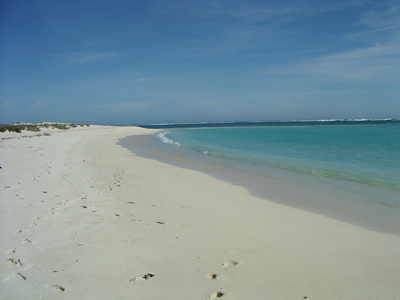
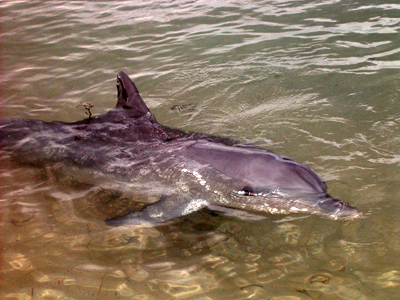
The Ningaloo Reef, the world�s largest fringing coral reef, was impressive and we thought was possibly better than the Great Barrier Reef. It comes as close as 50m to the shore in places and teems with fish and huge loggerhead and sea green turtles living in its very healthy coral. Bottlenose dolphins up close & personal at the world heritage site of Shark Bay were special. At a place called Monkey Mia, they regularly swim up to the edge of the water. Visitors are not allowed to touch them but we just stood in the water up to our knees and they swam all around us.
We are almost at Perth now (quicker than expected) but are going to investigate an area south of the city � watch out for the next update! Pictures below: