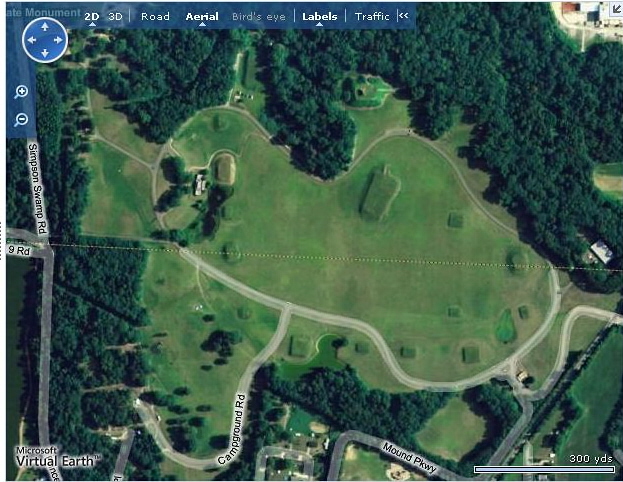
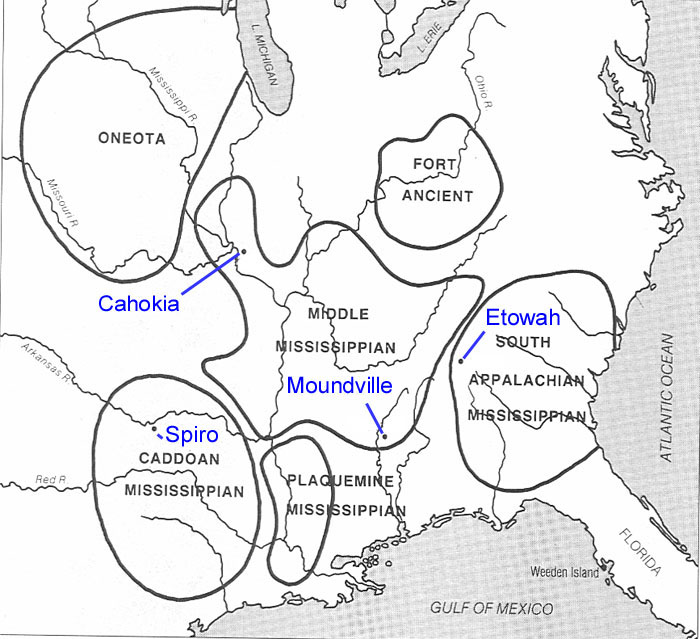
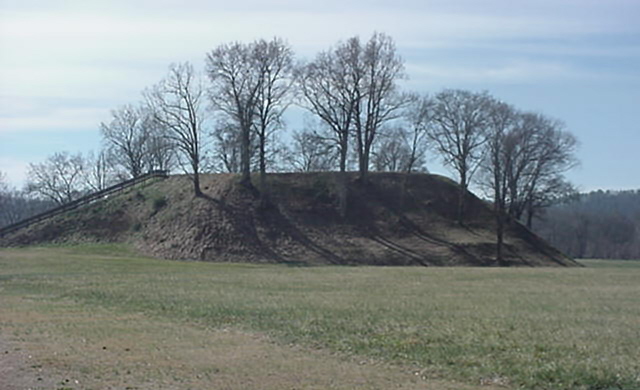
The Mississippian culture lasted from before 800 A.D. to after 1500 A.D. The four major sites were in Illinois (Cahokia), Georgia (Etowah), Alabama (Moundville) and Oklahoma (Spiro). Cahokia was the largest and most populous of the four major Mississippian sites. Trading is documented between the sites which all coexisted at the same time. Ultimately, all the major Mississippian sites were abandoned. Each site may have had different reasons for declining. Warfare, poor soil and water conservation, the little ice age, and my personal favorite: political turmoil. Political turmoil may have been fostered by social inequality and inherited positions of power. Could it be that the common man, after being offered safety and food, got tired of turning over his crops and building mounds that were not truly his? Longing for freedom, he may have left and taken his chances in small settlements.
Lessons to be learned for all of us. |