Abe Silverstein 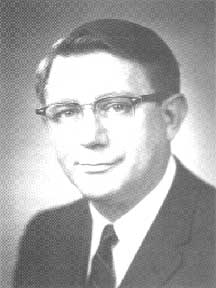
(1908 - Present AD) Born in Terre Haute, Indiana, Abe Silverstein was trained in mechanical engineering at the Rose Polytechnic Institute graduating in 1929. He was then hired by NACA as an aerodynamicist to work on the design of the Altitude Wind Tunnel to be built in Cleveland. He started at Langley then transfered to Cleveland. In October 1943, he became chief of Engine Installation Division to head the wind tunnel's research program In 1944, he joined the NACA High-Speed Panel and advocated supersonic wind tunnel built in Cleveland, completed 1949. Ray Sharp, the Lewis Director, had a background in law and so had Silverstein take over technical management of the Lab in 1949. Silverstein recognized the importance of rocketry research, which had been going on at Lewis since 1945 under cover as "High Pressure Combustion" research to avoid the appearance of being "Buck Rogers types." He officially established the Rocket Research Branch despite the reluctance of the conservative NACA headquarters to pursue such radical work. The group built engines for a variety of propellants and by the late 1950's had settled in on liquid hydrogen (LH2) and liquid oxygen (LOX) as the best combination. Lewis engineers modified a B-57's engine and flight tested it with liquid hydrogen. Silverstein was named Associate Director of the Lab in 1952. When NASA was formed in 1958, Silverstein became head of the Office of Space Flight Programs at Headquarters. He was responsible for the Mercury Program and for all unmanned satellite programs for the first three years of the agency. He named the Apollo program and, together with George Low, layed the groundwork for that program's success in landing a man on the Moon. The new NASA needed a new space flight center. Silverstein chose the site and proposed the name for the new Goddard Space Flight Center. He negotiated with the Navy to transfer the Vanguard team from the Naval Research Laboratory to form the nucleus of the new center. He even served as acting center director until Harry Goett took the job. In late 1959, a seven man committee was formed officially called the "Saturn Vehicle Team" and unofficially known as the Silverstein Committee. Chaired by Abe Silverstein, the committee was formed with members from the military including Wernher von Braun of the Army Ballistic Missile Agency.
NASA had inherited an LH2 development program as a result of NACA work carried on at Lewis Research Center throughout the 1950's; the work culminated in the successful test of a 89,000 newton (20,000 pound) thrust LH2 engine and propellant injector in the late 1950's. The Lewis LH2 group, led by Abe Silverstein, had been convinced of the practicality of LH2 by subsequent successful test runs. The research at Lewis - and in successful prototype engine design - encouraged Silverstein to push hard for LH2 engines in Saturn's upper stages. The first practical application of the LH2 engine was planned as a high-energy stage, named Centaur, for Atlas or Titan. ...When the Silverstein committee convened in December, not everyone was in favor of the untried LH2 technology because LH2 was widely thought to be too volitile and tricky to handle. Von Braun in particular expressed doubts about LH2 even though the Saturn-Atlas combination had the Centaur's LH2 system in the Atlas final stage, and he was definitely opposed to a new LH2 Saturn second stage. ...Using his background in the work previously done at Lewis, Silverstein argued with all the persuasive powers at his command. It was just not logical, Silverstein emphasized, to develop a series of vehicles over a 10-year period and rely on the limited payload capability of conventionally fueled boosters with liquid oxygen and kerosene-based prepellants. He was convinced that the use of LH2 in the upper Saturn stages was inherently sound, and his conviction was the major factor in swaying the whole committee, von Braun included, to accept LH2 boosters in the Saturn program. "Abe was on solid ground," von Braun acknowledged later, "when he succeeded in persuading his committee to swallow its scruples about the risks of the new fuel."
- Bilstein, Roger E.: Stages to Saturn, NASA SP-4206, 1980, pg.44-45. A new NASA administrator, James E. Webb, took office in 1961 and reorganized headquarters. He offered Silverstein the opportunity to manage the Apollo program under a new centralized orgainization. One of the reasons Webb decided on this new management structure could have been the well-known friction between Silverstein and von Braun. With strong technical backgrounds and equally strong opinions, each had operated within separate spheres of NASA. Initially, when the Army Ballistic Missile Agency became Marshall Space Flight Center in March 1960, it was placed under the newly created Launch Vehicles Programs. However, if Silverstein were to direct the Apollo Program under the decentralized, semi-autonomous structure he favored, von Braun would become his subordinate. With von Braun and Silverstein "at loggerheads," the situation would have been intolerable. Von Braun protested that he would not have his center run by a "colony of artists" - his characterization of the NACA engineers associated with Silverstein in the Office of Space Flight Programs.
-Dawson, Virginia P.: Engines and Innovation, NASA SP-4306, 1991, pg. 169. In 1961, Silverstein decided to return to Lewis as Director. Leaving the power struggles of Washington behind, he would still make contributions to the launch vehicle program. The LH2-fueled Centaur stage had begun as a Defense Department project then was transferred to Marshall Space Flight Center as NASA consolidated the civil space program. In September 1962 Edgar Cortright, then Deputy Director of the Office of Space Sciences at NASA Headquarters, remembered the keen interest in liquid hydrogen at Lewis. He asked Silverstein to come to Headquarters where he brandished a letter that his boss, Homer D. Newell, had received from Wernher von Braun. von Braun thought that NASA should cancel the Centaur Program. von Braun apparently was not yet convinced of the feasibility of liquid hydrogen as a fuel, despite his capitulation to Silverstein during the Saturn Evaluation Committee meetings in December 1959. ...Problems with NASA's contractors, General Dynamics and Pratt & Whitney, plagued the development of Centaur. However, the supervision of these contractors by the von Braun team had also played a role in its recent failures on the launch pad.
- Dawson, Virginia P.: Engines and Innovation, NASA SP-4306, 1991, pp.188-189.
Cortright asked Silverstein to take management of the Centaur program back to Lewis. The Centaur program, managed out of Lewis, went on to become a workhorse of the NASA stable of launch vehicles. Centaur was used to send the Surveyor spacecraft to the Moon, Viking to Mars, Pioneer to Jupiter and Saturn, Voyager to Uranus and Neptune, as well as on scores of other launches. RL-10 engines, developed for Centaur, were used on the Saturn upper stages.
Abe Silverstein retired in 1969 after 40 years of government service. |