Space Shuttle History 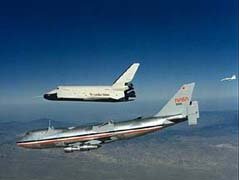 The Space Shuttle Orbiting Vehicle was conceived with the idea of having establishing a space vehicle that would make spaceflight a routine venture. Even today, the Space Shuttle is the only winged vehicle ever to fly into orbit and bring a crew back to Earth aerodynamically. In the United States the Mercury, Gemini, and Apollo manned space programs all required a expendable capsule, which would be used for only one spaceflight. In Russia, the same is true with their Vostok and Soyuz space capsules, which have been in use since 1961. NASA decided in the late 1960s that if space flight was going to be as routine as hoped, then a reusable spacecraft would have to be adopted. Even more logical was to make the spacecraft return to earth as an sort of glider or airplane that would have the capability of landing at an airport, rather than being plucked out of the ocean. Originally NASA wanted to create a fleet of a dozen or so of these "space shuttles" to fly into space once or twice a week, in order to transport people and equipment with the scheduled completion of a space station in the late 1970s. NASA, therefore, issued a report entitled America's Next Decades in Space: A Report of the Space Task Group that specified that a spacecraft was needed to support a space station and carry out other NASA needs. The Space Shuttle Orbiting Vehicle was conceived with the idea of having establishing a space vehicle that would make spaceflight a routine venture. Even today, the Space Shuttle is the only winged vehicle ever to fly into orbit and bring a crew back to Earth aerodynamically. In the United States the Mercury, Gemini, and Apollo manned space programs all required a expendable capsule, which would be used for only one spaceflight. In Russia, the same is true with their Vostok and Soyuz space capsules, which have been in use since 1961. NASA decided in the late 1960s that if space flight was going to be as routine as hoped, then a reusable spacecraft would have to be adopted. Even more logical was to make the spacecraft return to earth as an sort of glider or airplane that would have the capability of landing at an airport, rather than being plucked out of the ocean. Originally NASA wanted to create a fleet of a dozen or so of these "space shuttles" to fly into space once or twice a week, in order to transport people and equipment with the scheduled completion of a space station in the late 1970s. NASA, therefore, issued a report entitled America's Next Decades in Space: A Report of the Space Task Group that specified that a spacecraft was needed to support a space station and carry out other NASA needs.
North America Rockwell was chosen to be the winner of the proposals of this reusable spacecraft and in 1972, Rockwell began work on the design and construction of the Space Transportation System (STS) program. The reusable Space Shuttle would also consist of two other main components to help boost this spacecraft into orbit. One of these components was the massive bullet-shaped External Tank (ET) that would fuel the Space Shuttle's three main engines during launch. The second major component consisted of two strap-on Solid Rocket Boosters (SRBs) that would provide the majority of thrust for the Space Shuttle during liftoff and to help propel the spacecraft off the pad. The main component of the Space Transportation System was the Space Shuttle Orbiting Vehicle (OV), which is commonly known as the Space Shuttle, and is the central unit that houses the crew and payload. The primary mission of the STS program was to launch commercial and government satellites. The payload bay of the shuttle was, therefore, configured to accommodate up to a half dozen satellites. It was soon learned that this was cheaper than launching expendable rockets and the STS would actual begin to make money. 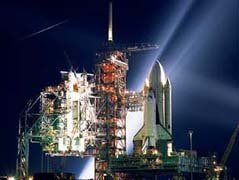 Finally in 1977 the first Space Shuttle rolled out after much political debate. The test shuttle was originally going to be designated the Constitution in honor of the famous American document, but the name was later changed to Enterprise after many write-in votes from Star Trek fans. The spacecraft Enterprise had the mission of testing the shuttle's ability to glide to a landing after being ejected from the Shuttle Carrier Aircraft (SCA). The SCA was a modified Boeing 747 passenger jet that had mounts on top to support and carry the shuttle to its designated release point. There were five of these glide home tests from the SCA to acquire valuable aeronautical data and then the Enterprise was used for ground testing and simulations. The Enterprise never was intended to reach the heavens and in 1985 the Enterprise was turned over to the Smithsonian Air and Space Museum for retirement. Finally in 1977 the first Space Shuttle rolled out after much political debate. The test shuttle was originally going to be designated the Constitution in honor of the famous American document, but the name was later changed to Enterprise after many write-in votes from Star Trek fans. The spacecraft Enterprise had the mission of testing the shuttle's ability to glide to a landing after being ejected from the Shuttle Carrier Aircraft (SCA). The SCA was a modified Boeing 747 passenger jet that had mounts on top to support and carry the shuttle to its designated release point. There were five of these glide home tests from the SCA to acquire valuable aeronautical data and then the Enterprise was used for ground testing and simulations. The Enterprise never was intended to reach the heavens and in 1985 the Enterprise was turned over to the Smithsonian Air and Space Museum for retirement.
The original plan called for the Space Transportation System to make its maiden voyage in 1979 and to become fully operational in 1981 after logging in 22 test flights. However, delays pushed the schedule back and caused Americans to remain out of space for six long years. Finally the first flight took off on April 12, 1981 from the Kennedy Space Center (KSC) in Florida and two days later the Space Shuttle Columbia made its first airplane like landing at Edwards Air Force Base. After four more test flights involving the shuttle Columbia, the first satellite-launching mission took place in April 1983 with the Space Shuttle Challenger. (Challenger became the second Space Shuttle of the fleet in July of 1982) For the next three years, the STS program was showing its worth. Challenger launched numerous satellites into orbit, and Columbia was fitted with a Spacelab module to conduct scientific missions in space. Two brand-new Orbiting Vehicles joined the satellite-launching fleet, Discovery in 1984 and Atlantis in 1985. Soon programs sprang up to get civilians into the space program; one of these included the Teacher in Space program. In early 1986, it seemed as if the STS program was absolutely perfect and infallible. On January 28, 1986, this attitude would change for the worse. The Space Shuttle Challenger was to be the 25th space flight and launched in a freak cold snap that engulfed Cape Canaveral. The Challenger exploded into a fireball 73 seconds into the flight, killing the entire crew instantly, including the Teacher in Space astronaut Christa McAuliffe. This disaster shattered the space agency NASA and the Space Shuttle's were grounded for a period of almost three years. Along with this tragedy, the launch of commercial satellites was banned and many improvements were made to the shuttle fleet. In September 1988, the STS program roared back into the skies as it has become a proven means of accessing space. 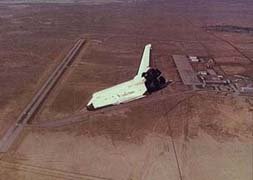 Columbia continued to fly with its Spacelab configuration, and a fifth shuttle, Endeavour, joined the fleet in May of 1992 to replace the fallen Challenger. Endeavour was built using the spare parts to repair damaged Space Shuttle Orbiters. The Space Shuttle has also launch and service the much treasured and venerated Hubble Space Telescope (HST), the Magellan Venus probe, and the Galileo Jupiter probe. Another major milestone for the shuttle program was the launch of the Long Duration Exposure Facility (LDEF) from Challenger (April 7, 1984) and 5.7 years later the facility was retrieved by Columbia. The LDEF remained in space longer than expected, but it gave ground engineers invaluable knowledge for the design of the International Space Station (ISS). In 1995, the STS program finished one of its primary goals of rendezvous and docking of a space station. The groundwork for the docking procedures to space stations was now done and the Mir-Shuttle program was now underway, with the crews of both spacecraft exchanging handshakes. Along with these friendly gestures was a open dialogue of information exchange that would pave the way for the ISS. Since the return of the Space Shuttle in 1988, between 40 and 50 people were flying into space annually and the missions have been gradually become longer in duration. Columbia continued to fly with its Spacelab configuration, and a fifth shuttle, Endeavour, joined the fleet in May of 1992 to replace the fallen Challenger. Endeavour was built using the spare parts to repair damaged Space Shuttle Orbiters. The Space Shuttle has also launch and service the much treasured and venerated Hubble Space Telescope (HST), the Magellan Venus probe, and the Galileo Jupiter probe. Another major milestone for the shuttle program was the launch of the Long Duration Exposure Facility (LDEF) from Challenger (April 7, 1984) and 5.7 years later the facility was retrieved by Columbia. The LDEF remained in space longer than expected, but it gave ground engineers invaluable knowledge for the design of the International Space Station (ISS). In 1995, the STS program finished one of its primary goals of rendezvous and docking of a space station. The groundwork for the docking procedures to space stations was now done and the Mir-Shuttle program was now underway, with the crews of both spacecraft exchanging handshakes. Along with these friendly gestures was a open dialogue of information exchange that would pave the way for the ISS. Since the return of the Space Shuttle in 1988, between 40 and 50 people were flying into space annually and the missions have been gradually become longer in duration.
The wounds of Challenger were almost completely healed, until a fateful morning in February of 2003. The Space Shuttle Columbia was scheduled to return back to Earth after a successful flight, however, the Shuttle never returned. As the clock at the landing facility at Kennedy Space Center counted upward signaling that the shuttle was off schedule, spectators in Texas were watching the fiery remains of Columbia fail from the sky. Once, again the shuttle fleet was grounded for an extended time to implement and safeguard the fleet from reoccurring tragedies. With the tragedy brought drastic changes within the mission goals of the national space program. The Space Shuttle would now only be used to construct and service the International Space Station. Even though its original goals have never been reached, the Space Transportation System has been vital tool for exploring and accessing the heavens above. |