 |
 |
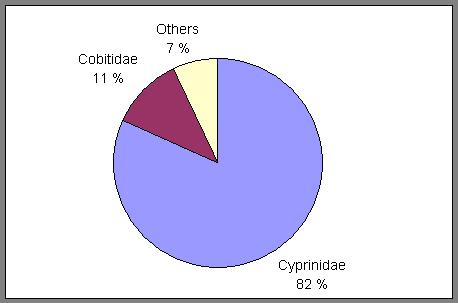
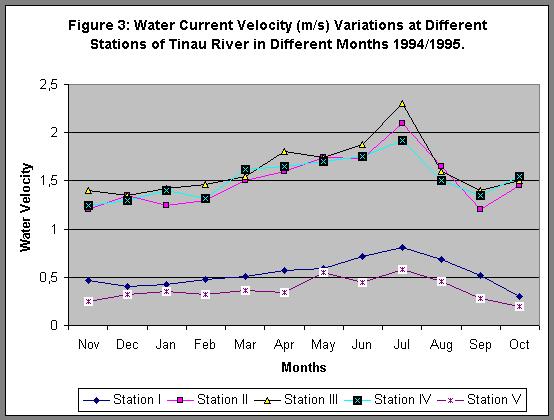
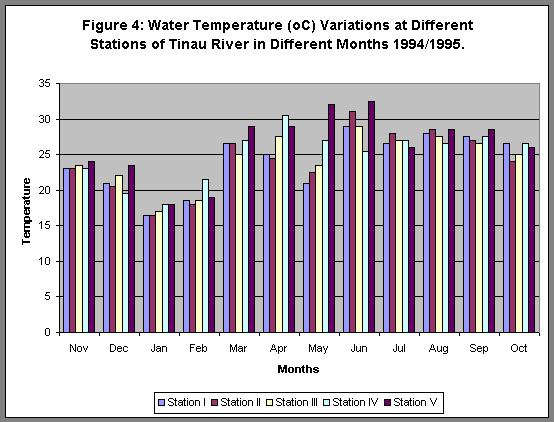
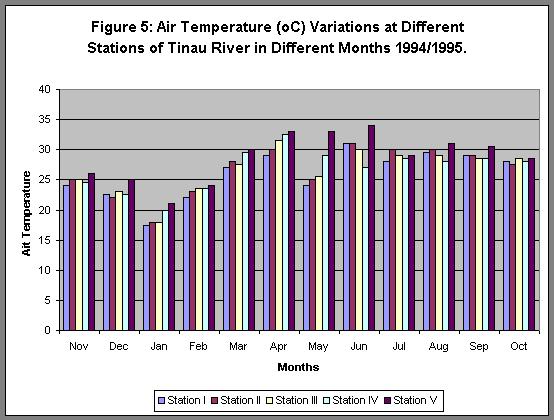
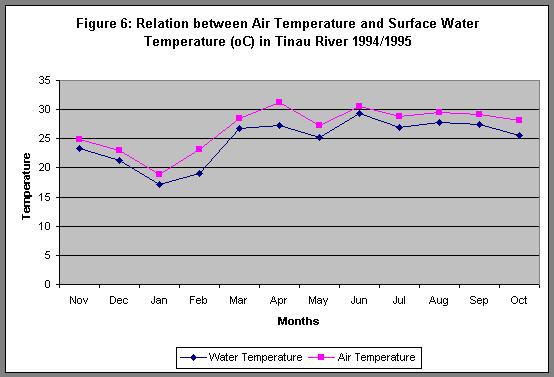
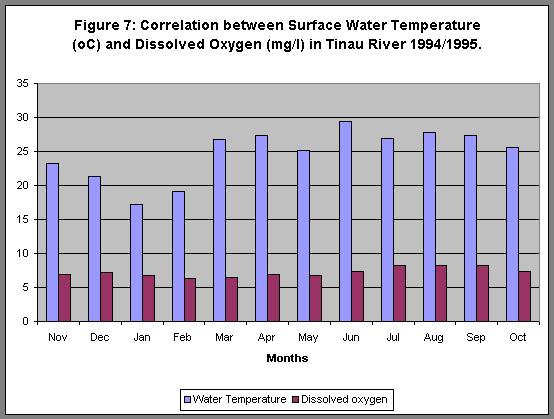
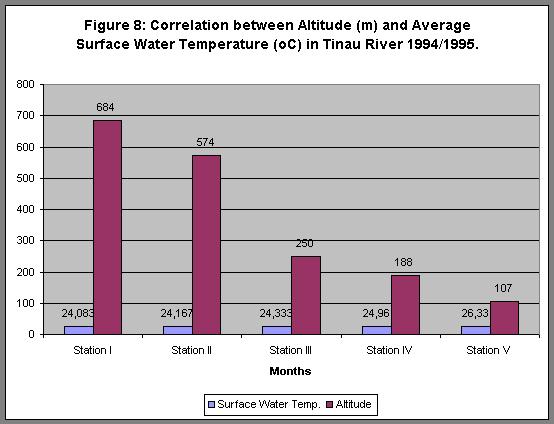
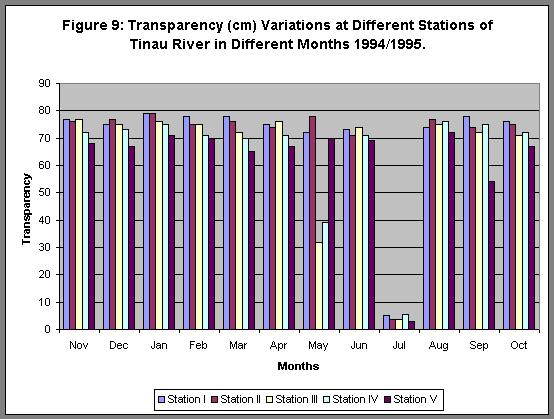
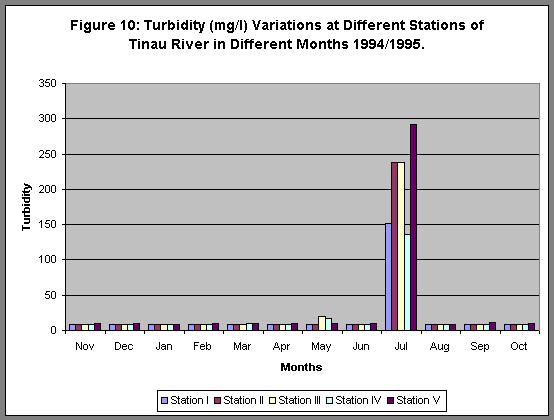
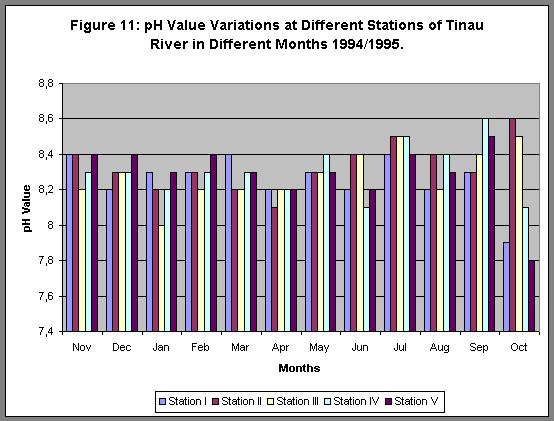
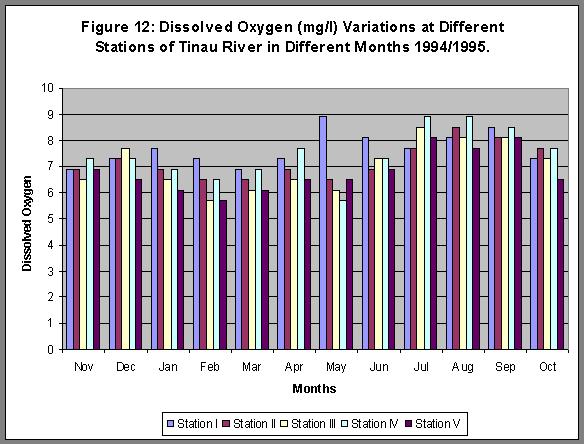
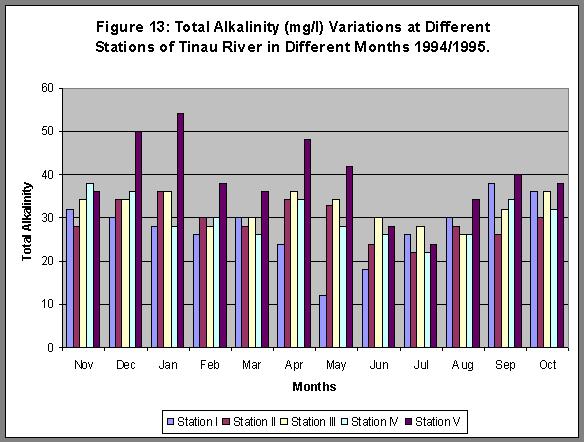
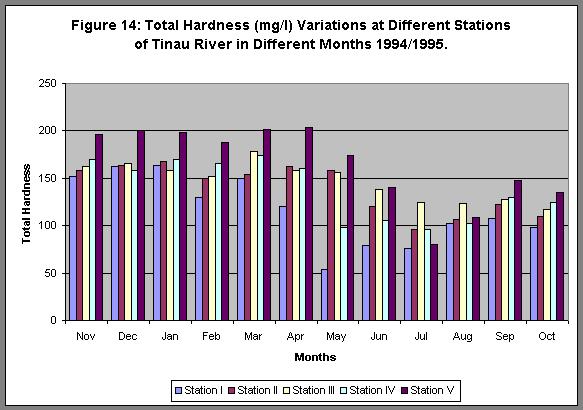
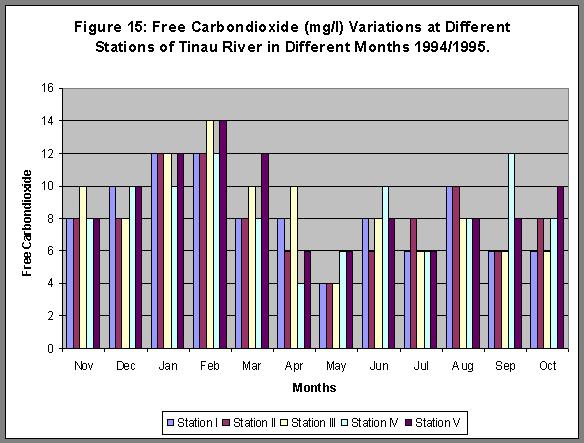
| 13. DISCUSSION A river and its watershed are normally considered as being physically and chemically a single system. Within the running surface waters of any such system, however, considerable differences can occur in water velocities, volumes, depth and riverbed materials. All of these parameters give to a river system a wide and diverse range of habitats for fishes. Factors of ecological significance which exhibit a progressive change in value along the length of rivers are: current velocity, substratum, flow, temperature, dissolved oxygen, hardness and other organisms which are interdependent (Whitton, 1975). 13.1 DISTRIBUTION OF ICHTHYOFAUNA IN TINAU RIVER A total of one hundred and eighty five indigenous fish species are reported to exist in river systems and other natural and man made water bodies of Nepal (Shrestha, 1995) included in 79 genera belonging to 31 families and 11 orders. Shrestha (1981) has reported eight fish species from the Tinau river belonging to the families Cyprinidae, Cobitidae and Amblycipitidae which are; Barilius bola, Danio devario, Garra annandalei, Garra gotyla, Tor putitora, Noemacheilus botia, Noemacheilus rupicola, Amblyceps mangois, among which Barilius bola, Tor putitora and Amblyceps mangois were not observed in the present study period. According to the local fishermen, Bagarius bagarius was abundant in this river system before the construction of dam. After the construction of the dam (at station III) this fish species no longer exists in the upper regions of the dam, i.e., station I, II and III. Only few small Bagarius bagarius were observed by local fishermen at station IV, in the month of July during the present investigation period. They also gave the information about the existence of Acrossocheilus hexagonolepis and Labeo angra in the Tinau river. Majority of fish species in Tinau river fall under the family Cyprinidae (about 82 % of the total catch, Figure 2), of which sub-family Cyprinini includes Barilius barila, Barilius bendelisis, Barilius vagra, Cirrhinus reba, Danio devario, Danio rerio, Esomus dandricus, Garra annandalei, Garra gotyla, Oxygaster bacaila, Puntius chilinoids, Puntius sophore, Puntius conchonius and Tor tor. Sub-family Psilorhynchini includes Psilorhynchus pseudecheneis and Psilorhynchus sucatio. Similarly, sub-family Schizothoracini includes two genera; Schizothorax and Schizothoraichthys which, according to Shrestha (1994), are commonly distributed at an altitude ranging from 784 meter to 3323 meter. These two genera were collected from the lower altitude (251 meter) at station III in the Tinau river. Family Cobitidae which consists of about 12 percent of total catch includes genus Botia, Lepidocephalichthys and Noemacheilus are distributed at stations I, II, III and IV. Family Bagridae includes only one species, viz., Mystus bleekeri. Similarly, each family Sisoridae, Schilbeidae, Saccobranchidae, Claridae, Channidae, Nandidae, Gobidae also includes one species such as Glyptothorax pectinopterus, Pseudeutropius atherinoides, Heteropneustes fossilis, Clarius batrachus, Channa gachua, Nandus nandus, Glossogobius giuris respectively. Among them Mystus bleekeri, Pseudeutropius atherinoides, Clarius batrachus and Nandus nandus were reported from station V. Glyptothorax pectinopterus was reported from station II and III, Heteropneustes fossilis from station I, Channa gachua from stations I, III and IV; and Glossogobius giuris from stations III and V respectively. Figure 2: Family-wise Fish Species Composition (in total catch number) in Tinau River (1994/1995). Family Mastacembelidae includes only 3 species; Macrognathus aculeatus, Mastacembelus armatus and Mastacembelus pancalus among which Mastacembelus armatus was reported from station III while the rest were reported from the station V. Family Notopteridae includes only one species Notopterus notopterus which was distributed at the station V. The most dominant fish species are Barilius bendelisis, Puntius sophore and Garra gotyla which form about 54 percent of the total catch. 13.2 EFFECTS OF PHYSICO-CHEMICAL PARAMETERS ON FISHES IN TINAU RIVER While in many respects the physical quantities of the environment appear to be basically more important than the chemical ones in governing the distribution of fishes (Hynes, 1970). The watercolour indirectly affects the fish population by fascinating the sunlight penetration which in turn increases plankton production. The river water was clear throughout the year except in monsoon when the watercolour was greyish (muddy). The water velocity plays a major role in the determination of the habitat and abundance of the flora and fauna in a river by grading the riverbed and material and maintenance of high levels of dissolved oxygen (Whitton, 1975). In Tinau river the velocity of water has positive correlation co-efficient value (r = 0.224) with dissolved oxygen which explains the increment of dissolved oxygen with the increase of water velocity (probable error, P.Er. = 0.185). Water velocity is mainly regulated by the slope gradient of the river bed which is highest at the station III (Figure 1) where the large number of torrential hill stream fishes were reported, e.g., Tor tor, Schizothorax plagiostomus, Schizothoraichthys esocinus, Garra gotyla, Glyptothorax pectinopterus etc. Figure 3 explains that the current velocity of water in Tinau river is not uniform. Stations II, III and IV have comparatively higher velocities (1.5, 1.62 and 1.53 m/s respectively) than the stations I and V (0.54 and 0.37 m/s respectively), this is because of the slope gradient of river bed which is higher at the stations II, III and IV than at stations I and V. Stream velocity is merely the function of slope gradient of the river bed (Jhingran, 1975). In the present investigation, low velocities in the stations I and V may be due to the maximum flatness as well as minimum slope gradient of the riverbed. Slope gradient is maintained by the altitudinal variations in riverbed and the altitude has a negative correlation (- 0.6805) with composition of fish fauna with probable error 0.105 in the Tinau River, i.e., composition of fish fauna increases with the decrease of altitudinal range in the Tinau River. All the aquatic organisms including fish have well defined limits of temperature tolerance. Temperature has an important influence on the physical and physiological activities of fishes, affecting growth rate, for example, the places with boulders, pebbles, gravels and fine sandy substrate with water temperature 15oC to 18oC and current velocity 3 to 9 m/s are dominated by Sucker head fish, Garra sps, Shrestha, 1990). The water temperature range in the Tinau River was in between 16.5oC and 32.5oC which is favourable for different types of hill stream fishes (Figure 4). Similarly, Figure 5 explains the air temperature pattern in the Tinau river at all the stations. Present investigation shows that the surface water temperature usually follows the air temperature pattern (Figure 6). Same type of relationship between air temperature and water temperature was also observed by Karna (1993). Temperature greatly influences the dissolved gases, for example, dissolved oxygen. The increase in the water temperature of the river decreases the concentration of dissolved oxygen and vice versa which is shown in the Figure 7, and is also explained by the negative value of correlation coefficient in between dissolved oxygen and water temperature (r = - 0.783) with probable error (P. Er. = 0.117). Generally stream temperature ranges from about 0oC in high latitude and at high altitudes to about 30oC in the tropics. In the present investigation the temperature increases with the decrease of altitude in all the stations (Figure 8). In the whole, Tinau River shows negative correlation in between altitude and surface water temperature (r = - 0.448) with probable error (P. Er. = 0.241) which explains the decrease of temperature with increase in the altitude. Fish species composition shows the positive correlation (r = 0.555) with surface water temperature, with the probable error 0.263, i.e., fish species composition increases with the rise in temperature in the Tinau river. Transparency, that directly or indirectly determines the productivity of the river by controlling the penetration of solar radiation, seems to be one of the major physical parameters. During the present investigation period the river water remained highly transparent throughout the year except in monsoon (Figure 9). This temporary decrease in transparency value in monsoon was caused by the rainfall and flood. The transparency shows the highly negative correlation (- 0.9854) with the turbidity value in the Tinau River which restricts the penetration of sunlight and hence reduces photosynthesis activity, which in turn is related to the productivity of water mass. During the present investigation period the highest turbidity value recorded in the month of July at all the five stations (291.63 mg/l at station V) in the Tinau River which has been explained in Figure 10. According to Jhingran (1975), the turbidity of natural water system may be due to the suspended inorganic substances such as silt and clay or due to planktonic organisms. In the present study the turbidity was mainly caused by the mixing of sand and clay particles resulting from soil erosion and rainfall during monsoon. Under most natural conditions variation in pH value has little effect on fishes, which can tolerate the normal daily pH range (Whitton, 1975). According to Welch (1952, cited in Manandhar, 1994), the currents in lotic environment tend to keep pH uniform over considerable distances. In the Tinau river the pH value fluctuated narrowly (0.8) with an average value of 8.294 which is explained in Figure 11. In Tinau river the pH value shows positive correlation r = 0.382 and probable error 0.166 with fish species composition, which shows slightly increment of fish species composition with the rise of pH value within this range in Tinau river. Dissolved oxygen of the Tinau river shows the positive correlation (0.527) with the composition of fish fauna, and the probable error is 0.14, i. e, composition of fish species increases with the increase of dissolved oxygen in this river. Jhingran (1975) suggested about the fluctuation in total alkalinity of natural water bodies, stating that the hill streams, sandy and rocky areas, flooded rivers in the rainy season usually have low total alkalinity. During the present investigation the total alkalinity value of the water sample was recorded 54.054 mg/l as maximum at station V in January and 12.012 mg/l as minimum at station I in May (Figure 13). Sum of the concentrations of alkaline earth metal cations (e.g., Ca++ and Mg++) forms the total hardness in natural water. Lind (1974, cited in Karna, 1993) reported that hardness more than 100 mg/l of CaCO3 is common in Nepal. During the present investigation period the total hardness ranged between 54 mg/l to 204 mg/l (Figure 14) which is favourable for riverine fishes. During the present investigation period, the free carbon dioxide of the Tinau river was recorded in between 3.99 mg/l and 13.99 mg/l (Figure 15). Most of the CO2 in water comes from the decomposition of organic matter and from respiration of organisms which helps in the formation of bicarbonates and carbonates and keeps fluctuation of pH under check. Variation of free carbon dioxide value in the Tinau river shows the negative correlation (r = - 0.486) and probable error is 0.148 with the composition of fish species, which explains the negative effect of free carbon dioxide on the composition of fish species. Few planktons could be reported during the present investigation period among which Spirogyra (phytoplankton) was abundant which form the main food for fishes. Fishermen of Tinau River are poor and are dominated by the people of higher caste, about eighty three percent of whom are totally illiterate. They are not aware of free education in government schools and family planning systems so that they have got a huge family member which is the main reason of their poverty. Insufficient agricultural land and huge family member led them to over-fishing which causes the degradation of riverine fishery. Bhagat (1985) and Joshi (1988) have also found the poor economic conditions of the fishermen in Morang district and Sunkoshi river area respectively. According to the local inhabitants, the Tinau River has undergone many changes in structure and function of natural watercourses as well as its physical, chemical and biological characteristics which in turn have affected the distribution pattern of fish fauna. During the present investigation period, the fish fauna reported just below the dam site (station IV) are; Barilius barila, B. bendelisis, B. vagra, Danio devario, D. rerio, Garra annandalei, G. gotyla, Puntius conchonius, P. sophore, Botia lohachata, Noemacheilus botia and Channa gachua. While the fish fauna reported from the upper reaches of dam site (station III) are; Barilius barila, B. bendelisis, B. vagra, Danio rerio, Garra annandalei, G. gotyla, Oxygaster bacaila, Puntius chilinoids, Tor tor, Psilorhynchus pseudecheneis, P. sucatio, Schizothorax plagiostomus, Schizothoraichthys esocinus, Botia lohachata, Noemacheilus beavani, N. botia, N. rupicola, Glyptothorax pectinopterus, Channa gachua, Glossogobius giuris and Mastacembelus armatus. The important food cum game fishes like Tor tor, Puntius chilinoids, Noemacheilus sps and many other species are affected for their migration (both local and long migrants) across the dam site. Present investigation also shows that the good sized fish species like Tor tor and delicious fish species like Schizothorax plagiostomus etc. are replaced by the small sized fishes as Barilius bendelisis (about 25 % of total catch composition), Puntius sophore (about 18 %) and Garra gotyla (about 11 %) etc. which plays negative role in the fishery occupation. One hundred and eighty five species of fish have been recorded from Nepal, of which eight are endemic (BPP, 1995c) one of which, Psilorhynchus Pseudeucheneis is reported from the Tinau River. According to Shrestha (1995), thirty-four of the 185 fish species in Nepal are threatened and merit Red Data Book status. The majority of these species belong to the genera Labeo (five species), Puntius (seven species) and Schizothorax (four species) but only five threatened species of fishes are reported from the Tinau River, viz., Puntius chilinoids, Tor tor, Danio rerio, Schizothorax plagiostomus and Psilorhynchus pseudeucheneis. It is recommended that legal protection be accorded to ten fish species out of which four species, viz., Tor tor (endangered), Danio rerio (Vulnerable), Schizothorax plagiostomus (Vulnerable) and Psilorhynchus pseudeucheneis (Vulnerable) are reported from the Tinau river. The study of ecology of the Tinau river and its tributaries is important for the development of fishery resources in this region as well as for the protection of threatened species of fish fauna which are reported from this river during the present investigation. Thus, recommendations are also made for conservation and management in the Tinau river. |
 |
 |
 |
 |
 |
 |
 |
 |
 |
 |
 |
 |
 |
 |
| Home | Family | Curriculum | Thesis TU | Thesis NLH | Publications | Term Papers | Recent Paper | Proposal | Nepali Poems |
 |
| You are here: Home>>>MSc Thesis TU>>>Discussion |