DON CHERA
A movie review by Balaji Balasubramaniam

| Cast: | Ranjith, Susi Bala, Ilavarasu, Chandrasekhar |
| Music: | Prince |
| Direction: | K.S.Saravanan |
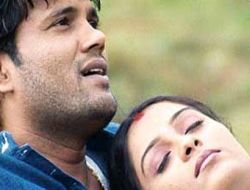
Cheran(Ranjith), who lives with his parents and his elder brother, is constantly chided by his father about his laziness. So he finally sets up a mobile, roadside eatery along with his friends. A heated exchange with one of his customers, who refuses to pay, escalates and Cheran kills him in a fit of rage. Turns out the man is the brother of a local dada and in order to save Cheran from him, his friend Sathya takes him to another dada, Bawa. Once in there, Cheran is unable to get out and slowly begins to rise in Bawa's ranks while becoming caught in a life of violence and drugs.
The movie is a weak remake of Sanjay Dutt's Vaastav. That by itself is not the problem since the Hindi original was released a while back. Don Chera reminds us of so many other Tamil movies that it might've well been called Deja vu! The storyline of how Ranjith inadvertently becomes a dada is identical to how Hamsavardhan turned into a rowdy in Mandhiran. Ranjith's interaction with a prostitute has been seen in several gangster movies (including, most recently, Pudhuppettai). Scenes of Ranjith growing from a nobody into a big dada (with a background score made up of his name repeated many times and put to music) have ofcourse been seen in every other gangster movie. Even the ending, which might've been surprising if one hadn't seen Vaastav, doesn't have much of an impact since a similar ending has already been seen in a more high-profile 2002 film.
In keeping with the way most gangster movies are shaped today, Don Chera also avoids romanticizing the life of its hero. Cheran is not one of those lightweight rowdies who fights only with a worse rowdy and has a rich girl fall in love with him. He kills without remorse and even becomes addicted to drugs. Only the relationships with his family and with Susi Bala help show that he has a softer side. The way rowdies like him are treated as expendable commodities by politicians is also showcased in a stark manner by how Ilavarasu deals with him. All these would have been surprising if they hadn't already been seen in every gangster movie released recently! But since they have been seen, they just seem like pale imitations.
The only area where the movie manages to be different is the depiction of Ranjith's relationship with his family. Things are cliched initially with the familiar set up of the complaining dad and the affectionate mom. But his family is around even after he becomes a dada and plays a key part in his life. Instead of them simply being used as pawns by the police or other dadas, they continue to be of importance since their acceptance is important to Ranjith. Their internal struggle between love for him and shame and fear at his profession is portrayed well and illustrated by their behavior whenever he visits them.
Ranjith overacts almost throughout. Initially, he tries to act like an innocent, loveable young man and comes off looking mentally ill. And he continues looking that way any time he interacts with his family. So he ends up looking as though he is overacting in most of the scenes. Susi Bala is introduced pretty late but is adequate in the few scenes where she is required to emote. Ilavarasu plays a villain for a change and manages to utter a few comments in his trademark style without letting his character lose its evil nature.
