
 Reviews
 FAQ
FAQ Guestbook
 RSS Feed
 |
Reviews |
FAQ |
Guestbook |
RSS Feed |
The Catacombs of Solaris
|
 |
Title |
The Catacombs of Solaris |
Developer |
Ian MacLarty | |
Publisher |
N/A | |
Relase Year |
2016 | |
Platforms |
Widows, Mac & Linux PC | |
Review Platform |
Linux PC |
The Catacombs of Solaris isn't so much a video game, as it is an interactive experience. It's the latest in a long line of small, experimental game projects created by developer Ian MacLarty and published online for free. I originally wasn't going to write a review of this game because, after first playing it, I assumed it was an alpha version or a tech demo, but according to the download page on Game Jolt, development on it is complete, the current release version is 1.0.0, and nowhere does the developer say it's only a proof-of-concept, or tech demo. Based on that, it technically meets my criteria for a finished, released game, and if you're reading this, it means I didn't find any evidence to the contrary while writing this review.
Player interaction in Catacombs of Solaris is minimal. The gameplay most closely resembles that of so-called "walking simulators", but instead of sending the player down a set path, like most of the
genre, Catacombs lets the player loose, to wander aimlessly around what is easily the trippiest and most disorienting game space I've ever encountered. The environment is a procedurally generated series of hallways that changes
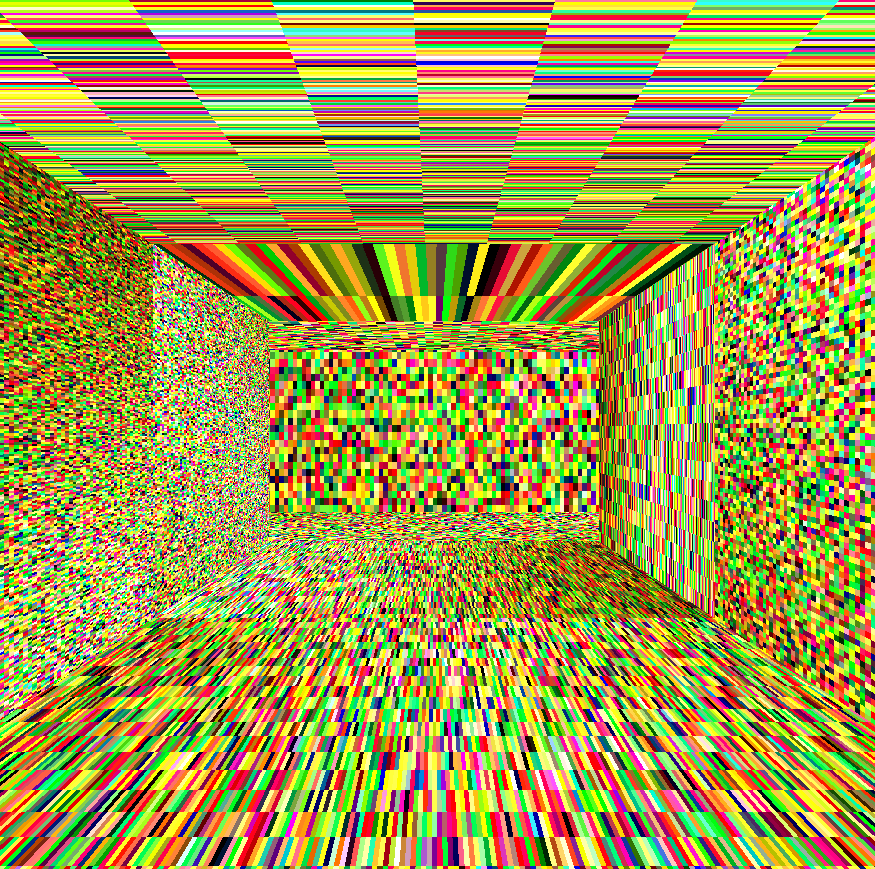
as the player moves through them. Every surface in the catacombs is shadeless and textured with a dense mis-mash of multicolored pixels, that look like digital vomit from a distance. The game will occasionally take screenshots
of whatever the player is currently looking at, and map it onto every surface in the environment, on top of that the hallways stretch and distort around the player as they move through the environment, with paths being opened up
and closed off constantly After a few minutes it becomes difficult to tell what's a wall and what's a newly opened path, and the variety of strange and dizzying imagery the game creates is impressive. All this results in one of
the most abstract and unnatural feeling games I've ever played, that even manages to become slightly unsettling at times.
After I Played Catacombs of Solaris for around 15 minutes I began to notice a number of patterns to the procedural generation algorithm, and it's at this point that the game starts to run out of
ways to stay engaging. For one thing the game doesn't really have much of a point or goal to it. The download page says that the goal of the game is to find your favorite room in the catacombs, but the at no point does the game
itsef convay this to the player, and even if it did, the environment is so dynamic that any room the player finds completely changes the moment they turn around. Maybe that's the point, but it comes across as more of an
afterthought, than something the designer intended while making the game.
There's also no sound in the game, as in none, whatsoever. I mentioned at the beginning of this review that I initially thought this game was an alpha version or tech demo, and the
complete lack of audio is a big reason why. Without sound, the Catacombs of Solaris feels more like an interactive screen saver than any sort of fully fleshed-out game, which sucks, because even some half-decent ambient
sound design could have gone a long way toward making the game more unsettling, as well as improving the overall immersion.
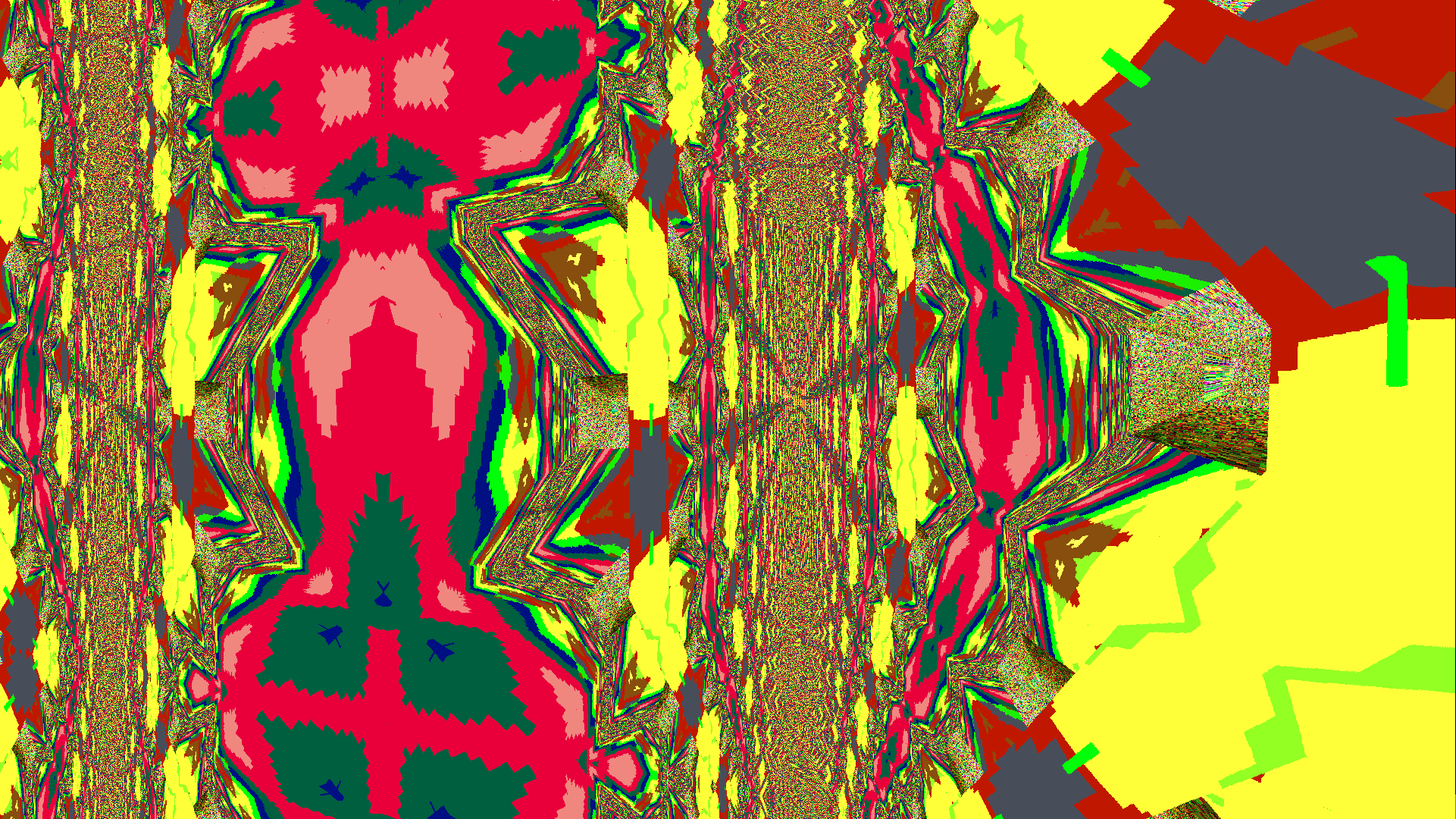
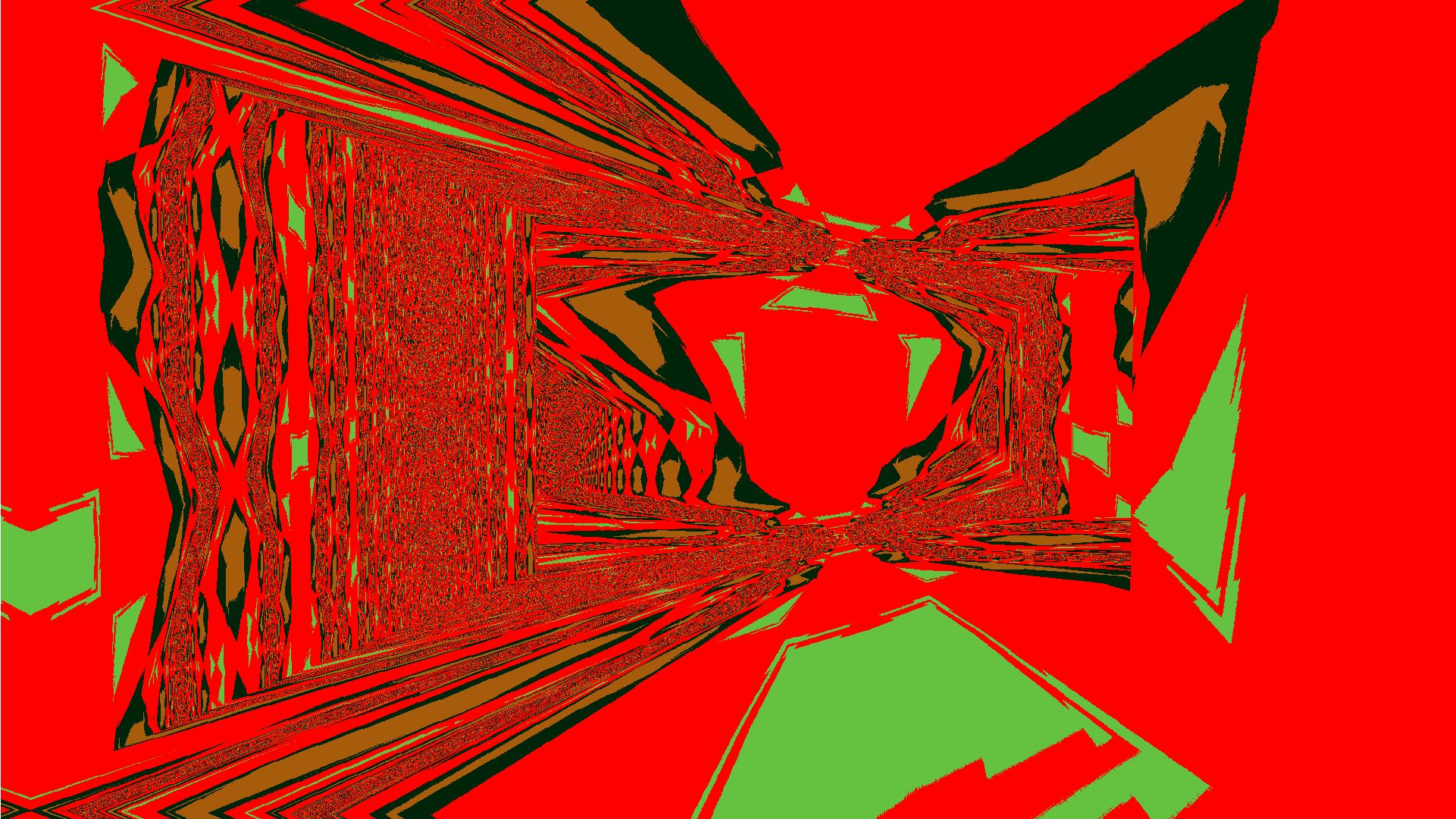
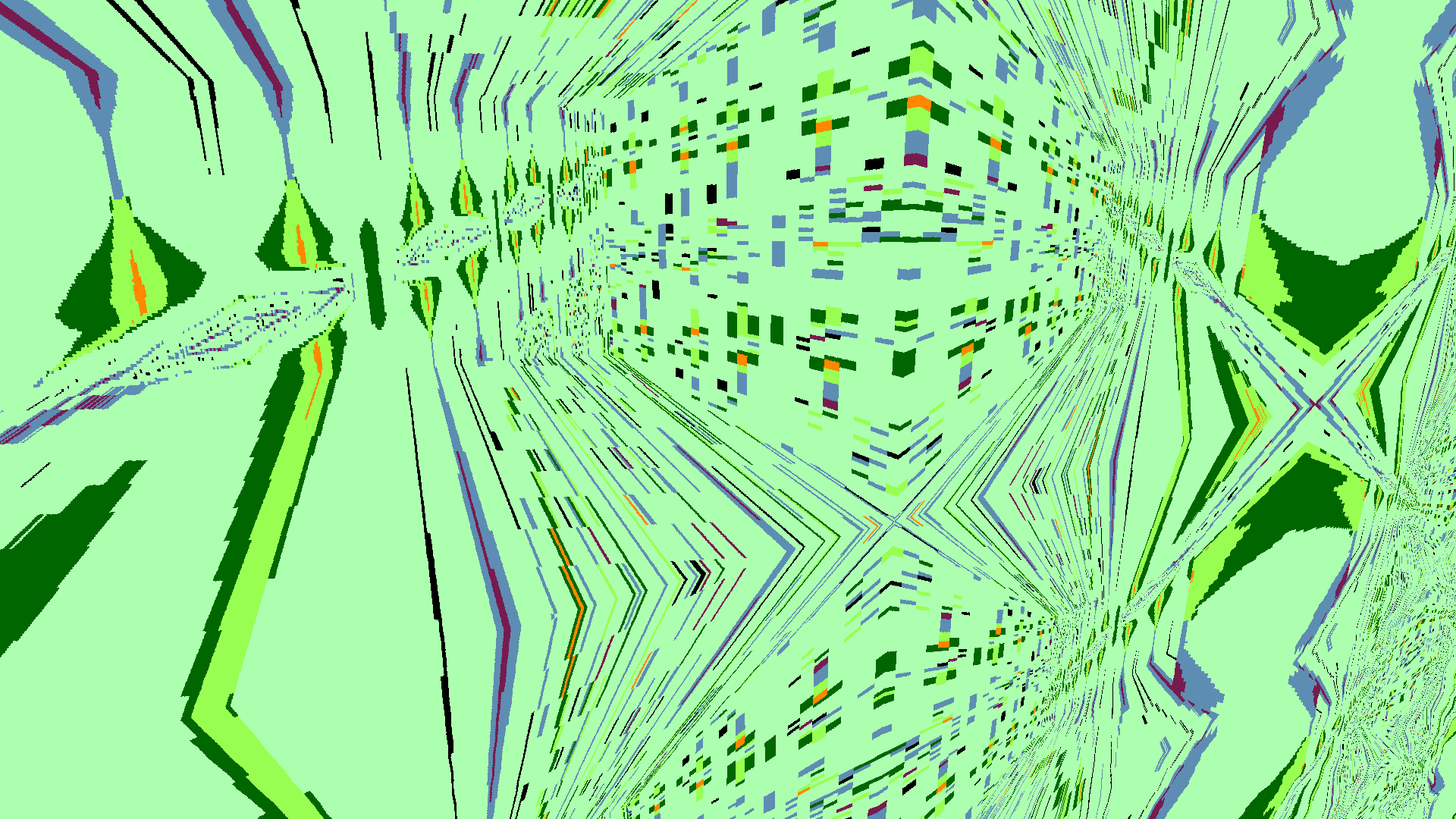

The only technical issue i encountered while playing Catacombs of Solaris is that the corner of the camera will sometimes clip walls slightly. The only reason this is worth mentioning is that if it happens at the right moment, the black void outside the boundaries of the level will be mapped onto every surface in the environment, along with whatever else the player is looking at. Other than that there's not much to mention as far as technical stuff. The entire game is three megabytes, and is so basic that it'll run on just about any computer from the last ten years.
Overall, the Catacombs of Solaris is one of the strangest, and most unique games I've ever played. Considering that the game consists entirely of a singe procedural generation algorithm, it's impressive how varied the imagery can be and how easy it is to get immersed in it, at least for a little while. Ultimately I would have liked to see a little more done in terms of gameplay or direction. There's not enough of a concrete goal to keep player engagement up for very long, and the predictability of the algorithm coupled with the lack of audio kept me form zoning out enough to recommend it as a good Zen game. With how unique the game is, and considering that it's free, I would still highly recommend it in it's current form to anyone who's intrigued by anything I've written here. Just be prepared for a somewhat shallow experience and possible headaches.
| Score | Recommendation |
|||||||||||||||||||||||||||||||||||||||||||||||||||||||||--|---------|---------|---------|---------|
57/100
|
Strongly
|

Any copyrighted material on this site is used solely for purposes of commentary and/or criticism, and is property of it's respectful owner.
All other material and
it's source code, is made freely available under the terms of the Creative Commons Attribution-ShareAlike 4.0 license.