
- Phobias
- Types of Phobias
- Bizarre Phobias
- Accessing Help
Common Types of Phobia
Social Phobias
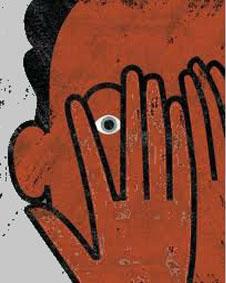
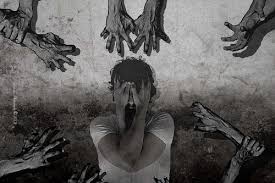
Social phobia is a strong fear of being judged by others and of being embarrassed. This fear can be so strong that it gets in the way of going to work or school or doing other everyday things.
Everyone has felt anxious or embarrassed at one time or another. For example, meeting new people or giving a public speech can make anyone nervous. But people with social phobia worry about these and other things for weeks before they happen.
People with social phobia are afraid of doing common things in front of other people. For example, they might be afraid to sign a check in front of a cashier at the grocery store, or they might be afraid to eat or drink in front of other people, or use a public restroom. Most people who have social phobia know that they shouldn't be as afraid as they are, but they can't control their fear. Sometimes, they end up staying away from places or events where they think they might have to do something that will embarrass them. For some people, social phobia is a problem only in certain situations, while others have symptoms in almost any social situation.
Zoo Phobias
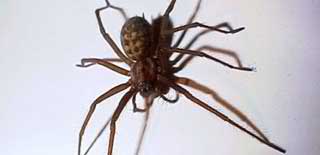
Zoophobia or animal phobia is a class of specific phobias to particular animals, or an irrational fear or even simply dislike of any non-human animals.
Examples of specific zoophobias would be entomophobias, such as that of bees (apiphobia). Fears of spiders (arachnophobia) and snakes (ophidiophobia) are also common. See the article at -phobia for the list of various phobias. Sigmund Freud mentioned that an animal phobia is one of the most frequent psychoneurotic diseases among children.
Zoophobia is not the sensible fear of dangerous or threatening animals, such as wild bears or venomous snakes. It is a phobia of animals that causes distress or dysfunction in the individual's everyday life.

Natural Environment Phobias
Much of the progress in understanding the acquisition of fear responses in phobias can be attributed to the Pavlovian model, which is synonymous with classical conditioning.[21] When an aversive stimulus and a neutral one are paired together, for instance when an electric shock is given in a specific room, the subject can start to fear not only the shock but the room as well. In behavioral terms, this is described as a conditioned stimulus (CS) (the room) that is paired with an aversive unconditioned stimulus (UCS) (the shock), which leads to a conditioned response (CR) (fear for the room).
For instance, in case of the fear of heights (acrophobia), the CS is heights such as a balcony on the top floors of a high rise building. The UCS originates from an aversive or traumatizing event in the person's life, such as almost falling down from a great height. The original fear of almost falling down is associated with being on a high place, leading to a fear of heights. In other words, the CS (heights) associated with the aversive UCS (almost falling down) leads to the CR (fear).
This direct conditioning model, though very influential in the theory of fear acquisition, is not the only way to acquire a phobia.
Examples of Natural Environment Phobias...

Situational Phobias
A situational phobia is a type of specific phobic disorder in which an irrational fear of a particular situation causes an intense physical and emotional reaction. Unlike reasonable fear associated with real-life danger, the phobia creates an excessive and irrational fear that interferes with an individual's daily life. People with situational phobias may even know that their fears are irrational, but the intense physical response to the situation is very real and may include such symptoms as panic, terror, trembling, hyperventilating, and avoidance of the trigger. Common situational phobias include the fear of confined spaces, open places, heights, flying, dentists, and needles.