
- Phobias
- Types of Phobias
- Bizarre Phobias
- Accessing Help
Weird and Bizarre Phobias

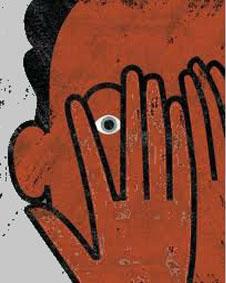
Papaphobia
There will no doubt be some smart alecs (and conspiracy loons) who will argue that it’s getting more and more rational by the day to be afraid of the Pope and the Catholic Church.
But Popes haven’t been going on mass poisoning binges since the Borgias moved out of the Vatican and the last couple of popes have been relatively elderly and almost certainly personally harmless men.
This phobia can cause panic attack-like symptoms – presumably only on the approach of an actual pontiff – and can expand to a more generalised fear of the Catholic Church (here our smart arses might be on safer ground). I suppose our Papaphobic friends can console themselves that spotting and avoiding popes – the hat, the frock, the pope mobile, the massive publicity surrounding their every move – should be relatively straight forward.
Nomophobia
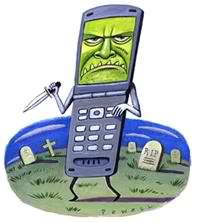
The modern world is tough for us, with our cavemen psychology, to negotiate and while modern technology is a great helper it’s also brought us a whole host of new addictions and fears to deal with. One of these lovely new psychological problems is Nomophobia. Unlike the elegant classical roots of the names of most phobias, nomophobia is a rather ugly abbreviation of “no-mobile-phone phobia” and it’s not yet a properly recognised phobia, coming as it did from some market research rather than anything more medical. It’s only a matter of time before the psychs recognise this surely.
In the UK 58% of men and 48% of women were said to suffer from anxiety when they lose contact with their phones. Some got genuinely panicky and around half of sufferers said they refused to ever turn off their phones. Of course, maybe these were people – on-call doctors, Prime Ministers, drug dealers and so on – who really do need to be reachable all the time.
Omphalophobia
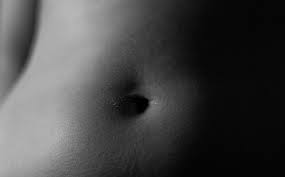
No, not navals, the heavily-armed floating branch of the armed forces, but belly buttons! Imagine waking up every morning, only to look down and be afraid of the very centre of your physical being!
Most sufferers from omphalophobia just don’t like having their belly buttons touched, or seeing someone else’s belly button being manhandled. It can cause nausea, anxiety and the usual symptoms of phobias. For others, even the sight of a belly button is too much. Interestingly, the celebrities listed as suffering from this odd fear can’t seem to keep their own belly buttons to themselves. Girl band singer, Jenny Frost, is one, a Playboy model called Kari Nautique is another sufferer as is Big Brother contestant (and now adult model) Bex Shiner..
Oikophobia
There’s no place like home. Certainly not to an oikophobe. To them, the home and its contents can be a source of great discomfort. Psychiatrists recognise this phobia, which is often linked to things which could have a certain amount of danger attached to them, like electrical household appliances and other domestic accoutrements. (If you never want to do any housework again… we’re just saying).
The nightmare scenario would see an oikophobe also suffering from domatophobia, the fear of the house in which all those terrible domestic things are stored. The term was first used to refer to the supposed wanderlust of the English and has been repurposed in recent times by conservative commentators who use it to refer disparagingly to liberals’ supposed hatred of their own cultures.

Philophobia
How terrible to be afraid of falling in love! Yet for some it’s a reality. The condition can be acquired by an unhappy experience but can also persist as a phobia.
The symptoms are that familiar mix of sweating, heart-pounding, shallow breathing – (ironically, not unlike falling in love) – and a terrible feeling of dread.
In serious cases philophobes will simply end up on their own rather than risk their hearts in love.

Hypnophobia
The causes of hypnophobia are thought to be related to a fear of loss of control. Some people who suffer badly from nightmares or other sleep disorders may develop it, whereas others are thought to be unreasonably put out about the sheer waste of time of spending eight hours or so unconscious. Sleeping through a terrible accident or watching someone else suffer in their sleep can also play a part.
Physical and mental distress accompany the fear and psychiatrists use drugs to treat – or rather suppress – the symptoms. Otherwise talking therapies, meditation or yoga can help as can sleeping alongside someone – though this is in no way to be used as a cheap way to pick up partners!