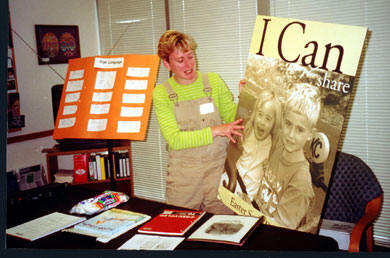


In the last two years, members of our staff or our trained public speakers have spoken at most of the area hospitals. They have addressed genetic counselors, obstetricians, pediatricians, nurses, social workers, physical therapists�in other words, most of the specialists who will come into contact with the parents of a child with Down syndrome. Many of those specialists come into contact with the families before we do, and they see the families at what is often a very difficult time. Our hospital in-service programs address the hard questions doctors face in breaking the news: how do they tell the parents? Who should be present? How can they provide families with hope? We provide doctors and nurses with the most current information about Down syndrome. We introduce them to the resources available to them and to parents. We give them a vision of what it is like for families to raise a child with Down syndrome so that they, in turn, can offer sensitive, informed support to the families. We also give them something else to offer their patients: the referral to TROPICAL. For many families, just learning there is an organization available to help them is a source of hope.
We are committed to continuing our medical in-service programs because we recognize that by doing so, we increase the chance new families will be referred to TROPICAL at a time when they most need our support. Without the cooperation of medical staff, we would find it much harder to reach those families in that vulnerable period when they first learn of their child�s diagnosis. With it, we can arrange for our trained parent support volunteers to visit new parents before they even leave the hospital. We let them know they need not struggle on their own.