 As most people who know me would attest, I could pass for a survivalist. I prepare for
contingencies that are unlikely to happen as well as preparing for things that often do (like extreme weather in the mountains).
As most people who know me would attest, I could pass for a survivalist. I prepare for
contingencies that are unlikely to happen as well as preparing for things that often do (like extreme weather in the mountains).Mountaineering and backpacking lend themselves neatly to things that could happen on a smaller scale. Knowing how to deal with the small stuff makes dealing with bigger stuff easier too, 'cause in the end the big ones are just all the little ones piled together.
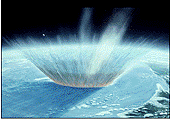
Lucifer's Hammer by Niven and Pournelle is one of my favorite books. My only concern was that they downplayed the potential of NEOs. Spaceguard and NASA seem to agree that there is a risk to the planet and to humans from NEO impacts; the probability is small that it will happen soon, but it will happen.
Deal with it.
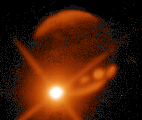
On 8 Mar 2002 a relatively large rock came at us from our blind side - the sun. We didn't see it until 4 days later. Read the space.com news story here.
Why don't people see this as a real threat? Why the perception of relative safety and non-understanding of statistics? Here's an interesting article from space.com on the Dread Factor.
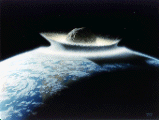 The extremely small probability that a large NEO could strike the earth is probably of little consolation to the dinosaurs.