PLOT


|
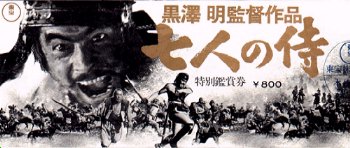
The film opens with the villagers worrying about the bandit attacks. After some discussion, a delegation of villagers is sent out to recruit samurai to protect the village and its crops from the recurring raids. Initially, the delegation's proposal is met with scorn by the proud samurai they come in contact with. Particularly impressed by Kambei, a samurai who went so far as to shave his head (normally a sign of disgrace) to save a young boy from a thief, the villagers feed him rice (while they eat millet) in an attempt to lure him to help. He takes pity on the villagers and, together with a young disciple, sets out himself to recruit the other samurai needed for the fight. He sets up tests for samurai to pass and invites only those he feels comfortable in asking to join in a fight which will only reward them with three meals a day. His recruits include a master swordsman, Kyuzo, Kambei's longtime friend, Shichiroji, the cheerful Heihachi, the wise Gorobei, and the farmer-who-would-be-samurai, Kikuchiyo (Mifune). When the samurai arrive at the village, the villagers are too afraid to meet them. Kikuchiyo tricks them out of hiding and berates them for fearing those who have come to help. The film continues with preparations for battle, including the training and arming of the villagers, and numerous fights leading to a final confrontation. One subplot concerns the young disciple Okamoto's infatuation with one of the village girls (the feelings are in some respects mutual). While another focuses on Kikuchiyo's paradoxical hatred for, and fierce defense of, the farmers. As preparations continue, a captured bandit tells of his cohort's hide-out, and three of the seven samurai go on a sneak attack and kill numerous bandits. Sadly, the farmer acting as their guide sees his wife, who was previously kidnapped and chases after her. Heihachi goes to rescue him and is killed, leaving only six to defend the village. As the inevitable, escalating battles rage Gorobei, Kyuzo, and Kikuchiyo are eventually killed along with all of the bandits. The film ends with the three remaining samurai walking past the graves of their comrades as the farmers, ignoring them, are singing a planting song in the fields. The more than three-hour film flies by with its frenetic action and the depiction of complex emotions. The personalities of the individual samurai are fleshed out to great effect along with those of several of the farmers.
|
