 |
BRAIN DAMAGE COMA |
|
|
| |
 |
Brain Coma |
|
|
| |
What do you think about when you hear the word coma? Does it make you think of someone in a deep sleep? |
| |
Coma is an extended period of unconsciousness from which a person cannot be aroused even with the most painful stimuli. Coma is not a disease. It is a symptom of a disease or a response to an event, such as a severe head injury, seizure or metabolic problem. Most comas do not last longer than four weeks. Some people in a coma shift to a persistent vegetative state, in which breathing, maintaining normal blood pressure, digesting and eliminating foods continues without the patient's awareness.
|
| |
A coma can be difficult to understand, especially because people sometimes jokingly use the words coma and comatose, which means in a coma or coma-like state to describe people who aren't paying attention or who are drowsy or sleeping. But a coma is a serious condition that has nothing to do with sleep. |
| |
If someone is in a coma, he is unconscious and will not respond to voices, other sounds, or any sort of activity going on around him. He is still alive, but his is functioning at its lowest stage of alertness. You can't shake and wake up someone who is in a coma like you can someone who has just fallen asleep. |
| |
|
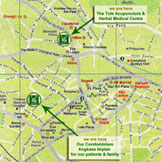
THE TOLE ACUPUNCTURE & HERBAL MEDICAL CENTRE SDN BHD
Suite 4.08 - 4.10, 4th Floor,
Medical Specialist Floor, Menara KH (Menara Promet),
Jalan Sultan Ismail,
50250 Kuala Lumpur,
Malaysia.
Tel No : 603-21418370 / 603-21451671
Fax No : 603-27326887
email: [email protected]
|
|




 E-mail Master mail to : [email protected].....


