| Aspects Of Physics |
| In skiing there are many different aspects of physics. These include; turning, accelerating, stopping, jumping, and falling. Friction plays a major role in all five of these aspects. |
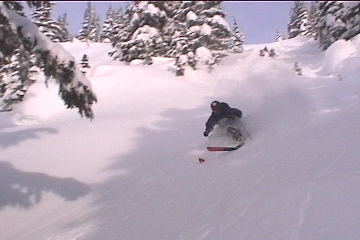
| For turning, friction is needed, and is partially self-explanitory, for when a skier wants to turn, he or she would turn the skis a few degrees to the left or right, and the friction between the snow and surface of the underside of the skis will slow down the skier enough to allow him or her to change direction as desired. Without friction, turning would not be possible. |
| For accelerating, friction is needed also, for if there was none, a skier could accelerate relatively quickly, and could be dangerous. Accelerating from 0 m/s to 10 m/s in a frictionless environment would be fairly easy, and the skier would accelerate more, and quicker untill it becomes dangerous, but due to friction, the skier will accelerate at a safe speed. |
| Stopping is the aspect of skiing which needs friction the most, and for obvious reasons. In order to come to a complete stop, or even slow down at all, one needs friction, it is the only way, therefore, friction is needed in stopping. |
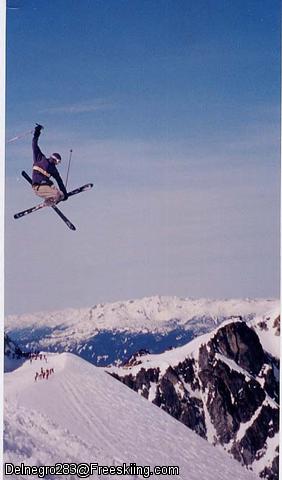
| Jumping, and landing for that matter, needs friction also. When a skier comes off a ramp, there has to be a certain amount of friction there to give him or her the compsure needed to execute a smooth jump. When landing a jump, there also needs to be friction to stop the acceleration due to gravity, and keep the skier from falling. |
| Falling, of which many of us do more than actual skiing, is an act that the people who perform it regularly are thankful for friction, for it brings them to a complete stop after falling, for reasons that include the fact that there is friction between the body and snow, than waxed fiberglass and snow. |
 |
 |
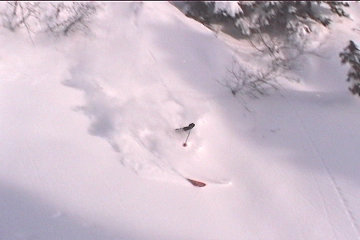 |
| Ouch!!! hehehehe |
| Turning |
 |
| Sweet......... *drools* |
 |