Ancient Constructions
 The Egyptian Pyramids
The Egyptian Pyramids are the oldest and only surviving member of
the ancient wonders. Built: From about 2700 to 2500 B.C.
The location is at Giza, Egypt, on west bank of Nile River near
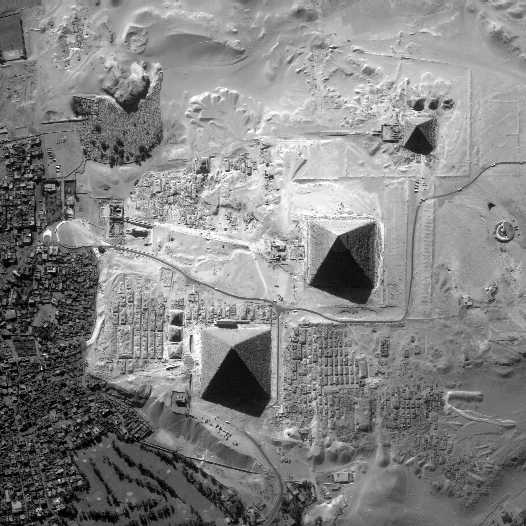
Cairo.Of the 10 pyramids at Giza, the first three are held in the
highest regard. The first, and largest, was erected for the
Pharaoh Khufu. Known as the Great Pyramid, it rises about 450
feet (having lost about 30 feet off the top over the years) and
covers 13 acres.It's believed to have taken 100,000 laborers
about 20 years to build the mammoth Khufu pyramid, using an
estimated 2.3 million blocks. By one theory, crews dragged or
pushed limestone blocks up mud-slicked ramps to construct the
royal tombs.Many scholars think the pyramid shape was an
important religious statement for the Egyptians, perhaps
symbolizing the slanting rays of the sun. Some speculate the
sloping sides were intended to help the soul of the king climb to
the sky and join the gods.
Khufu's son, Khafre, who was next in the royal line, commissioned
the building of his own pyramid complex which includes the Sphinx
. Menkaure, who is believed to be Khafre's son, built the third
and smallest of the three pyramids at Giza. Giza, however, is
more than just three pyramids and the Sphinx. Each pyramid has a
mortuary temple and a valley temple linked by long causeways that
were roofed and walled. Alongside Khufu and Khafre's pyramids
were large boat-shaped pits and buried boats that were presumably
meant to aid the pharaoh's journey to the afterlife. As yet, no
vessels have been found beside Menkaure's tomb. In addition,
cemeteries of royal attendants and relatives surround the three
pyramids. The entire plateau is dotted with these tombs, called
mastabas, which were built in rectangular bench-like shapes above
deep burial shafts. (Picture above
:Sattelite image of the Giza plateau (Click at the picture for medium size)
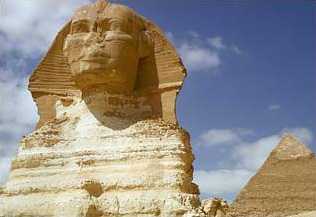
The Sphinx (embodies the body of a lion and the head of a pharaoh, is believed to be the head of Khafre and his guardian spirit for his entire burial complex. Carved from the natural limestone of Giza, the sphinx has disintegrated over the years, entire pieces dropping off to the desert floor below. It is not known to have chambers inside, like those found in the pyramids at Giza.Dates Built: Most archaeologists say the Sphinx is about 4,500 years old. But some claim that vertical weathering patterns on the Sphinx could only have been made thousands of years earlier Base: 187 feet (57 m) in length Total Weight: undetermined Width: Face is 20 feet (6 m) wide Height: Total height is 66 feet (20 m), 30 feet (9.15 m) high from chin to head Construction Material: Soft limestone)
(Click at the picture for full size)
 Stonehenge
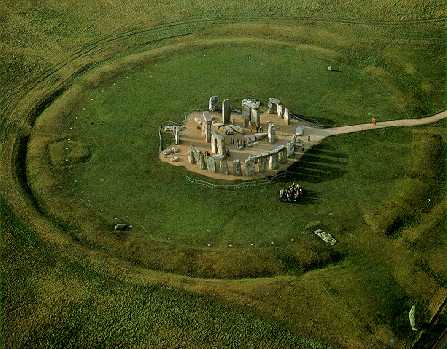
Stonehenge is a megalithic monument on the Salisbury Plain in
England, about 85 miles southwest of London. It consists of a
ditch and bank surrounding huge stones -- many weighing between
one and 45 tons -- arranged in circle and
horseshoe patterns, along with a lane connecting it to the
nearby River Avon. Construction
began around 3,000 B.C. and continued until about 1,100 B.C. The
most common theories suggest Stonehenge is an astronomical
calendar, a religious site, or a combination of the two.The story
of Stonehenge wouldn't be complete without its legends. These
mythical stories serve to explain the meaning of the monument,
and maybe even the dangers. One such story says that the henges
are gateways to where we originally came from. The legend goes on
to suggest that every 5,000 years or so, someone attempts to open
one of them, which bring about some horribly catastrophic event.
Continue to Ancient Constructions1
 Back
to Back
toAncient Structures |
Return to Ancient Mysteries |