an electronic device which is capable of receiving information (data) in a particular form and of performing a sequence of operations in accordance with a predetermined but variable set of procedural instructions (program) to produce a result in the form of information or signals.
Computer hardware is the physical parts or components of a computer, such as monitor, keyboard, computer data storage, hard disk drive (HDD), graphic card, sound card, memory (RAM), motherboard, and so on, all of which are tangible physical objects.
PART l
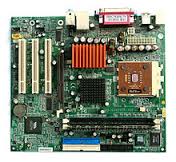
Motherboard - It is the "body" or mainframe of the computer, through which all other components interface. Central processing unit (CPU) - Performs most of the calculations which enable a computer to function, sometimes referred to as the "backbone or brain" of the computer. Computer fan - Used to lower the temperature of the computer; a fan is almost always attached to the CPU. Firmware is loaded from the Read only memory eg. ROM run from the Basic Input-Output System (BIOS) or in newer systems Extensible Firmware Interface (EFI) compliant Internal Buses - Connections to various internal components. PCI (being phased out for graphic cards but still used for other uses) PCI Local Bus (usually shortened to PCI), or Conventional PCI, specifies a computer bus for attaching peripheral devices to a computer motherboard. PCI Express (Peripheral Component Interconnect Express), officially abbreviated as PCIe (PCI-E is also commonly used), is a computer expansion card standard introduced by Intel in 2004, and currently is the most recent and high-performance standard for expansion cards that is generally available on modern personal computers. Industry Standard Architecture (in practice almost always shortened to ISA) was a computer bus standard for IBM compatible computers. Universal Serial Bus (USB) is a serial bus standard to interface devices to a host computer. HyperTransport (HT), formerly known as Lightning Data Transport (LDT), is a bidirectional serial/parallel high-bandwidth, low-latency point-to-point link that was introduced on April 2, 2001. The Intel QuickPath Interconnect ("QuickPath", "QPI")is a point-to-point processor interconnect developed by Intel to compete with HyperTransport. Prior to the announcement of the name, Intel referred to it as Common System Interface or "CSI". The Accelerated Graphics Port (also called Advanced Graphics Port, often shortened to AGP) is a high-speed point-to-point channel for attaching a graphics card to a computer's motherboard, primarily to assist in the acceleration of 3D computer graphics. The VESA Local Bus (usually abbreviated to VL-Bus or VLB) was mostly used in personal computers. VESA Local Bus worked alongside the ISA bus; it acted as a high-speed conduit for memory-mapped I/O and DMA, while the ISA bus handled interrupts and port-mapped I/O. External Bus Controllers - used to connect to external peripherals, such as printers and input devices. These ports may also be based upon expansion cards, attached to the internal buses.
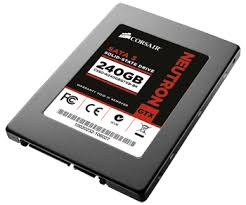
Hardware that keeps data inside the computer for later use and remains persistent even when the computer has no power