Enables the computer to output sound to audio devices, as well as accept input from a microphone. Most modern computers have sound cards built-in to the motherboard, though it is common for a user to install a separate sound card as an upgrade.
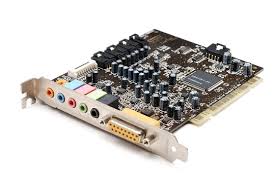
Connects the computer to the Internet and/or other computers.
Sometimes abbreviated as SW and S/W, software is a collection of instructions that enable the user to interact with a computer, its hardware, or perform tasks. Without software, computers would be useless. For example, without your Internet browser, you could not surf the Internet or read this page and without an operating system, the browser could not run on your computer. The picture to the right shows a Microsoft Excel box, an example of a spreadsheet software program.
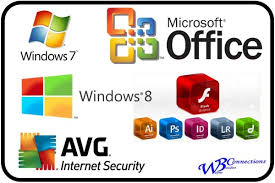
Once the software has been installed on to your computer hard drive, the program can be used anytime by finding the program on the computer. On a Windows computer, a program icon is added to the Start Menu or Start Screen, depending on your version of Windows.
After the software has been installed on your computer it may need to be updated to fix any found errors. Updating a program can be done using software patches. Once updates are installed any problems that may have been experienced in the program will no longer occur.
A computer programmer (or several computer programmers) write the instructions using a programming language that tell the software how to function and what to do. Once the program has been completed, it is compiled into a language that the computer can understand.
PART ll
The first software program that was held in electronic memory was written by Tom Kilburn. The program calculated the highest factor of the integer 2^18 = 262,144 and was successfully executed on June 21st of 1948 at the University of Manchester. The computer that held that program was called the Small Scale Experimental Machine, otherwise known as the "Baby" computer. This "Manchester Baby" is largely celebrated as the birth of software.