Home | Visit me | Album | Friends | Eelam | Music | Java | Tamil | Spirituality | Wanna Dance Email Me

http://www.share-international.org/
Lord JESUS
"For God so loved the world (you), that he gave his only begotten Son (Jesus), that whosoever believeth in him should not perish (die and to be born again), but have everlasting life (not to be born again /deathlessness / eternal bliss / godly status)" (John 3:16).
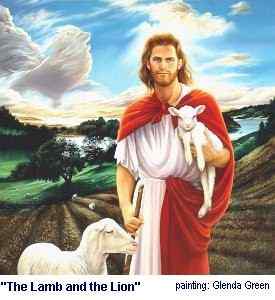
Around Christmas in 1996, a 50-foot-high image, in bright colour, of the Madonna and child, appeared on the windows of a downtown bank in Clearwater, Florida, USA. Half a million people have come to look and pray. This, and the other Marian manifestations, are created by the Master who was Mary, Mother of Jesus, 2,000 years ago. Crosses of light, up to 40 feet high, have appeared in homes and churches, many the source of miracle cures and healings.

For four days in September 1995, throughout the Hindu world, North and South, East and West, was enacted what must be the greatest worldwide miracle of all time: statues of the gods, made of stone, wood, brass, copper and bronze, appeared to drink the milk offerings presented by the priests and devotees. In India, Parliament closed, as did the shops. Hundreds of thousands of Hindus, many non-believers, queued for hours to offer milk to Ganesha, Siva and the other gods. Thousands of gallons of milk disappeared when offered. The television cameras of a fascinated and bewildered Western media showed these events to millions in the West. Did the statues really drink the milk? Of course not. They are made of stone, metal and wood. The milk was made to disappear, at the moment of offering, by Maitreya and a group of Masters, his disciples.

Almost weekly, Maitreya appears miraculously �out of the blue� at fundamentalist, orthodox religious meetings around the world, always in a form that the group can recognize -- if they are Hindus, as the people�s idea of what Krishna will look like; if Jews, as their idea of the Messiah; if they are Muslims, as their idea of the Prophet, the Imam Mahdi or the Messiah; if Buddhists, their idea of Maitreya Buddha. He can change his appearance at will. He can be old or young, man or woman, fair or dark. In this way, everyone can identify with him. He speaks to the gatherings in their own language, and then disappears again. He appeared in this way in June 1988 in Nairobi, Kenya, before 6,000 people who recognized him as the Christ. The event, through photographs, was seen on CNN and BBC television and other world media.

Which religion is true?

There is truth in every religion. But if one studied any one religion one would only get a partial truth. If one studied most of the religions of the world, one would get a more complete truth. But one will never see the absolute truth, as it depends on ones' ability to comprehend the truth. As one goes deeper, there will still be more deeper truths, one will not be able to comprehend and there will never be an end.


Each one of us, whether we know it or not, is a soul in incarnation, a perfect, divine, spiritual Being in incarnation. On the soul plane, there is no such thing as a separate soul. Each soul is an individualized aspect of one great Oversoul. The sense, therefore, of being separate, is the great illusion. From that illusion stem all our problems, all our suffering. We do not know who we are.


What is Kalki Avatar? - Master(Siddha) thru Benjamin Creme
A. Kalki Avatar, for Hindus, is the Avatar for this coming age or Yuga, and is synonymous with Krishna. Hindus expect an Avatar - they have the doctrine of Avatars who come cyclically, age after age. In the West Jesus is seen as a 'one-off' event: God made flesh, who came specifically for a particular group. In fact, there has never been an age without an Avatar. Hindus await a reincarnation of Krishna. Maitreya overshadowed Krishna, so as far as Hindus are concerned, Maitreya is Kalki Avatar, the Avatar for this coming age, the 'age of righteousness', which indeed it will be. It is the age in which for the first time on a mass scale the spiritual essence of humanity demonstrates; in which humanity realizes, experiences itself, as one, and therefore creates structures which will demonstrate that oneness. It will also see itself not only as one but as whole, intrinsically part of its environment. There will come a time when humanity will see that humanity, God, and nature are one and the same; there is no separation between any of these. That sense of wholeness, eventually, humanity en masse will know, not just as an intellectual idea but as direct experience. Krishna, or Kalki Avatar, comes at the end of this 'dark age', Kali Yuga. Though not everyone would agree that Kali Yuga, the 'dark age', has ended, the great Teacher, Sai Baba, in south India, has said that the dark age is over; Swami Premananda has said the same thing; my Master has confirmed that it is now ending. So it is now possible for Kalki Avatar, 'the rider on the White Horse', to come.


Take your brother's need as the measure for your action, and solve the problems of the world. There is no other course.

Share and save the world.

Fear not!

All in time will be renewed.

All in time will be returned to light.

- Lord Maitreya -


"Let the disciple seize hold of the tail of the serpent of wisdom, and having with firmness grasped it, let him follow it into the deepest centre of the Hall of Wisdom. Let him not be betrayed into the trap set for him by the serpent of illusion, but let him shut his eyes to the colourful tracery upon its back, and his ears to the melody of its voice. Let him discern the jewel, set in the forehead of the serpent whose tail he holds, and by its radiance traverse the miry halls of maya."

Alice A Bailey


No glamour, no illusion can long hold the man who has set himself the task of treading the razor-edged Path which leads, through the wilderness, through the thick-set forest, through the deep waters of sorrow and distress, through the valley of sacrifice and over the mountains of vision to the gate of Deliverance.

He may travel sometimes in the dark (and illusion of darkness is very real ); he may travel sometimes in a light so dazzling and bewildering that he can scarcely see the way ahead; he may know what it is to falter on the Path, and to drop under the fatigue of service and of strife; he may be temporarily side-tracked and wander down the by-paths of ambition, of self-interest and material enchantment, but the lapse will be but brief.

Nothing in heaven or hell, on earth or elsewhere can prevent the progress of the man who has awakened to the illusion, who has glimpsed the reality beyond the glamour of the astral plane, and who has heard, even if only once, the clarion call of his own soul.

Alice A Bailey


http://www.share-international.org/

Maitreya and other well-known figures
This page sheds some light into the relationship between Maitreya and some well-known figures such as Sai Baba, the Buddha, Krishna and Krishnamurti. This information is excerpted from the books by Benjamin Creme.
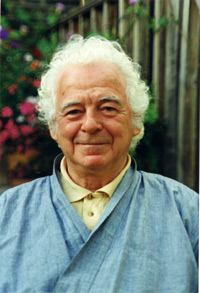

Benjamin Creme, a British artist and long-time student of esoteric philosophy, has become the principal source of information about the emergence of Maitreya, the World Teacher. Born in Glasgow, Scotland, in 1922, Benjamin Creme began studying art at an early age, developing into an accomplished painter in the modernist style. He befriended and collaborated with many of the leading figures of the time in British art, music and literature. His paintings have been exhibited in a number of prestigious galleries.


For more info about Benjamin Creme, visit
http://www.einterface.net/gamini/Ben.html


Maitreya & Sai Baba
Sai Baba is a teacher or guru in south India with an enormous following. Hundreds of thousands, perhaps one or two million people from all over the world would claim to be his devotees. These Followers see him as God, the creator of the universe. He is a cosmic avatar. Sai Baba and Maitreya both embody the same energy--what we call the Christ principle, the energy of Love --- Sai Baba at the cosmic level, Maitreya at the planetary level. The relation of Sai Baba to the Christ: The Christ is a planetary avatar, Sai Baba is a cosmic avatar. He is a Spiritual Regent, sent into the world by the Lord of the World, Sanat Kumara, on Shamballa. A regent "stands in" for the king. Similarly, a Spiritual Regent "stands in" for God, for the Logos, Whose reflection Sanat Kumara is. Sai Baba embodies the energy of Love at a cosmic level (the Christ embodies this energy at the planetary level) and his work, in part, is to prepare humanity for the work of the Christ. By awakening the love principle in humanity, Sai Baba will prepare people for the Initiatory work of the Christ. As the Hierophant, the Initiator, at the first two planetary initiations, the Christ will lead humanity gradually out of the strictly human kingdom into the Hierarchy, the Kingdom of Souls, or the Kingdom of God. That is his major work in the coming age of Aquarius. These two Great Ones work together in daily contact, complete harmony and shared purpose in the evolution of mankind. Maitreya & Buddha The Buddha (Master) is the brother of Maitreya. They were among the first group of our humanity to take initiation and have been at the forefront of humanity ever since. He overshadowed Mithras, Memnon and Gautama. He now dwells on the highest center of our planet, Shamballa. He acts as the Divine Intermediary between Shamballa and Hierarchy, and is deeply engaged in the process of Maitreya's mission as World Teacher. He will send two initiate disciples to reform Buddhism. Maitreya and the Buddha were among the first group of earth humanity to 'achieve', that is, take initiation, way back in early Atlantean times. They have been at the forefront of humanity ever since. The Buddha is deeply engaged in the process of Maitreya's mission as World Teacher. Buddha, Gautama (c563-483) Avatar, was overshadowed by The Buddha. Maitreya & Krishna Sri Krishna (5.0) (c3000 BC) Avatar. Maitreya overshadowed Sri Krishna. Despite the discolouration that has occurred by its dissemination over the centuries, the Bhagavad Gita remains a fairly accurate allegorical statement of his teaching for that time. Maitreya & Krishnamurti Krishnamurti (4.0) (1895-1986) was one of a small group that were prepared as a possible vehicle for Maitreya to manifest through. Maitreya then decided that he would come in person so no longer required a disciple to overshadow. Krishnamurti established himself as a great teacher in his own right, with a tremendous following throughout the world. In Share International magazine Maitreya's associate has said: "he was a true disciple of Maitreya. The teachings of Krishnamurti are the teachings of Maitreya." Krishnamurti is due to reincarnate before the end of the 20th century.

http://www.share-international.org/
http://www.agathiar.org/

To attain Eternal Bliss or Godly status a man must practice alms-giving and meditation. To practice alms giving or charity he needs wealth. Even if he is wealthy, he should be generous. Even if he is generous to carry out the noble acts of charity, he should have a conducive environment, place and scrupulous followers. For all these he needs the great blessings of Guru Sri Agathiar.


For meditation or prayer he must be aware us whom he must pray to and obtain the blessings. Even if he has this awareness, he must be taught as to what and how he must seek in his prayer. He must also be taught as to when and how long he must meditate or pray. Otherwise people will stumble without knowing how to realize God.

Hence a Preceptor or Teacher should be available to him who can guide the disciple with all His rich experience. To be fortunate to have such a Preceptor or Guru the man needs the great blessings of Guru Sri Agathiar.

So his daily prayer to Guru Sri Agathiar must comprise of his humble request for Guru Sri Agathiar’s blessings to practice charity and meditation with his submission that he realizes that those two would be impossible without the holy blessings of Sri Agathiar.

He must realize that without those two practices it would be impossible to attain Eternal Bliss. He must surrender that even the prayer itself is the result of mercy shown by the Great Guru Sri Agathiar and realize that all the above are only due to his own virtues or good deeds.

With an intention to attain Godly status, some practice breathing exercise (Pranayama). When they hold their breath for a long time they get acute stomachache, ulcer and will suffer from hypertension (high blood pressure), indigestion and dysentery. There will be swelling in their arms, legs, stomach and they will face untimely death leaving behind their wife and children as orphans. The reasons for this are the absence of the true Guru in their life and the chasing ill effects of their vices or bad deeds.

http://www.agathiar.org/


http://www.vallalar.org/

Vallalar Principles


  • Universal brotherhoodness
  • Treating all souls are equal.
  • Creating awareness to individual's self diciplines
  • The God is one for all and worshipping Him as Vast Grace Light or ArutperunJothi
  • No killing of animals
  • No eating of flesh
  • Jeeva Karunaya ; Showing mercy to hungers and feeding them.


    The VALLALAR was the one who affirmed openly and clearly in an unmistakable language the deathlessness of his body which he attained by the power of what he called "Arut Perum Joti", the Vast Grace-Light of the Divine which he identified as the Truth-Light of Knowledge, Satya Jnana Joti. HE who put before the people DEATHLESSNESS of body as an essential part of the realisation of the One blissful Divine. A saint whose very soul-stuff was made of infinite love and compassion, a sage of Truth - consciousness who possessed the divine knowledge and science of deathlessness of body and attained its deathless transformation along with the self creative power of creating all substances of whatever kind including bodily substances.


    The ArutperunJothi Ramalinga Adigalar, popularly known as VALLALAR, the Great Munificient, may be regarded as the foremost of the saints and ages of the nineteenth century, considering the heights, widths, depths and intimacies of his integral realisation of the Divine in all the "inmost, inner, outer, and the outermost parts of his being".


    http://www.vallalar.org/

  • Spirituality in the New Age

    Maitreya | Sai Baba | Jesus | Miracles | Meditation | Golden Age | After Life | Share Intl | Masters | Home Page |

    This site is about the spirituality in the New Age. It has information on Esoteric teachings, Ageless Wisdom, miracles, supernatural phenomena and modern spiritual teachers such as Sai Baba, Maitreya and other Avatars.

    It also gives information about topics such as life after death and complimentary medicine.


    http://www.eaisai.com/baba
    Buddhism

    [Extracts from Bhagavan Baba's Discourses]

    Siddhartha was the founder of Buddhism. His family name was Gauthama, He was a prince, son of King Suddhodhana and Queen Maya. He became Buddha or the enlightened one, later in his life and formed the religion of Buddhism. He taught the gospel of four truths: 1) Life is full of suffering. 2) It is desire that is the origin of suffering. 3) It is possible to achieve the suppression of suffering and 4) The way to end suffering is to follow the noble eight fold path. He also said that by torture of the body, Nirvana or salvation cannot be attained. He taught non-attachment and said that a wise man, who is a 'Sama Darshi' who looks upon everything in an objective unattached manner is a real 'Bodhi' or enlightened person.

    Buddhists declare, "I take refuge in the Buddha. I take refuge in the Sangha. I take refuge in Dharma." The first is the involvement with the reality of one's own individual self. The second stage is refuge in Sangha. Just as one yearns for and work towards securing property, welfare and happiness for oneself, one must also yearn for and work towards securing these very things for the sangha (society) to which one belongs. The third stage is refuge in Dharma. Dharma means the vesture of the cosmos, that which is its very nature, namely Prema or Divine Love. When one seeks refuge in Love that sustains and promotes progress, the individual, the society and the world become a sublime Trinity. The wheel is a symbol of this Dharma.


    Christianity

    [Extracts from Bhagavan Baba's Discourses]

    Christianity in general is the religion of those who believe in Christ, as a unique revelation of God. It arose nearly 2000 years ago as a section within Judaism in Palestine. It accepted the first Jewish scripture as its own, but instead of the traditional belief of the Jews that the expected Messiah or Christ was yet to appear, it held that he had already appeared on earth in the person of Jesus of Nazareth. So Christianity centers around the life and message of the Jesus who was called Christ or the Messiah. He was the son of Virgin Mary upon whom the grace of the Lord had fallen.

    Jesus tried to teach everyone the Fatherhood of God and Brotherhood of man. Faced with opposition, he continued to be an example of living Truth and to purify society. Jesus could assert that his life was his message, for he lived among men as he advised them to live. Everyone has to start his spiritual pilgrimage proclaiming he is a servant or messenger of God. This is the stage of duality. Then he progresses to discover the divine within himself and realizes that God is his precious heritage, which he must claim and utilize. That is the stage when one feels he is the son of God. Finally he merges in God consciousness. This is the stage of non-duality.

    The 'I' when crossed out becomes the symbol of the cross. So what is really crossed out is 'I' or ego.


    Hinduism

    [Extracts from Bhagavan Baba's Discourses]

    Hinduism is the oldest religion in the world. The three cardinal principles of Hinduism are: 1) Belief in a series of births. 2) Belief in Avatars of the Lord for the reestablishment of Dharma and the transformation of those who have strayed from it. 3)Belief in Karma, the fact of every activity having its inevitable consequences and of human destiny being shaped by cumulative effect of all these consequences. Karma is the cause of births, the Jivi being compelled to undergo another ordeal for clearing its accounts and becoming free of both debit and credit.

    The life aim of Hindus is to reach fulfillment through constant spiritual discipline, the fulfillment that comes from the awareness of one's Divinity. Merging with the Divine is the attainment of fullness. The Vedas are the soul that sustains the spiritual life of Hindus. They are the breath that that keeps the people alive. The Vedas emanated from God Himself. The great sages received the Vedas as a series of sounds and spread it over the world by word of mouth from preceptor to the pupil. One can know from the Vedas the code of right activity and the body of right knowledge. The Vedas teach man his duties from birth to death. They describe his rights and duties, obligations and responsibilities in all stages of life. In order to explain the Vedas in simpler terms, the Puranas (scriptures) and epic texts appeared in course of time. Two such great epics are the Ramayana and Mahabharata. Another great spiritual text of Hinduism is the Bhagavat Geetha, which helps people to control the agitation of the mind, destroy the delusion, develop true knowledge and make one catch a glimpse of the glory of the Lord.

    The word Hindu means those who keep away from the path of violence, away from inflicting injury on others. The essence of all the scriptural texts of Hinduism can be described in one sentence as "Help Ever, Hurt Never".

    Aum, which is a primary symbol of Hinduism, is the symbol of unchanging eternal, universal supreme God. Aum, is the primordial word, which gives life to all the other words. Aum is the origin of creation. It contains the essence of all the Vedas and is the source of all the scriptures.


    ISLAM

    [Extracts from Bhagavan Baba's Discourses]

    Islam is a word, which denotes not a particular religion but a state of mind, the state of total surrender to the Will of God. Islam means dedication, surrender, peace, tranquility. Islam denotes the social community whose members have achieved supreme peace through surrender to the All Merciful, All Powerful God and who have vowed to live in peace with their fellowmen. Islam directed attention to the One in Many, the Unity in Diversity and led people to the Reality named God.

    Islam gives importance to the moon, which regulates the months. The Quran lays down that all men should cultivate the sense of unity, of interdependence, of selfless love and of immanence of Divinity. Islam prescribes food for the spiritual nature of man and directs that it be taken five times a day as prayer. Prayer in Islam is also a congregational activity. Islam promises a greater flow of ecstasy when God is adored by a huge concourse of yearning hearts. Islam teaches that God's grace can be won through justice and righteous living; wealth, scholarship and power cannot earn it.


    Zoroastrianism

    [Extracted from Bhagavn Baba's Discourses]

    Zoroastrianism, the Parsi religion was founded by Zoraster, who wanted that man should always have the fire of wisdom blazing in his consciousness so that evil thoughts and tendencies might be reduced to ashes. It has to infuse all thoughts, words and deeds with the illumination of virtue and vigor. It must destroy all worldly desire and render man pure for entry into the heaven of freedom. Adoration, meditation and acts of selfless service are essential for the dawn of enlightenment. The religion of Parsis consider the highest Truth as "I am the Light" and "The Light is in me".

    They are called Fire worshippers. Agni is a symbol of purity. Zoroastrians worship the sun who stands for illumination and purity. They must follow four purities - pure thoughts, pure words, pure deeds and pure chastity. http://www.eaisai.com/baba


    MODES OF WORSHIP


    The Veda is the most ancient as well as the most lasting knowledge (or Sastra) discovered by man. That is to say, man has not invented it; he has only recollected it in the serene silence of the soul. So, the Veda can lead man into the Vision of the Truth, unreachable by the senses and unrelated to the material world. It is inaccessible to human reason because it is transcendent. So, it is described as Paramam Vyoma, the Great Protector, also indestructible, Thath, Truth. These words denote all the four Vedas, beginning with the Rg Veda.

    The term Veda was originally applied to the Supreme Lord, Paramesvara, the All-Knowing. (Veththi ithi Vedah - He who knows is Veda). Then it was applied to the principle of understanding (Vedayathi ithi Veda), that which makes known is Veda. The Rg and other Vedas have the all-knowing characteristic. So this meaning too is appropriate. Later the word was applied to activities in consonance with the Vedas - activities promoting the goals laid down, namely, Righteous, Economic, Volitional and Spiritual.

    The Supreme Lord is All-seeing; He is the person on whom all the hymns of the Vedas converge. The Vedas enable man to get the vision of that Lord and those who have earned that Vision are the Rshis. They were guided by the Vedas; many psalms, hymns and declarations emerged from them. As a result, the Supreme Lord Himself is referred to as the Great Sage (Maharshi) in the Brahma Sutra. Among the 108 Names of Siva, the Supreme Lord, we find Maha-rshi and Mukhya-rshi (the Chief Sage, the foremost Sage). Even the Veda is personified and referred to as Rshi, for the same reason. Brahmam (the Vast Expanse) is another word which denotes the Supreme Lord as well as the Veda. Hence, all acts, undertaken with no other desire than the attainment of Brahmam, are also known as Brahma activity - a Brahmayajna. A Rshi yajna is a sacrificial act - with no desire to earn the fruit ensuing therefrom - designed to gain the Vision of Truth.

    While performing such sacrificial acts and yajnas, the expression, Swaaha, is used. Yajnas are pure, auspicious, sacred acts. This exclamation Swaaha, used while offering oblations or reciting the Veda, is full of significance. Kesavaaya Swaaha, Praanaaya Swaaha, Indraaya Swaaha: the expression is used in this manner. The meaning generally given is " Let this be duly consumed. May these materials we are now placing in this holy fire be fully accepted and consumed, so that through this Fire they can reach the Deity for which it is intended - kesava, Prana, Indra." Doubts may arise--why pray to Fire for something which is inevitable, because it is the very nature of Fire to burn all that is put into it. But the scriptural meaning is different. Kalidasa in the poem Kumara Sambhavam describes the Himalayas as Devathaatma (Divine Souled), that is to say, the Embodiment of the Divine. The scriptures distinguish the Divine Body and the Material Body, which each entity and being possess. The Divine Body of every one cannot be cognised by the senses. When an oblation is given to it, it becomes sanctified. The Aahuthi is trans-substantiated into Havis.

    The oblation or Aahuthi is thus described in the Veda. The offering and offeree become one through the acceptance. (The Attha and the Adya). Who in this case is the offeree, the acceptor? It is Agni, the Divine Power inherent in Fire, in the Sun, in the warmth of the vital air that sustains life. When with the recitation of the appropriate ceremonial formulae, material oblations are placed in Agni with the phrase Swaaha, it is not a mere exclamation; it is expiation; it is realisation of the prayer, which the ritual represents.

    The Veda is known as Chhandas also. This name means pleasant, joyous; it is also associated with the kindred meanings - strong, vital, shielded. Since all the attributes and characteristics can be predicated of the Vedas, the name referred to above is very appropriate. The sacred ceremonies and rituals which the Vedas expound confer joy not only on the participants but on the entire world and even on worlds beyond. The Supreme Lord who is the source of Bliss, is known in the scriptural text as Yajnaanga (having the Vedic ritual as His Limbs), Yajna-vahana (using the Vedic ritual as His Vehicle). When Godhead assumes form the first manifestation is Hiranyagarbha (the Golden Womb). This too is embodied Bliss, having as vehicle the bird with wings of Beauty, or Garuda. The Supreme Lord is also known as Vrsha-ratha. He whose chariot is the bull, the symbol of Dharma (Righteousness). This is the reason why in temples we find the bird Garuda carved or kept as an idol before the shrine of Vishnu and the figure of the bull or its idol placed before shrines of Siva.

    Chha or Chhaadana has as its root meaning another important aspect of the Vedas--shielding, fostering or promoting, promoting the welfare, the ultimate liberation of humans engaged in the unceasing round of worldly affairs. Humans are ever caught up in activities pursued with the profit available as the purpose. They have to be moulded as righteous men and women at the same time; the Tree of Life has to be guarded to offer them fruits and shade. The Veda has to shield from destruction the activist 'doers' (Karma lovers) from the evil temptation to court unrighteousness and, the inquiry-fond thinkers (Jnana seekers) from the evil temptation to pursue the pleasure-bound senses. Since the Veda both guides and shields, these verses are called, in totality, Chhandas. Through their role as armour or shield, they shower Bliss on all who rely on them. Chhaadanaath chhandasi. By shielding they become chhandas.

    There is a myth about the Vedic rituals, collectively known as Yajna. Once, Yajna fled from the gods taking the form of a black antelope; the gods went in pursuit, but they succeeded only in retrieving its skin. That skin became the Yajna, the symbol of the rite. The white, dark and tawny colours on that skin represent the Vedas, Rg, Yajur and Saama, and it was adored as sacred for this very reason. It was honoured an symbolising the Triple Knowledge, that is to say, Mastery of the three Vedas. The skin is used by the officiating priests and other participants in all Vedic ceremonials in order to invoke the protecting hymns, called Chhandas. The three colours are believed to represent the three worlds too and, therefore, he who is seated on the skin or wears it, benefits the three worlds by his Vedic recitations and oblations.

    The master of the ceremonials at the Vedic yajna is described in the vedic scripture as the "Foetus in the Womb." As the foetus is safe and secure, with its fingers clasped and body prostrate enveloped in the mother, the priest initiate must be enveloped in the antelope skin symbolising Mother Veda. To human eyes, it is just a skin but during Vedic rites, it becomes a shield. This is the reason why, before wearing it, the initiate prays, addressing it, "You are the shield, Charma, shield me as Charma." Charma since it shields man from grief, injury, and wrong has come to mean happiness and bliss. Vishnu, the second of the Trinity, Is the embodiment of Bliss. And Vedic sacrifices confer bliss. Vishnu is praised as Yajna itself (Yajno vai Vishnuh). The Lord Vishnu is the embodiment of the triple Veda.

    Upasana means the acquisition of the Presence of the Divine, the achievement of the Bliss of adoration. Vedic tradition sanctions four paths as legitimate and fruitful to win this achievement. They are called Sathyavathi, Angavathi, Anyavathi and Nidaanavathi. We shall consider these in some detail.

    Sathyavathi: The scripture defines the Divine thus: Sarva Vyaapinam Aatmaanam, Ksheere Sarpithiva Arpitham - - the Aatma is immanent everywhere, just as ghee interpenetrates every drop of milk. When the seeker pursues the Truth with this conviction urging his endeavour, his sadhana is called Sathyavathi (Truth-based). "Maayathitham Idam Sarvam, Jagadavyaktha Moorthinaa", the Lord declares. "In My latent form, I am in entire Creation, operating the mystery. See in Me all this, see all this as Me". When one succeeds in this effort the Sathyavathi path will lead to suceess. "I shall be vlsible to you as all this and in all this," the Lord assures. The Lord promises this Vision of Immanence and Transcendence to whomsoever that persists with sincerity on this Sathyavathi path.

    Angavathi: The Universal being is the Fire, the Wind, the Sun, the Moon and ail else. He is the Breath that sustains life in all beings. He is the Fire that illumines all. He is the Rain that feeds the plants that provide sustenance. So, He can be adored either as Fire (Agni) or as Wind (Vayu) or as Rain (Varuna), as having graciously assumed all those beneficent forms. This approach through the benign manifestations or Angas, is the Angavathi path. Anga means a 'limb', a 'fact', a 'feature'.

    Anyavathi: Picturing the many faceted Divine and symbolising, in perceivable ways, the attributes that are evidenced in each facet, the seeker endeavours to acquire the Presence of the Divine. One Form of the Divine, the Omnipresent (Vishnu) is pictured as having the Conch (symbol of the Primeval word or Sound), the Wheel (symbol of Time) and the Mace (symbol of Might and Majesty). With the facet to which is ascribed the power and willingness to overcome obstacles (Vighneswara), the single tusk symbolising sharpness and concentration is associated, Iswara or Siva (the facet of disintegration and dissolution) has the Soola or Trident (symbolising in its three prongs, the Past, the Present and the Future). Rama, the form of righteousness or Dharma is always pictured with the Kodanda, the bow which can send the arrow (will) straight to the target, Krishna, the manifestation of Universal love, has on His crown a peacock feather, symbolising the thousand-eyed, glance of Grace. He bears a flute on which He plays enthralling tunes; the flute is the symbol of the ego-less desire-less seeker. The facet of wisdom pictured as the Goddess Saraswathi, has a Veena in Her hand; the Veena is a stringed musical instrument, symbolic of heart-strings responding, with harmony and melody, to the gentle touch of the true, the good and the beautiful. Seekers meditate on these pleasing personifications and the significance of the symbols of their attributes and adore the Divine in the delight that wells up in their hearts. This is named Anyavathi Path - the Path through symbolised Divinity, Anya meaning the other, the adjunctory, the appurtenance.

    Nidaanavathi: This path is slow but progress is always achieved when each step is successfully negotiated. Sravanam (Listening to the Glory of God), Kirtanam (singing joyously His unique graciousness), Vishnoh smaranam (keeping in memory and recapitulating always the Majesty and Mercy of the Lord), Paada sevanam (Aspiring to fall at the Feet of the Lord), Archanam (offering prayers to the image or idol of the Lord), Vandanam (offering gratitude for blessings received), Dasyam (Surrendering to the Will of the Lord), Sakhyam (Confiding completely in Him), Atma Nivedanam (Dedicating thought, word and deed to Him), Thanmayaaasakthi (Longing to merge in Him) and Paramaviraha-aasakthi (Agony at slightest separation from Him) - these are the eleven stages which the seeker has to pass through to win the final consummation in Bliss. Hence, the name for this path is 'slow and sure' (Nidaana).

    These four paths (Sathyavathi, Angavati, Anyavathi and Nidaanavathi) are each one progressively more commendable than the previous ones, as far as simplicity and practicability are concerned. They award, in the end, Oneness with the Universal Will. Of the various other Upasanas or Sadhanas which are mentioned in the sacred texts and practised by seekers, Pratheekopasana (Idol Adoration) or Prathiroopopasana (Image Adoration) is included under Angavathi Upasana. Sarvathah Paani Paadam Thath, Sarvathokshi Siro Mukham. "Everywhere His Hand and Feet, everywhere Head and Face". The Lord (Madhava) has His Hands everywhere, for He is in all. He sees through all the eyes. He thinks, plans and resolves in all heads. He eats through all mouths, hears through every ear. Through one Form, you can adore Him as all Forms. This is the highest ideal - He is latent in all beings; He operates unseen in and through all. This is the Prathiroopa-upasana, worshipping Him as present in each. There are sundry other Upasanas too mentioned in the texts:

    Bhanopasana: Ascribing to the Lord the Highest splendour, the deepest compassion, the most potent Power, etc. and worshipping Him as such.

    Geethopasana : Adoring Him as the Master and Preceptor who teaches the Geetha and reveals the Way. The epic Mahabharata is revered as a Veda, the fifth one. It sets out the code of morality that man must adhere to for realising his goal, both here and hereafter. It is an inexhaustible treasure chest of guidelines for righteous living and spiritual uplift. Here, the Lord can be seen on the theatrical stage of Dharmakshetra, with all the equipments and roles, the plots and counter-plots, the denouements and devices, for the Cosmic Play He is enacting in His own marvellous way. That play is the epic, the Mahabharata. In this play, the actors and actresses, the dialogues and texts, the cues and songs, have been assembled by Him, He is the cast, the director, the audience - all. It is Madhava who manifests Himself and manipulates in every thing and being. On one side, boundless material strength - urged on by unrighteous greed, and on the other, the apparently limited strength of the Atman. the ever righteous. In the Cosmic confrontation and conflict between these two forces, the Lord stands forth as the arbiter, the supreme embodiment of the victory of right over might. This is the ultimate ambrosia available in the Mahabharata --the Bhagavad Geetha, the Song of Divine Triumph. The core lesson which the epic is bent on teaching is contained in the Geetha - the seeker surrendering, with the words, Karishye Vachanam thava - Your word shall be obeyed and the Lord admonishing the seeker, Swadharme Nidhanam Sreyah - In fulfilling the duty assigned to you lies your safety and prosperity. All work should be tested on this criterion.

    The path of dedication to the Will of God (Bhakthi) should not be discarded, for it can lead you to all-round delight and bliss. Instead, if one closes his eyes and instills into himself the conceit that He is Brahmam, he will miss the joy and become a victim of anxiety. When you pound husk you cannot expect rice grains to result, can you? And, Krishna is no other than the very Brahmam !

    Adwaithopasana: The body of the cow has milk in it. The milk has ghee in it. But, the ghee cannot be a source of strength to one. The milk has to be drawn, yeast added to curdle it, butter has to be churned out and clarified to produce the ghee which, when consumed by one can give one strength. So, too, though God is omnipresent and omni-motivating He has to be discovered and cognised in order to realise Bliss, Awareness. Like oil in mustard, butter in yogurt, like water inside the earth, like fire in timber, God is present but not patent in everything. God is in the human body and in the human mind. To become aware of Him there, spiritual effort is necessary. When that is undertaken, the unity of both can be realised. One will not there after experience "two" or "difference". The awareness of the one without a second is 'Liberation', release from bondage.

    Visishta-adwaitha : (Qualifed Monism) Ramanuja considered the problem whether the God whom one seeks to worship and realise as real must be conceived as being apart from oneself, or whether God can be conceived as in oneself. His answer is: Life is the soul of the body; God is the soul of Life. God is the grantor, the force, the sustainer. Seek Him in that spirit. The Supreme Sovereign Purusha in whom all the elements reside, and who is the indweller and inner motivator of all Creation, can be known and experienced only by winning Grace through surrender. Understand well His transcendence and immanence and, realising one's deficiencies. Surrender the ego in order to partake of His Glory. The mental attitude of the seeker should be Thwam Eva Sarvam, Mama Deva Deva: Thou alone art all, O my God of Gods. You are the urge, You are the path, You are the goal. The spiritual effort must be one-pointed, unwavering, untiring.

    Dwaithopasana : (Dualism) The Dualistic outlook on the relationship between God and the individual is that of husband and wife. Vishnu, the Lord, the ever-free, ever-full, has to be adored as the wife adores the husband. Among such sadhakas, Chaithanya is most noteworthy. He established a distinct Chaithanyopasana itself. Without the anguished yearning for the Feet of Lord Krishna liberation cannot he gained. Why? Even purification of one's intelligence is not possible without that yearning. This is the assertion of Chaithanya. He declares that sages and others capable of being immersed in inner bliss can enjoy the ecstasy of the supreme consciousness through the contemplation of the auspicious, restorative and cleansing attributes of the Lord, Sri Hari. No text or scripture is needed for one to realise this bliss. Sunk in the waves of that Divine ecstasy, the person ignores all the norms of social behaviour and escapes from all conventions; he sings aloud the names of Hari, sheds streams of joy, dances in divine delight and experiences unadulterated genuine bliss. He feels that the Lord's Feet have made every inch of ground holy. Thus they sing the glory of the Lord fully attuned to Him. This Sadhana was emphasised, as the easiest and most fruitful, by Chaithanya. His foremost goal was to attain the absence of body-consciousness in the flood of ecstasy that surges from melodious group-singing of the majesty and mercy of the Lord.

    There are a few other forms of worship which merit mention. The Gowdeyopaasana is one such. Sri Krishna, formulated and incorporated in the unmanifest Immanence, as Purushothama and Radha, formulated and incorporated as unmanifest Universal Energy, are both visualised, and known as Krishna-Radha or more commonly, Radha-Krishna. Madhava is another name of Krishna, signifying that He is the master of Cosmos or Prakrthi. So, the name used in this Upasana or worship is Radha-Madhava. The recitation of this Name is held by the adherents of this path of worship to be capable of leading to the ecstasy that can confer liberation from all forms of bondage. The acharyas or founders of this Upasana declare this to be the attainable goal. The Lord is the very embodiment of the nectar of delight. Living beings can get immersed in spiritual delight only when they imbibe that nectar. The Sruthi texts proclaim that those born in Ananda can live only in and through Ananda. The sacred name Radha-Madhava is the key, it is said, to the treasure-house of that precious nectar.

    Radha-Madhava is Prakrthi-Purusha and this dual category is assumed to represent the duality of Jivatma and Paramatma, the individual Soul and the Universal Soul, the Wave and the Ocean. Worship is offered to both through that Name. Vallabhacharya proclaimed Krishnasthu Bhagavan Swayam (Krishna is the Lord Himself). Attaining Him was explained to be equal to merging in the Universal, the goal of genuine monists.

    Saivopasana is also a notable path. This emphasises the worship of Siva as formulated in the Lingam or Symbol. Lingam Sarva Kaalam. The Infinite Lingam is the symbol of the Primal Energy which forms the basic cause of the origin, condition and progress of the 'elements' that compose the Cosmos. The Lingam is the Form of Siva Himself and realising it as such is asserted as the ultimate goal, liberation.

    Virasaivopasana advocates the worship of Siva, the Lord or Isvara, as the one and only, everywhere and always. The merging of the individual in the splendour of the Linga or Isvara is the acme of all Sadhana, the achievement of Liberation.

    Paasupathopaasana : The individual entity (Jiva) is tied by the bond (paasa) of the qualities or modalities arising from nature. Pasupathi (Siva) is worshipped in order to earn freedom from Bondage.

    Saakthopaasana : Sarva Deva Mayee Devee "Devee is all Gods". The Primeval Universal Energy, Aadi Paras Sakthi, is conceived as the matrix of all forms of Divinity. The Cosmic Urge, the Prakrthi, is the cause of the variety and multiplicity of expression, the manifold forms. The Maheswara (Supreme Divinity) has this capacity to manifest and is therefore so named. Maheswara and Parasakthi are two aspects of the same force. This dual-faceted force motivates the Universe, from the vast expanse of the sky to the entire earth. The unmanifest Supreme Person manifests as the feminine Universal, the Maya, the Paraa Sakthi. In each individual, it is experienced as knowledge, strength and activity.

    Jainopaasana: (The Marwari community, In worshipping the Lord, adopt a Vaishnavite slant. Idols of Vishnu, with the traditional equipment of the Conch, the Wheel, the Mace and the Lotus, are found in Jain temples). The Jains have as their mantra:

    Namo Arihanthaanaam Namo Siddhanaam Namo Ayiriyaanaam Namo Uvajjhayaanaam Namo Loye Sabba Saahoonaam',

    meaning

    Salutations to the great heroes (Mahavira) who have conquered desire etc. Salutations to the Siddhas (those equipped with super natural powers) Salutations to the great Masters of Spiritual Wisdom Salutations to the great Teachers who transmit the wisdom Salutations to the good persons of all lands."

    This fivefold adoration helps remove the evil effects of all sinful acts. Experiencing the meaning of this mantra gives one the sum of prosperity. The Jains declare that when one merges in this universal adoration, one is liberated and attains Moksha.

    Sikh-upaasana: The Preceptor (Guru), who reveals the Atma and makes one conscious of its Existence as one's Reality, has the highest place in this system of worship. The collection of the teachings of the Gurus - referred to as Granth Saheb - is extolled and revered by the Sikhs. It is derived from the spring of Bharathiya spiritual traditions. Its ideas form the very core of Bharathiya cultural traits.

    Christ Upasana: Lord Jesus is the Saviour. Man is by nature prone to fall into sin, knowingly or unknowingly. Jesus shed his heart-blood on the Cross to free man from sin and cleanse his soul. Follow this Lord and his teachings contained in the Bible and worship him--this is Christ upaasana. Sing his glory and adore him through hymns - this is the mode of worship which this Upaasana envisages.

    Muhammadan-upaasana : Imaamdaaree Khaidaa Mey Ho, Pygambar Mey Bharosa. Acquire self-confidence and place all burdens on God; have implicit faith in the power of God every moment of living; recognise it at every step; - these are the rules for meaningful life. One has to evidence one's rectitude in the Durbar of the Lord, when one lays down his body. So, one has to follow the straight path laid down by the Lord until the very end. For this, the Holy Quran is the guide; it has to be revered and observed down to the very letter. This is the spiritual instruction to be observed in this Upaasana.

    Allaho Akbar; La Illah Ill Allah. This is the sacred formula of Islam. It signifies that God is the super-most Sovereign; Allah is the undisputed unexcelled Ruler of Creation. He alone is worthy of worship. In the Bhagavad Gita, Lord Krishna says, "There is nothing higher than Me." The Quran formula says the same. The Muhammadan Upasana too is a form of the same spiritual practice, based on the same Truth.

    All these upaasanas reveal that, since man initiated his age-long inquiry into his own truth, he has accumulated, especially in Bharath, a vast spiritual treasure which can save him from sorrow and bondage. The treasure is so vast and so deep that it has survived the passage of centuries as vast and as deep as ever it was, unaffected by the emergence of different modes or the influx of other forms of worship.

    Besides, the spiritual wisdom of India is today a triumphant beacon, shining in One resplendent flame in the thickening darkness, illumining all lands, encompassing all races and enchanting all mankind.

    There is no fortune more splendid than being born on this sacred land, Bharath, repository of this magnificent and beneficent culture, which can save the world. Becoming aware of this blessing is, indeed, a spring of immeasurable Ananda.

    --------------------------------------------------------------------------------
    [Source: Sathya Sai Vahini] http://www.eaisai.com/baba


    P'nathan Surya

    HOME


    setstats 1

    Hosted by www.Geocities.ws

    1