History of social network
Social networking sites have a very vivid record over the past years.
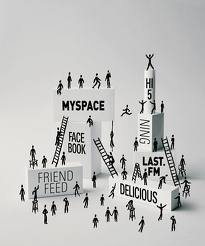
<In the late 1990s, user profiles became a central feature of social networking sites, allowing users to compile lists of "friends" and search for other users with similar interests. The end of the 1990s developed new social networking methods, and many sites began to develop more advanced features for users to find and manage friends. This newer generation of social networking sites began to flourish with
the emergence of SixDegrees.com in 1997, followed by Makeoutclub in 2000, Hub Culture and Friendster in 2002, and soon became part of the Internet mainstream. MySpace and LinkedIn a year later, and, finally, Bebo followed friendster. Attesting to the rapid increase in social networking sites' popularity, by 2005, it was reported that MySpace was getting more page views than Google. Facebook, launched in 2004, became the largest social networking site in the world in early 2009, and remains largest of all social networks.
The Early Years
Social networking began in 1978 with the Bulletin Board System (or BBS). BBS was hosted on personal computers, requiring that users dial in through the modem of the host computers, exchanging information over phone lines with other users. Although it was quite slow since only one user could be logged in at one time.
Later, Usenet was created by Jim Ellis and Tom Trusscot, and it allowed to post news articles or posts. Difference between Usenet and other BBS forums was that it didn�t have a dedicated server or central server. Some modern forums also use idea of Usenet today. Instant messaging came in 1988 with Internet Relay Chat (IRC). It was used for file sharing and keeping in touch with one another.
Birth of social networking as we know it
Geocities was the first social networking site on the Internet. Its intent was to allow users to create their own website, dividing them into cities based on its content. In 1995, TheGlobe.com was launched, offering users to interact with people who held same interest. Two years later, in 1997, AOL instantmessenger and SixDegrees.com were launched. This was the year instant messaging became popular and it was the first time Internet users were able to create a profile and friend each other.
BEFORE THE DAWN
Brief History of Social Media
1969
CompuServe was the first major commercial Internet service provider for the public in the United States. Using a technology known then as dial-up, it dominated the field through the 1980s and remained a major player until the mid-1990s.
1971
The first email was delivered.
1978
Two Chicago computer hobbyists invented the bulletin board system (BBS) to inform friends of meetings, make announcements and share information through postings. It was the rudimentary beginning of a small virtual community. Trolling and flame wars began.
1979
Usenet was an early bulletin board that connected Duke University and the University of North Carolina.
1984
The Prodigy online service was introduced. Later, it grew to become the second-largest online service provider in 1990, with 465,000 subscribers compared with CompuServe's 600,000. In 1994, Prodigy pioneered sales of dial-up connections to the World Wide Web and hosting services for Web publishers. Subsequently, it was resold repeatedly and now is part of AT&T.
1985
The America Online (AOL) service opened.
1989
British engineer Tim Berners-Lee began work at CERN (European Organization for Nuclear Research, in Switzerland), on what was to become the World Wide Web.
1992
Tripod opened as a community online for college students and young adults.
1993
CERN donated the WWW technology to the world. Students at NCSA (National Center for Supercomputing Applications at the University of Illinois at Urbana- Champaign) displayed the first graphical browser, Mosaic, and Web pages as we know them today were born. More than 200 Web servers were online.
THE DAWNING
1994
Beverly Hills Internet (BHI) started Geocities, which allowed users to create their own websites modeled after types of urban areas. GeoCities would cross the one million-member mark by 1997.
There were 38 million user Web pages on GeoCities before it was shut down for United States users in 2009. Yahoo, which opened as a major Internet search engine and index in 1994, owns GeoCities today and offers it only as a web hosting service for Japan. More than 1,500 Web servers were online in 1994 and people were referring to the Internet as the Information Superhighway. EarthLink started up as an online service provider.
1995
Newsweek headlines an article: The Internet? Bah! Hype alert: Why cyberspace isn't, and will never be, nirvana
.
1997
The Web had one million sites. Blogging begins. SixDegrees.com lets users create profiles and list friends. AOL Instant Messenger lets users chat. Blackboard is founded as an online course management system for educators and learners.
1998
Google opens as a major Internet search engine and index.
1999
Friends Reunited, remembered as the first online social network to achieve prominence, was founded in Great Britain to relocate past school pals.
2000
In the world of business and commerce, the dot.com bubble burst and the future online seemed bleak as the millennium turned. Seventy million computers were connected to the Internet.
2001
Wikipedia, the online encyclopedia and world's largest wiki, was started. Apple started selling iPods.v
2002
Friendster, a social networking website, was opened to the public in the U.S. and grew to 3 million users in three months. AOL had 34 million members.
2003
MySpace. another social networking website, was launched as a clone of Friendster. Linden Lab opened the virtual world Second Life on the Internet. LinkedIn was started as a business-oriented social networking site for professionals. There were more than 3 billion Web pages. Apple introduced the online music service iTunes.
2004
Facebook, another social networking website, was started for students at Harvard College. It was referred to at the time as a college version of Friendster. MySpace surpassed Friendster in page views. Podcasting began on the Internet. Flickr image hosting website opened. Digg was founded as a social news website where people shared stories found across the Internet.
AFTER THE DAWN
2005
Bebo, an acronym for Blog Early, Blog Often, was started as another social networking website. News Corporation, a global media company founded by Rupert Murdoch, with holdings in film, television, cable,vmagazines, newspapers and book publishing, purchased MySpace. Facebook launched a version for high school students. Friends Reunited, now with 15 million members, was sold to the British television company ITV. YouTube began storing and retrieving videos. There were more than 8 billion Web pages.
2006
MySpace was the most popular social networking site in the U.S. However, based on monthly unique visitors, Facebook would take away that lead later, in 2008. Twitter was launched as a social networking and microblogging site, enabling members to send and receive140- character messages called tweets. Facebook membership was expanded and opened to anyone over age 13. Google had indexed more than 25 billion web pages, 400 million queries per day, 1.3 billion images, and more than a billion Usenet messages.
2007
Microsoft bought a stake in Facebook. Facebook initiated Facebook Platform, which let third-party developers create applications (apps) for the site. Facebook launched its Beacon advertising system, which exposed user-purchasing activity. Beacon sent data from external websites to Facebook so targeted advertisements could be presented. The civic action group MoveOn.org and many others protested it as an invasion of privacy. Beacon was shut down in 2009. Apple released the iPhone multimedia and Internet smartphone.
2008
Facebook surpassed MySpace in the total number of monthly unique visitors. Meanwhile, Facebook tried unsuccessfully to buy Twitter. AOL purchased Bebo. Later, AOL would re-sell the relatively unsuccessful social media site.
2009
Facebook ranked as the most-used social network worldwide with more than 200 million. The site's traffic was twice that of MySpace. Citizen journalists everywhere were electrified when Twitter broke a hard news story about a plane crash in the Hudson River. The New York Times later reported a user on a ferry had sent a tweet, "There's a plane in the Hudson. I'm on the ferry going to pick up the people. Crazy." Unfriend was the New Oxford American Dictionary word of the year. Microsoft's Bing joined Yahoo and Google as major search engines on the Internet. ITV sold the relatively unsuccessful Friends Reunited social media site to Brightsolid Limited. It's estimated that a quarter of Earth's population used the Internet. Google saw one trillion unique URLs - after eliminating duplicate entries. The Internet had at least 27 billion web pages and could have had as many as 58 billion web pages. They changed so many times a day it was nearly impossible to count.
2010
Facebook's rapid growth moved it above 400 million users,while MySpace users declined to 57 million users, down from a peak of about 75 million. To compete with Facebook and Twitter, Google launched Buzz, a social networking site integrated with the company's Gmail. It was reported that in the first week, millions of Gmail users created 9 million posts. Apple released the iPad tablet computer with advanced multimedia and Internet capabilities. AOL sold the relatively unsuccessful Bebo social media site to Criterion Capital Partners. The Democratic National Committee advertised for a social networks manager to oversee President Barack Obama's accounts on Facebook, Twitter and MySpace. It was estimated the population of Internet users was 1.97 billion. That was almost 30 percent of the global population. The Internet had surpassed newspapers as a primary way for Americans to get news, according to the Pew Internet and American Life Project. The Internet was the third most popular news platform, with many users looking to social media and personalized feeds for news. National and local TV stations were strong, but the Internet was ahead of national and local newspapers.
2011
Social media were accessible from virtually anywhere and had become an integral part of our daily lives with more than 550 million people on Facebook, 65 million tweets sent through Twitter each day, and 2 billion video views every day on YouTube. LinkedIn has 90 million professional users. Social media commerce was on the rise along with mobile social media via smart phones and tablet computers. Public sharing of so much personal information via social media sites raised concern over privacy. Apple introduced the Ping social network for music and integrated with iTunes. Both MySpace and Bebo were redesigned and updated to compete with the far more successful social networks Facebook and Twitter. It was estimated Internet users would double by 2015 to a global total of some four billion users, or nearly 60 percent of Earth's population.