People & Culture
Ethnic Diversity
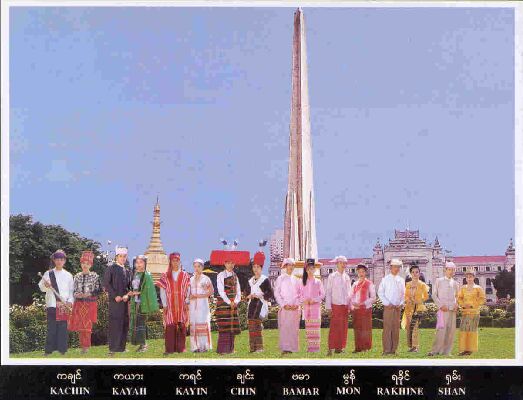
Current estimates hold that approximately 68 percent of the Burmese are Burmans, while the wide array of ethnic groups make up the remaining 32 percent. The Burmans dwell largely in the central river valley. The surrounding mountains and coasts contain seven distinct minority states: Chin, Kachin, Karen, Kayah, Mon, Arakan, and Shan. The Shans (9 percent) and Karens (7 percent) are the most numerous of the ethnic groups. Each of these and their many subgroups are descended from one of the three major linguistic groups: the Mon-Khmers, the Tibeto-Burmans, and the Thai-Shans.
Throughout Myanmar's long and tumultuous history, there were times when conflicts gave rise to wars among the various races. Some of that legacy continues today. But predominantly, over the centuries in which ethnic relations and territories were constantly changing, the different races learned to adapt to each other and be mutually accommodating. These groups were not assimilated by the controlling central kingdoms and managed to preserve a tradition of autonomy.
|
The Mon
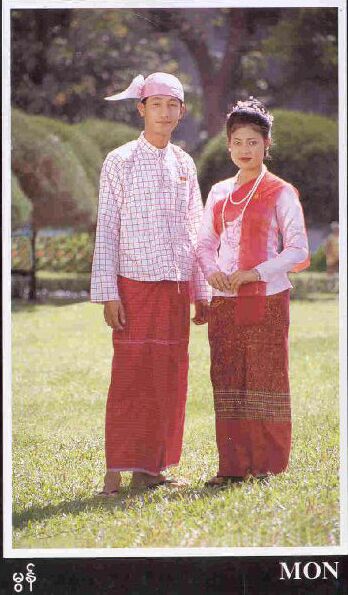
For centuries the Mons have taken pride in their high regard for aesthetics and traditional cultural values, establishing themselves as a race of great writers and poets. Culturally, the Mons and the Burmans are closely linked. Over the decades, the Mons have been largely assimilated into the mainstream of Burmese Buddhist culture, even though for periods they maintained their own state and retained their own distinct language.
|
 |
|
In the Shan state lived one of the largest Mon groups, the Palaung, who are hill dwellers practicing both Buddhism and spirit worship. Among the smaller groups of Mon-Khmer descent, the Padaungs and the Wa have become known due to their unusual and exotic customs.The few thousand Padaungs live in the vicinity of Loikaw, capital of Kayah State. Padaung 'giraffe women' have necks which appear to have been elongated by copper or brass rings that are worn for life. Young girls begin receiving neck rings at the age of five or six, and twenty pounds of new rings are gradually added as they mature. At the time of marriage, their necks appear to be ten inches long. In actual fact, the collarbones and ribs have been pushed down and the women have been unable to develop substantial neck muscles.
|
|
|
The Shan
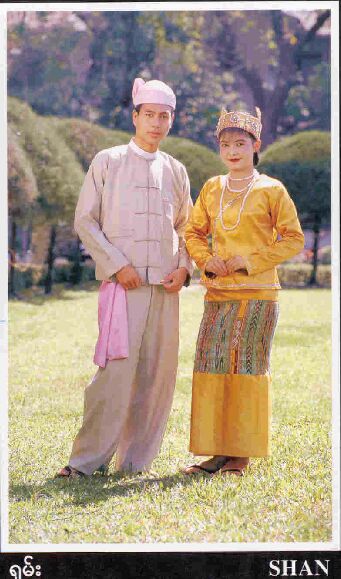
The four million Shan are predominantly Buddhist and have played an important role in shaping the mystique of Myanmar. Shan state offers some of the most beautiful and unspoiled environments in the country. The Shans prefer a life of simplicity in harmony with nature and value being far from the urban centers of the plains and delta regions. |
 |
|
Buddhist temples and pagodas dot the crests of their rugged hills. A Shan subgroup, the Intha people of Inle Lake, are famous for their leg-rowing technique, which they perform while standing erect and with one hand free. Shan State's awesome Pindaya caves contain tens of thousands of exquisite images of the Buddha, shrouded in centuries of legends.
|
|
|
The Karen
The Karen are a rugged and peace-loving people who have a great appreciation for simplicity. Like the Shans, the Karens are reverential towards the environment. They have developed illustrative stories and legends to explain the power of nature and the necessity of maintaining a high regard for all life forms. Numerous small farming villages built of thatch and bamboo comprise a state of several million inhabitants. The Karen were easily converted by Christian missionaries, partly because of ancient beliefs disposing them to the Christian tradition. The Karen are by far the largest Christian group in Myanmar, though spirit worship and Buddhism still exist among some Karen groups.
|
|
|
The Kachin
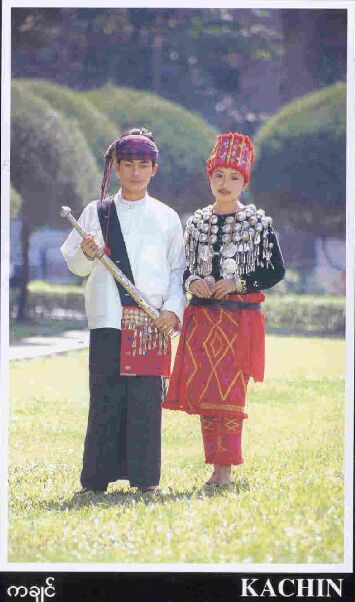
The mountains of Kachin State, in the remote far north of Myanmar, are home to an astounding array of hill tribes. The Kachin are primarily animistic, but followers of Buddhism and Christianity exist within the culture. The animistic Kachin believe that there is always a spirit behind every good or evil action, and that all acts can be explained in that way. |
 |
|
Shamans perform rites at village shrines to make the appropriate offerings and communications to these powerful spirits. The Kachin are well known throughout Myanmar for developing elaborate dances, which play an important role in feasts and festivals. |
|
|
The Rakhaine
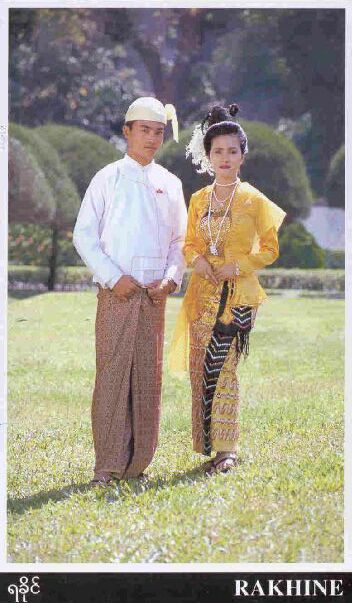
The state of Rakhaine along Myanmar's coast is partly inhabited by the Rohingyas, a distinct cultural group of Burmese Muslims descended from Arab, Moorish, Mughal, and Bengali merchants who arrived on the Arakan coast beginning in the seventh century. Rohingyas share the Arakan state with the Buddhist Rakhine, of Tibeto-Burman stock.
|
 |
|
The Chin
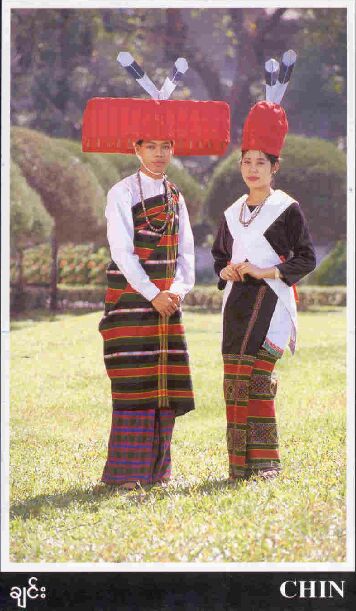
The Chins are the least known group and have been only minimally affected by foreign influence. The obscurity of these peoples is due to their isolated mountain habitat as well as the great diversity of subsects found among them. Comprising a population of 280,000, the Chins speak at least forty-four dialects. Like the Kachins, most Chins are animistic. Throughout Myanmar, the Chins are highly regarded as skilled fishermen, hunters, and weavers of fine fabric and blankets.
|
 |