 |
|
|
|
|
|
|
|
|
|
|
|
|
|
|
|
|
|
|
|
|
|
|
|
|
|
|
|
|
|
|
|
|
|
|
|
|
|
|
|
|
|
|
|
|
|
|
Chemiluminescence |
|
|
|
What is chemiluminescence?
|
|
|
|
Reactions that occur without heat, but do give off light are called chemiluminescent reactions. There are many reactions that produce light and heat, such as lighting a match, but these types of reactions cannot be luminescent because luminescence is characterized as �cool light�. The types of light that can be given off from chemiluminescence can be ultraviolet, visible or infrared. The most common type of reaction releases visible light, and has the many common uses.
There is more than one type of chemiluminescent reaction. There is bioluminescence and electroluminescence. |
|
|
|
What is Happening? |
|
|
|
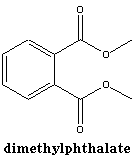
When you crack a glow stick to substances mix together, causing a reaction which produces a glow. A liquid called �oxalate,� makes up the majority of the stick. Oxalate is a mixture of a few substances, bis oxalate and dibutyl phthalate. This mixture is heated over nitrogen for an hour or so. Another substance, called bis(phenylethynyl) anthracene, is added to finish the oxalate mixture.
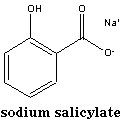
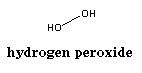
The key ingredient to the glow stick is the activator. This is the substance that creates the reaction with the oxalate to form the glow. Here is the chemical reaction that is used to form the activator. |
|
|
|
 |
|
|
|
 |
|
|
|
 |
|
|
|
|
+ |
|
|
+ |
|
|
|
|
|
|
|
|
CONTINUED
BELOW |
|
|
|
|
|
|
|
|
|
|
|
|
|
|
|
|
|
|
 |
|
|
|
= |
|
|
+ |
|
|
|
|
|
|
|
ACTIVATOR |
|
|
|
|
|
|
|
|
|
|
|
|
 |
|
|
|
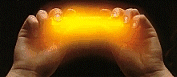
The glow stick contains three parts oxalate and one part activator. The activator is stored in a capsule. When you �crack� the stick the capsule is broken and the reaction begins. |
|
|
|
Uses and Occurrences: |
|
|
|
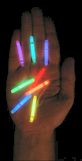
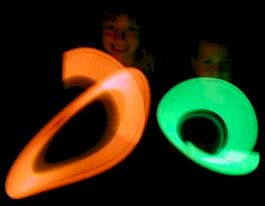
You have probably seen more chemiluminescent reactions than you know of. If you have ever been in a crowd on the 4th of July, you have probably seen thousands of little glow sticks. Each glow stick is a reaction producing chemiluminescent light. As soon as you �crack� the stick, two liquids mix together, producing the light that you see. |
|
|
 |
|
|
|
|
|
 |
|
|
|
|
|
|
|
|
Back |
|