| Bioluminescence | |||||||||||||
| What is Bioluminescence: | |||||||||||||
| Bioluminescence is a form of chemiluminescence. The unique characteristic is that the reaction occurs in a living organism. The light that is produced by the organism can be voluntary or involuntary. The reaction most commonly occurs through a chemical reaction in which something called �luciferin� is brought into the animals system through diet or synthesis. Another substance called �luciferase� acts as a catalyst to oxidize the luciferin. This reaction produces light, and less importantly,�oxyluciferin,� an inactive byproduct. | |||||||||||||
| Where do you see Bioluminescence? | |||||||||||||
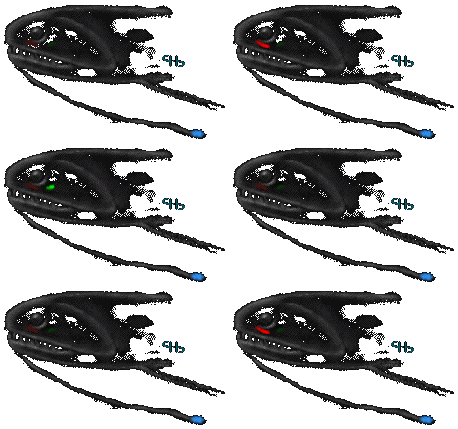
| There are many organisms that produce there own light. The reason for the light is usually for one of the following reasons: to discourge predators, to draw prey, or to attract mates. The organism that you are probably most familiar with is fireflies. Every summer they come out at night to release blinks of light, telling other fireflies that they are ready to mate. Other examples of bioluminescent organisms are some types of worms, centipedes, and funguses. However, land is an uncommon place for bioluminescence. The world of the sea is teeming with glowing animals. Many sailors are familiar with a certain type of one celled organism that glows as ships passes through the waters. A trail of light is left in the wake of the ships. In the deepest parts of the ocean there are many fish that depend on the light that they produce. Some fish are so well adapt that the light that they produce is the color that travels the farthest underwater. |
|||||||||||||
![]() |
|||||||||||||
| Back | |||||||||||||