 |
| Parkinson's Disease: A Background |
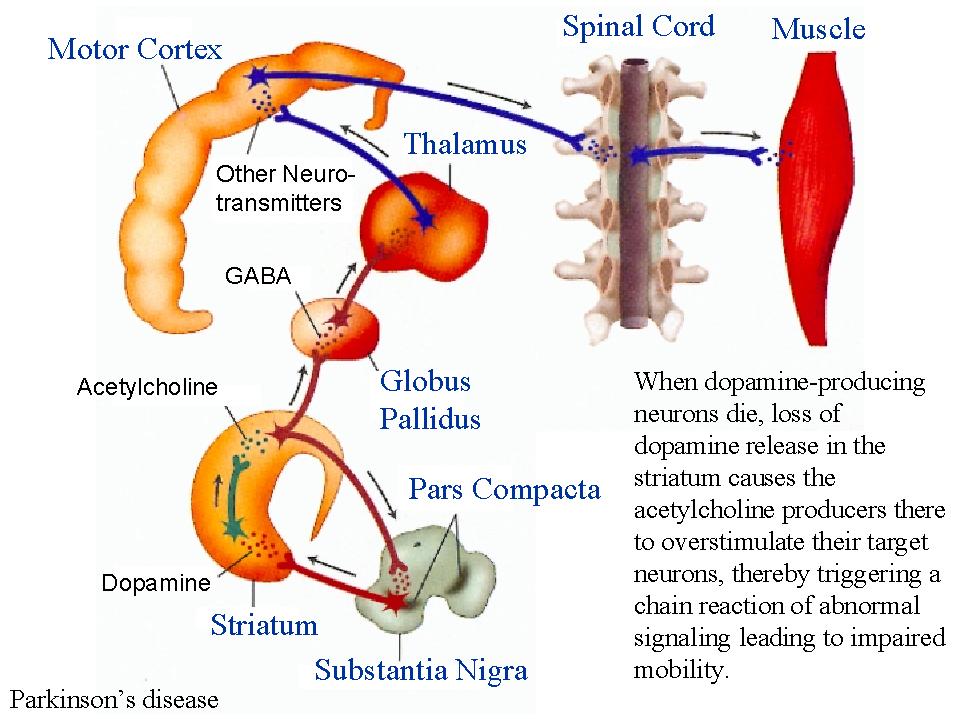
| Causes There are several theories about the cause of PD. We believe that in most cases Parkinsonism is a result of the death of the dopaminergic cells in the substantia nigra. Studies show that parkinson's patients have a loss of 80% or more of the dopaminergic cells in their substantia nigra. There is also a theory that associates this cell death with the presence of free radicals in the brain that could destroy these dopaminergic neurons. For example, studies confirm higher brain levels of iron and lower levels of ferritin in the brain, indicating oxidation. Some scientists also link the neuronal death in the substantia nigra to the presence of a single toxin, like MPTP. |
| Other scientists, however, are exploring a genetic link to the disease. Scientists have proven a link between the mutation for the protein alpha-synuclein, located on chromasome 4, and early onset PD. The most common genetic defect found involves the gene for a protein known as parkin on chromosome 6. Other researchers believe that it is a combination of four of the following mechanisms that leads to the devleopment of PD: 1) Oxidative Damage 2) Environmental Toxins 3) Genetic Predisposition and 4) Accelerated Aging. |
|
| Major Symptoms |
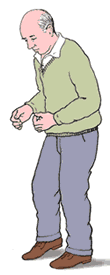
| There are 3 Cardinal Symptoms of PD. 1) Tremor (For video click HERE ) 2) Bradykinesia (slowness of movement) 3) Rigidity For more video examples of these symptoms, click HERE |
 |