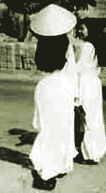



To the Vietnamese people, ao dai has always been synonymous with grace, and beauty. Throughout the many trials and tribulation of Vietnam's history, the ao dai remained unchanged in its symbolism and the image it conjures in the hearts of all Vietnamese. Today, due to its timelessness, the ao dai remained the national dress for both Vietnamese men and women. The ao dai and what it represents transcends all ages and it reaches the lives of people from all walks of life. To the Vietnamese people, rich or poor, the ao dai is still the dress of choice on social occasion and enjoys a preference on special occasions as well.
A similar costume is worn by the men and is also called an ao dai. However, the man's dress is shorter (knee length) and more loose-fitting. The color of the brocade and the embroidered dragon were worn only by the Emperor. Purple was the color reserved for high ranking mandarins while the blue was worn by those mandarins of lower rank. The dresses for mourning have frayed fringes a line up the back and may be either white or black, although white is the standard color for mourning.
Since the dawn of Vietnamese literature and music, poets and musicians alike have expound the beauty of the ao dai and the grace and beauty it brings to people who wears it. Nowhere in modern literature does an article of clothing have the power to conjure drama, romance and fate like the ao dai in Vietnamese literature. Symbolically, one can argue that Vietnam is ao dai and ao dai is Vietnam. Although the trends in fashion brought to the traditional ao dai many changes in terms of materials and western influences, the ao dai remains a timeless article of clothing that has the strength to unify people.
Trung and I have choosen to work on this topic because we like the designs and the colors of the ao dai. There are many designs on the ao dai like dragons, butterflies, and the phonix that interest us. We have choosen this topic because Ao Dai is so beautiful and we want to know how it got to be so popular.