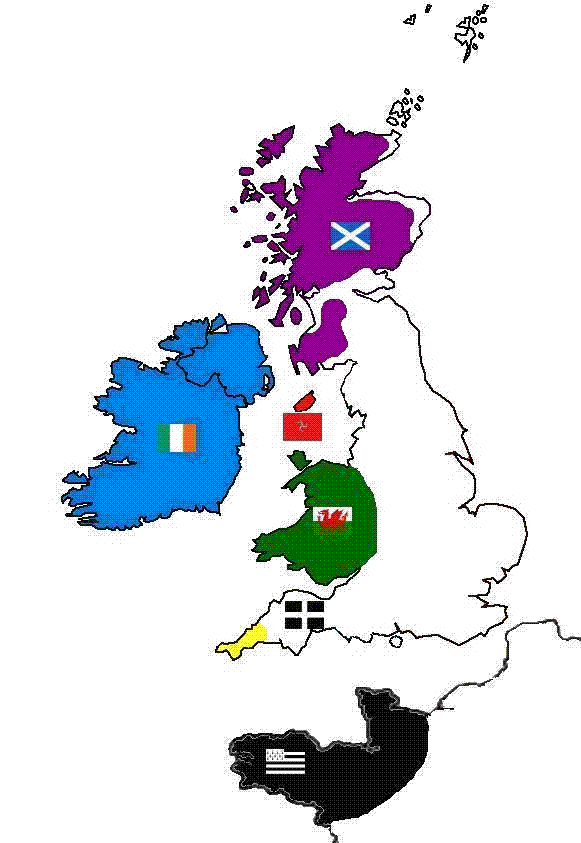
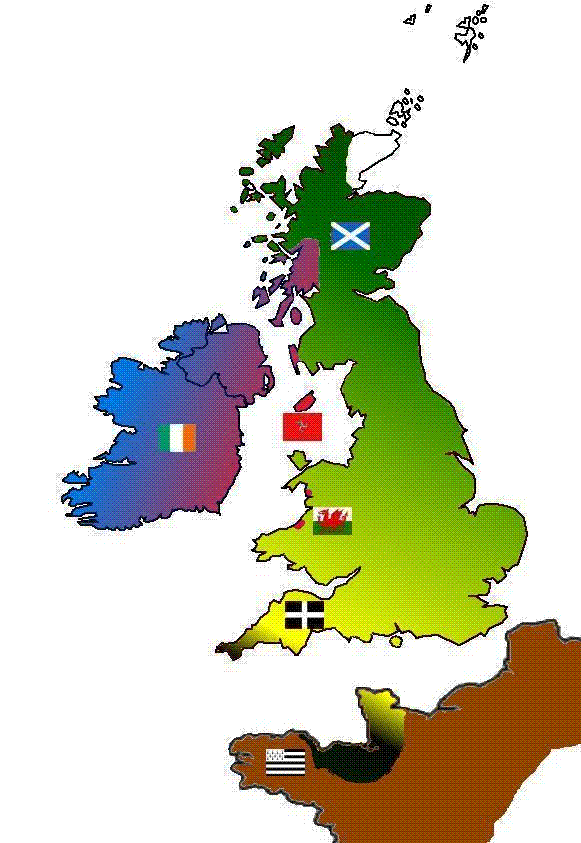
The earliest invasions came from the Vikings, attacking almost every Celtic area and subsequently forming many of the earliest cities. The Vikings themselves conquered the Isle of Man and continued to rule it up until the 1200's when the Scots and eventually the English captured it in 1333.
However, the most devestating invasion was that of the Anglo-Saxons and Normas, culminating in the conquest of England in 1066 by William I. This invasion completely wiped out the Eastern Celtic languages and secluded the remainders into small regional areas. Many of the native Celtic kings were replaced by Norman supporters, ending native rule in both Wales and Cornwall. Wales did revolt and achieve independance but this was short lived as the last native leaders were captured, hung, drawn and quartered in 1283 making Wales England's first colony.
Following a Bull Laudabiliter in 1171, Henry II marched on Ireland claiming a right to rule. The native kings were either subdued or killed and by the 13th century English law supplanted the native Brehon law (although it was still in use). In order to calm its most unsettled colony, the English followed a series of plantations (Tudor under Henry VIII and Elizabeth I, and later Ulster) and banning Irish-English marraiges.