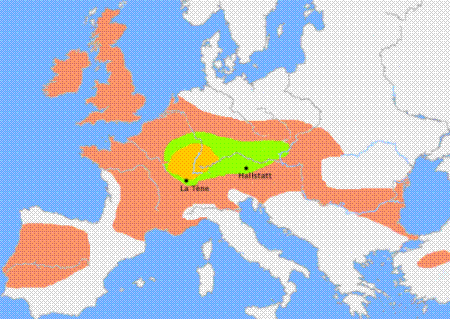
By 1000 BC the Celts had expanded into other areas in Europe (green on the above map) and many places still bear Celtic derived names from this time including Switzerland (Offically "Confederation of Helvetica" from the Helvetti tribe), Belgium (from the Belgae tribe), and Bohemia (from the Boii tribe). The peak of the Celtic peoples was from 800-400BC when they spread from Turkey to Portugal and from Italy to Britain covering almost all of Europe. Many famous references to these Celts may be found, from the Keltoi of the Greeks, to the Gauls of Rome (which was invaded, sacked and burnt by them), to the Gallatians of the Bible.
With the Germanic expansions in the North East and the Roman expansions in the south, including the infamous Gallic wars of Caesar the Celtic peoples were soon subjugated and Latin replaced their native tongues. By 500 CE all traces of the Continental Celtic languages (Gaulish, Lepontic, Noric, Galatian, and Celtiberian) had been expunged from the face of Europe. The only home left for the beleagured Celts were the islands of Great Britain and Ireland where, luckily, the languages, art, and culture survived.