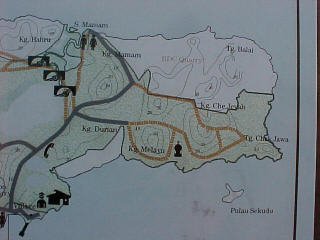
Where do I begin? I discovered Tanjong Chek Jawa some years ago after visiting the old Ang Mo bunglow (1 Pulau Ubin). With a view of Changi and Pulau Sekudu, the bunglow was great for evening BBQs! Unfortunately it is now fenced up.
On the other side of the Chek Jawa promontory (northern side) was a bay. Because the bay was extremely shallow, the family living there had an old wooden jetty extending dozens of metres out. It was only one plank wide in places which scared some. I loved sitting at the end of that old jetty and relaxing to the wind and the waves. The family also had a lot of unusual pets. Among them was a wild boar who stills hangs out there. I have no idea what the family called her, but NSS members have taken to calling her Priscilla.
It was only later in the new millenium that I accidentally 'discovered' the beauty of the mudflats and its flora and fauna. This was just before the time that Nature Society started organising trips there.
The hill I found out about only this year.
Locally, the place is simply known as 'Tanjong'. As for Chek Jawa, I have heard that it simply means "a woman from Java".
Wild Boar | Intertidal Flora and Fauna
Maps & Guides:
Cartoon Sketch Map of Chek Jawa
1997 URA plan for Ubin
2001 URA Concept Plan Map
MPA Map
showing planned reclamation works.
Guides:
Habitat News Chek Jawa Homepage
Chek Jawa Flora and Fauna Guidesheets
Guide to the Mangroves of Singapore
Photo Galleries:
by Joseph
by Ria
by Sivasothi
by Beng Chiak
by Nick
Nature Watch Articles:
"Pulau Ubin's
Tanjung Chek Jawa: A Treasure to Behold"
by Chua Sek Chuan and Shawn Lum. Jul-Sep 2001 issue.
"Chek Jawa Days"
by Joseph Lai. Jul-Sep 2001 issue.