Lesson One - Part One (Palm Reading)
Many people may believe that palm reading is a simple practice with no thorough background and information. Well, those people would be wrong. Several books state that Palm Reading dates back as far as 12,000 � 15,000 years ago! The prehistoric caves of Santander, Spain display hand drawings of palms with the major lines portrayed in amazing detail.
The earliest writings using the word palmistry (then spelt Pawmestry) date back to 1420. John Lyndgate was the man who first used the word in his �Assembly of Gods documents�. The first book on Palmistry was Michael Scotts DE PHISIOGNOMIA done in 1477 on the physiognomy of the human body with an entire chapter dedicated to the human hand.
In the seventeenth century, many books were written that included the early magical ideas about the hand dating back to the 14th century. Later in the 18th century, Muggles entered the picture and blended the current ideas with scientific information. Since then Palmistry was aligned with the idea that the person read the hand with a scientific eye or as we know it, the Inner Eye. As a once famous Seer said, �Palmistry is a form of prediction that is as individual as the hand�.
The �
The hand you use to write with is your dominant hand. The lines on this hand tend to change over the course of your life. You may find a significant change from when you began your schooling at Hogwarts and when you finished. Some people have found extra lines appear on their hands after several years. The other hand is your destiny hand and tends to stay the same throughout your life cycle.
There are three basics lines found on the hand. They are the life, head and heart lines. Below is a diagram indicating where on your hand you can find each of them, this diagram also includes the mound of venus.
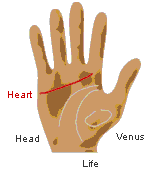
For a little bit of fun, visit this site and follow the prompts to receive your own analyse. I suggest using your right hand when answering each of the questions. This will appear as extra credit, so if you are after extra points, go ahead and try it out! Because we have a few more areas to cover, I�ll leave Palmistry here but if you have any further questions, feel free to contact me and I�ll help you in anyway I can.