 |
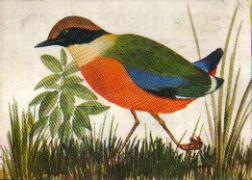
01. Blue-winged Pitta The resident population is supplemented in the rainy season by migrants from the north. Usually found on small islands, in coastal forests and mangrove swamps. It is said to utter loud cries before rain, hence it also called "Ujan Ujan". |
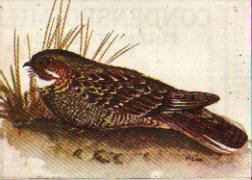 |
02. Long-tailed Nightjar This bird is easily recognized by its characteristic call, a repeated "tok tok tok" which can go on for hours on end, especially on a moonlit night. It is frequently seen squatting on the roads with wings spread and tail fanned out. |
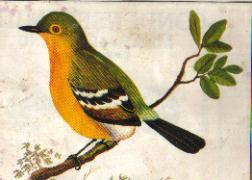 |
03. Common Lora A familiar garden bird. Its plumage varies in colour according to age and season. Usually seen singly or in pairs on low trees. Its call is a prolonged high whistle, followed by a short sharp one and ending on a lower note. |
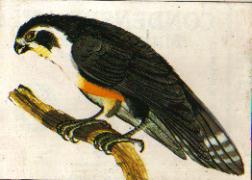 |
04. Red-breasted Falconet A bold and fierce little hawk which will attack birds bigger than itself. This falconet usually perches on a branch hunched in a characteristic attitude in wait for its prey. Feeds principally on large insects such a grasshoppers. |
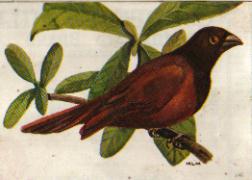 |
05. Chestnut Munia A sociable bird, usually seen in flocks in paddy fields and open country. The flock flies in a close globular formation, taking off with a whirr and shrill "peeps". It feeds on paddy seeds. Considered one of the worst pests of the paddy fields. br> |
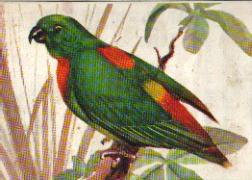 |
06. Malay Lorikeet This bird usually flies singly or in pairs with fast-whirring wing-beats. At roost, they often hang upside down from a branch. They climb with the aid of the bill. The males are distinguished by the scarlet breast patch and yellow rump. |
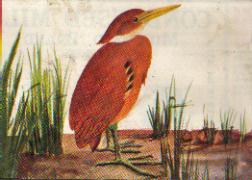 |
07. Chestnut Bittern An inhabitant of paddy fields and freshwater swamps which likes to hide in long grass or thick vegetation. Its nest is very difficult to find and according to the Malays, the finding of one confers the gift of invisibility upon the finder. |
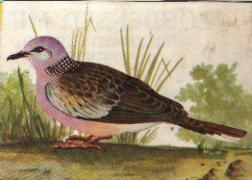 |
08. Spotted Dove Commonly seen walking on roads and paths in pairs or small parties. Most remarkable for its almost vertical take-off flight into the air. It has a low musical coo often repeated three or four times. A favourite cage-bird. |
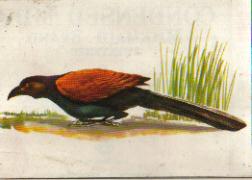 |
09. Common Coucal Often seen along the muddy banks of rivers. Sometimes in open country. It has a habit of basking in the sun of tree tops after rain. Its call consists of several notes on an even pitch - "boob-boob-boob-boob". |
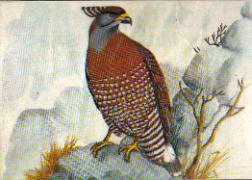 |
10. Crest Serpent Eagle Common in both the lowland and mountain regions. Often seen sitting on lofty trees or circling in the sky. It has a plaintive call. A forest bird which preys on other birds, mammals, lizards and snakes, and large insects. |
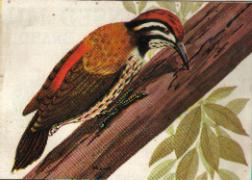 |
11. Golden-backed Three-toed Woodpecker A well-known woodpecker in the low-lands. It is mostly seen in pairs on tree trunks feeding on ants and other insects. It has a preference for palm trees, including coconut and pinang. Most active just before and after rain. |
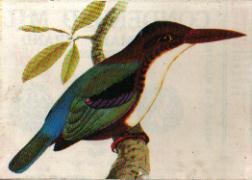 |
12. White-breasted Kingfisher A common kingfisher which likes to perch on boughs and telegraph wires beside the road or in open country and in orchards and gardens. It may also be seen near water into which it dives for fish. But its usual diet includes reptiles and insects. |
Back