 |
|
|
|
|
|
|
|
|
|
|
|
|
|
|
|
|
|
|
|
|
|
|
|
|
|
|
|
|
|
Spiritual Waters & Sacrificial Alters |
|
|
 |
|
|
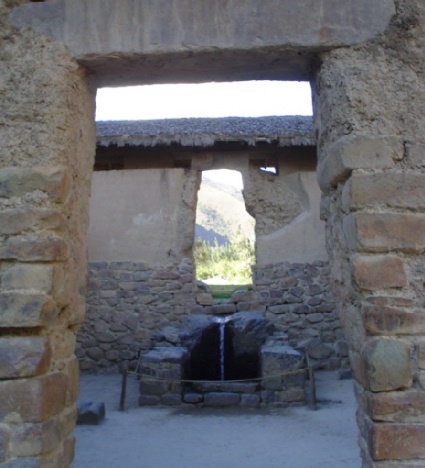
Inca religion was based in animistic beliefs and complex rituals. Incan religion began with Viracocha, creator of earth, humans, and the heavens. It was believed that after creation he walked across the waters of the Pacific and would return to help the Inca through periods of crisis. According to legend, Tanta Carhua was a ten year old girl whose beauty was unmatched by any young lady. Her father chose her to be offered to the Inca Emperor. As ritual required, Tanta was paraded from her home village to Cuzco to meet the emperor. She was then brought back to her village amid great feasts and celebrations. She is reported to have said, "You can finish with me now because I could not be more honored than by the feasts which they celebrated for me in Cuzco." The beautiful young lady faced live burial in a shaft tomb high in the Andes Mountains with great pride and dignity, bringing honor to her family. |
|
|
|
 |
|
|
|
|
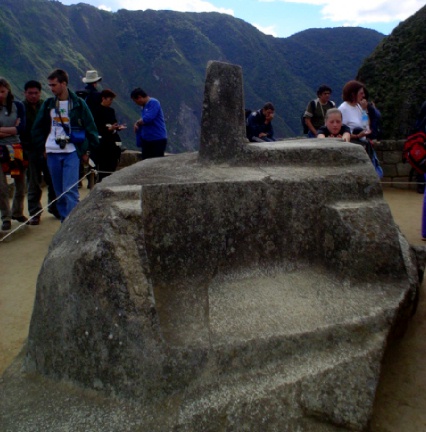
Sacrifice, both human and animal, was an important part of Inca ritual. . It is believed that such sacrifices were made on important occasions as well as during times of trouble. The sacrifice of a child bestowed great honor upon the family and forever immortalized the child as a deity. The sacrificial child had to be perfect, without a single blemish. Once chose, the child would travel to Cuzco to meet the emperor. Great feasts and ceremonies prepared the child for death. They were given chica, a maize alcohol, and buried alive in a tomb-like structure. Priests conducted ceremonies on the mountainside while the children left the earth. |
|
|
|
|
|
 |
|
|
|
|
|
|
Sacred Rock for offerings and animal sacrifice |
|
|
|
|
|
 |
|
|
|
|
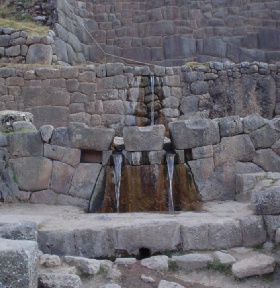
The water fountain above is supposedly a "fountain of youth" containing spiritual powers of the Incan gods. Had a sip, but I don't think I got any younger! In fact, I think I turned a year older that day!
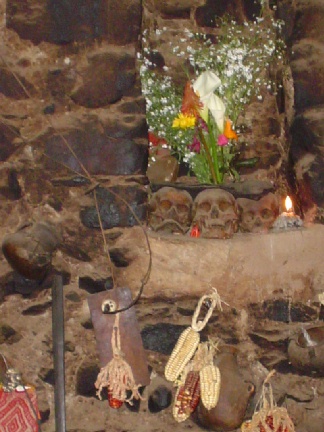
The picture on the right is from inside a traditional Incan dwelling in which the family would display the skulls of their anscestors as an offering to the gods. Other offerings included things like corn, feathers, etc.
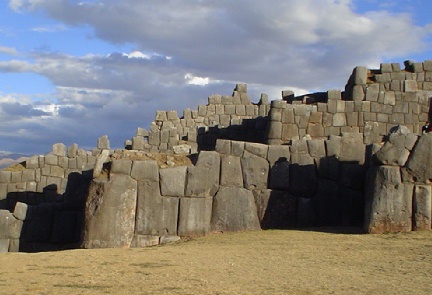
On the tour of the Sacred Valley, in route to Machu Picchu, our first stop was to Sacsayhuaman. Sometimes called the "City of Stone", Sacsayhuaman was built in 1440 and took nearly a century and 20,000 workers to finish it All of the huge stones, some weighing nearly 300 tons, were hand carried from 15km away. Pretty cool site, with an amazing view of the valley below |
|
|
|
|
|
|
Sacsayhuaman |
|
|
|
|
|
 |
|
|
|
 |
|
|
 |
|
|
|
|
|
|
|
|
Back to Peru Main Page |
|
|
|